1 citations
,
July 2024 in “Journal of Investigative Dermatology” Immune cells boost stem cell activity in hairy moles, causing more hair growth.
 October 2022 in “Regenerative Biomaterials”
 A special gel with stem cells can create new hair follicles.
 2 citations
,
March 2019 in “Plastic and Reconstructive Surgery”
2 citations
,
March 2019 in “Plastic and Reconstructive Surgery” The letter suggests that a modified fat processing technique may increase regenerative cells but calls for more trials to confirm its effectiveness for skin and hair treatments.
1 citations
,
February 2025 in “Journal of Dairy Science” The SLICK1 allele in Holstein heifers affects hair and immune traits without altering prolactin signaling.
 April 2025 in “Frontiers in Animal Science”
 Sheep exosomes can enhance hair growth in mice.
January 2025 in “Biochemical Pharmacology” Peficitinib can turn human fibroblasts into cells that help grow hair.
 April 2023 in “Journal of Investigative Dermatology”
 Muscle around hair follicles controls hair loss by releasing a signal that causes cell death.
December 2025 in “International Journal of Molecular Sciences” Opophytum forskahlii seed oil may help with anti-aging and hair growth.
 June 2020 in “Journal of Investigative Dermatology”
 Tiny particles from skin cells can help activate hair growth.
January 2025 in “International Journal of Biological Macromolecules” Decorin helps hair growth by influencing specific cell signals.
December 2025 in “Animals” TGFBR1 slows down cell growth in fine-wool sheep hair follicles.
 1 citations
,
September 2022 in “Pharmaceutics”
1 citations
,
September 2022 in “Pharmaceutics” The stiffness of a wound affects hair growth during healing, with less stiff areas growing more hair.
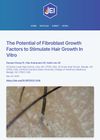
Some fibroblast growth factors may promote hair growth similarly to minoxidil and could potentially treat hair loss.
 March 2026 in “bioRxiv (Cold Spring Harbor Laboratory)”
 The Enriched-GF method efficiently produces high-yield growth factors for tissue repair.
15 citations
,
August 2019 in “F1000Research” CMG2 and TEM8 receptors have distinct roles in skin and growth disorders, affecting collagen breakdown and growth.
October 2024 in “Journal of Cosmetic Dermatology” Reducing miR-30a-5p helps hair follicle stem cells grow and survive.
August 2025 in “Biomaterials” A new therapy using secretions from fetal cartilage cells shows promise for safe and effective hair regrowth.
October 2014 in “Dialnet (Universidad de la Rioja)” Snail2 is crucial for hair growth and affects skin cancer development.
147 citations
,
April 1997 in “Oncogene” Overexpressing IGF-1 in mice leads to skin abnormalities and tumors.
37 citations
,
January 2010 in “Human Molecular Genetics” FTase and GGTase-I are essential for skin keratinocyte health.
January 2007 in “Linchuang pifuke zazhi” HIF-1α in fibroblasts boosts hair growth and health.
 168 citations
,
August 2000 in “American Journal of Pathology”
168 citations
,
August 2000 in “American Journal of Pathology” Fibromodulin might help reduce scarring if increased in adult wounds like in fetal skin that heals without scars.
118 citations
,
December 2003 in “Mechanisms of Ageing and Development” Thymosin β4 helps heal wounds, grow hair, and improve blood vessel formation.
21 citations
,
October 2007 in “Journal of Investigative Dermatology” Fetuin-A helps wounds heal without scars by promoting cell movement.
 April 2016 in “Chinese Journal of Dermatology”
 Wnt10b can help regenerate hair follicles.
A protein called sFRP4 can partly inhibit hair growth.
5 citations
,
February 2022 in “Stem cell reports” Thymic stromal lymphopoietin (TSLP) promotes hair growth, especially after skin injury.
 154 citations
,
November 2017 in “Development”
154 citations
,
November 2017 in “Development” Fibroblast Growth Factors (FGFs) are important for tissue repair and regeneration, influencing cell behavior and other factors involved in healing, and are crucial in processes like wound healing, bone repair, and hair growth.
 68 citations
,
April 2012 in “Journal of Investigative Dermatology”
68 citations
,
April 2012 in “Journal of Investigative Dermatology” The conclusion is that Fgf18 and Tgf-ß signaling could be targeted for hair loss treatments.
 January 2022 in “Journal of St. Marianna University”
 Substances from human hair cells can affect hair loss-related genes, potentially leading to new treatments for baldness.