March 2023 in “Медицинский совет” Minoxidil works better for hair regrowth if you have higher SULT1A1 enzyme activity and ATP concentration.
 January 2011 in “Reactions Weekly”
 Long-term use of minoxidil may cause hair follicles to transform into noticeable terminal hairs, leading to trichostasis spinulosa.
Minoxidil can cause hair growth as a side effect.
 15 citations
,
November 2017 in “Drug Delivery and Translational Research”
15 citations
,
November 2017 in “Drug Delivery and Translational Research” Certain extracts from Curcuma aeruginosa Roxb. and germacrone can boost the skin's absorption of minoxidil, a hair growth promoter, making it more effective.
December 2021 in “Clinical and Experimental Dermatology” Systemic minoxidil might help maintain hair regrowth in alopecia areata.
March 2026 in “Journal of medical & health sciences review.” Both 5% minoxidil foam and liquid effectively treat hair loss, with foam slightly preferred.
 January 2022 in “Experimental Dermatology”
 Minoxidil solution and foam both increase hair growth, but the solution works better than the foam.
 1 citations
,
January 2022 in “Journal of Cosmetic Dermatology”
1 citations
,
January 2022 in “Journal of Cosmetic Dermatology” Taking oral vitamin D and applying topical minoxidil together can better treat female pattern hair loss than using either treatment alone.
 May 2024 in “Clinical, cosmetic and investigational dermatology”
 5% topical minoxidil effectively treated a boy's congenital triangular alopecia without side effects.
 April 2026 in “Journal of Gandhara Medical and Dental Science”
 Oral Minoxidil effectively treats male pattern baldness.
July 2026 in “Journal of Drug Delivery Science and Technology” January 2009 in “Journal of Tissue Engineering and Reconstructive Surgery” Combining hair transplantation with minoxidil is effective and easy for treating hair loss.
 November 2009 in “Cambridge University Press eBooks”
 Minoxidil and finasteride combined can effectively treat hair loss.
8 citations
,
January 1989 in “PubMed” Minoxidil did not affect hair growth in newborn mice.
 17 citations
,
May 1998 in “Contact Dermatitis”
17 citations
,
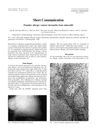
May 1998 in “Contact Dermatitis” Minoxidil can cause pustular allergic reactions on skin.
January 2006 in “Fudan University Journal of Medical Sciences” Finasteride is more effective than 3% minoxidil for treating hair loss in Chinese men.
October 1988 in “Archives of Dermatology” Minoxidil's benefits may decrease after two years of use.
January 2012 in “Open MIND” Oral minoxidil can cause painful skin bumps and scarring in some people.
 16 citations
,
January 2007 in “JEADV. Journal of the European Academy of Dermatology and Venereology/Journal of the European Academy of Dermatology and Venereology”
16 citations
,
January 2007 in “JEADV. Journal of the European Academy of Dermatology and Venereology/Journal of the European Academy of Dermatology and Venereology” A man had an allergic reaction to minoxidil, which stopped after he discontinued use and started corticosteroids.
 December 2024 in “Biological and Pharmaceutical Bulletin”
 Gum arabic improves minoxidil delivery to hair follicles, enhancing hair growth.
 4 citations
,
February 2021 in “Journal of Cosmetic Dermatology”
4 citations
,
February 2021 in “Journal of Cosmetic Dermatology” Pumpkin seed oil slightly outperforms minoxidil foam in treating hair loss with fewer side effects.
February 2020 in “The Pharmaceutical Society of Japan”  40 citations
,
January 2018 in “Pharmaceutics”
40 citations
,
January 2018 in “Pharmaceutics” Eucalyptol and oleic acid in nanoemulsions improve minoxidil delivery to hair follicles, potentially enhancing hair loss treatment.
26 citations
,
March 1987 in “Journal of the American Academy of Dermatology” Minoxidil helps hair regrowth by stimulating hair follicles and reducing immune responses.
May 2026 in “Clinical and Experimental Dermatology” Sublingual minoxidil improved hair growth in a 10-year-old boy without side effects.
March 2026 in “Journal of the American Academy of Dermatology” Lower doses of oral minoxidil can promote hair growth without major heart risks.
 November 2025 in “Frontiers in Pharmacology”
 Botanical treatments like saw palmetto, rosemary oil, and ginseng may help reduce hair loss in menopausal women.
October 2022 in “Our Dermatology Online” The Trust tonic is more effective than minoxidil for treating hair loss.
 February 2023 in “International Journal of Pharmaceutics”
 A new version of minoxidil, a hair loss treatment, was made using nanotechnology. This version, called minoxidil cubosomes, works better and causes fewer skin reactions than the old version. It also penetrates and stays in the skin better, promoting hair regrowth. It's safe and could be a good alternative to current treatments.