11 citations
,
September 1988 in “Annals of Plastic Surgery” Topical minoxidil can help some men regrow hair, but results vary and may decline after a year.
 40 citations
,
January 2018 in “Pharmaceutics”
40 citations
,
January 2018 in “Pharmaceutics” Eucalyptol and oleic acid in nanoemulsions improve minoxidil delivery to hair follicles, potentially enhancing hair loss treatment.
January 2012 in “Sichuan Medical Journal” 2% minoxidil effectively increases hair count in women with androgenetic alopecia without severe side effects.
 2 citations
,
November 1987 in “Archives of Dermatology”
2 citations
,
November 1987 in “Archives of Dermatology” Minoxidil solution helps regrow hair in men with hair loss, with most improvement seen at 12 months and effects lasting over 30 months.
 October 2023 in “Journal of Cosmetic Dermatology”
 Using both minoxidil and finasteride together is more effective for hair growth than using either one alone in men with hair loss.
 25 citations
,
January 2002 in “Folia Pharmacologica Japonica”
25 citations
,
January 2002 in “Folia Pharmacologica Japonica” Minoxidil helps hair grow by improving blood flow and increasing growth factors in hair follicles.
 4 citations
,
March 2017 in “PubMed”
4 citations
,
March 2017 in “PubMed” Increasing the dosage of minoxidil can help hair regrowth in women who didn't respond to the standard treatment.
December 2009 in “Digital Library of Theses and Dissertations (Universidade de São Paulo)” Iontophoresis and chitosan microparticles improve minoxidil delivery for hair loss treatment.
 54 citations
,
March 1987 in “Journal of The American Academy of Dermatology”
54 citations
,
March 1987 in “Journal of The American Academy of Dermatology” 3% topical minoxidil effectively treats extensive alopecia areata with few side effects.
 45 citations
,
October 1988 in “British Journal of Clinical Pharmacology”
45 citations
,
October 1988 in “British Journal of Clinical Pharmacology” Using topical minoxidil for baldness can cause heart problems, especially in those with heart disease.
Minoxidil shampoo showed slight hair growth but needs longer testing for clear results.
 1 citations
,
July 2023 in “Cureus”
1 citations
,
July 2023 in “Cureus” Cetosomal minoxidil alone and with finasteride is effective and well-tolerated for hair loss treatment.
 3 citations
,
May 2020 in “Journal of The European Academy of Dermatology and Venereology”
3 citations
,
May 2020 in “Journal of The European Academy of Dermatology and Venereology” Topical booster improves hair loss treatment effectiveness.
 17 citations
,
April 2002 in “Contact Dermatitis”
17 citations
,
April 2002 in “Contact Dermatitis” Minoxidil 5% caused skin discoloration in a man using it for hair loss.
 January 2024 in “International Journal of Dermatology Research”
 Minoxidil alone is as effective as the combination but has fewer side effects.
March 1990 in “Journal of Dermatological Science”  January 2014 in “Anales Médicos de la Asociación Médica del Centro Médico ABC”
 The treatment effectively promoted hair growth with minimal side effects.
 32 citations
,
January 1994 in “Skin Pharmacology and Physiology”
32 citations
,
January 1994 in “Skin Pharmacology and Physiology” Minoxidil helps hair growth by activating enzymes in hair follicles.
 26 citations
,
April 1977 in “PubMed”
26 citations
,
April 1977 in “PubMed” Minoxidil, a blood pressure drug, can cause excessive hair growth, but this can be successfully treated with a hair removal agent called calcium thioglycolate.
 October 2025 in “International Journal of Advanced Research in Science Communication and Technology”
 Minoxidil effectively promotes hair growth, especially in a 5% solution, but requires continuous use.
 102 citations
,
September 1977 in “The Lancet”
102 citations
,
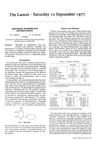
September 1977 in “The Lancet” Minoxidil with propranolol and diuretics lowers blood pressure but causes fluid retention and hair growth.
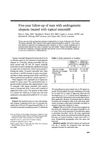 70 citations
,
April 1990 in “Journal of The American Academy of Dermatology”
70 citations
,
April 1990 in “Journal of The American Academy of Dermatology” Minoxidil treatment increased hair growth for up to 5 years, requiring twice daily application.
5 citations
,
September 2021 in “Dermatologic Therapy” Oral minoxidil effectively treats female pattern hair loss and is a good alternative to topical minoxidil.
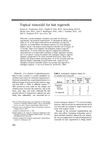 80 citations
,
September 1984 in “Journal of The American Academy of Dermatology”
80 citations
,
September 1984 in “Journal of The American Academy of Dermatology” 5% minoxidil helps hair regrowth in androgenic alopecia.
Using 5% minoxidil foam twice daily can help regrow hair, especially in younger men aged 20-30.
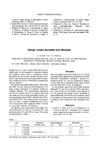 13 citations
,
January 1988 in “Contact Dermatitis”
13 citations
,
January 1988 in “Contact Dermatitis” Some patients using Minoxidil for baldness developed allergic skin reactions.
 January 2004 in “Journal of Clinical Dermatology”
 A man got a skin allergy from using a hair growth product called minoxidil.
 June 2025 in “Frontiers in Pharmacology”
 Oral minoxidil is a safe and effective treatment for alopecia, improving hair growth with minor side effects.
 March 2024 in “International Journal of Pharmaceutics”
 Ginsenoside Rg3 combined with minoxidil was more effective in treating hair loss in mice.