1 citations
,
October 2021 in “The journal of investigative dermatology/Journal of investigative dermatology” Removing HIF-P4H-2 from certain skin cells in mice causes hair loss on the body but not the head.
 95 citations
,
July 2010 in “Genes & development”
95 citations
,
July 2010 in “Genes & development” Notch/CSL signaling controls hair follicle differentiation through Wnt5a and FoxN1.
1 citations
,
May 2024 in “Animal Biotechnology” Reducing miR-361-5p boosts hair growth in cashmere goats by activating stem cells.
 53 citations
,
August 2019 in “American journal of human genetics”
53 citations
,
August 2019 in “American journal of human genetics” FOXN1 gene variants cause low T cells and immune issues from birth.
 6 citations
,
May 2013 in “PloS one”
6 citations
,
May 2013 in “PloS one” The Foxn1(-/-) nude mouse shows disrupted and expanded skin stem cell areas due to high Lhx2 levels.
1 citations
,
March 2022 in “Journal of biological chemistry/The Journal of biological chemistry” Removing a specific gene in certain skin cells causes hair loss in mice by disrupting hair follicle development.
142 citations
,
February 2016 in “Science” Foxc1 helps keep hair follicle stem cells inactive, preventing hair loss.
 32 citations
,
May 2012 in “PloS one”
32 citations
,
May 2012 in “PloS one” Thymic transplantation normalized some T-cells but not others, maintaining immune function.
22 citations
,
July 2015 in “PloS one” Foxp1 helps control hair stem cell growth and response to stress during hair growth cycles.
92 citations
,
May 2004 in “Journal of Investigative Dermatology”  March 2021 in “bioRxiv (Cold Spring Harbor Laboratory)”
 Removing a specific gene in certain skin cells causes hair loss on the body by disrupting normal hair development.
 June 2020 in “bioRxiv (Cold Spring Harbor Laboratory)”
 Activating β-catenin increases melanocytes and decreases Schwann cells.
 33 citations
,
September 2017 in “Journal of clinical immunology”
33 citations
,
September 2017 in “Journal of clinical immunology” New treatments for immune disorders caused by FOXN1 deficiency are promising.
 16 citations
,
October 2014 in “Cell death and disease”
16 citations
,
October 2014 in “Cell death and disease” FoxN1 overexpression in young mice harms immune cell and skin development.
 69 citations
,
January 2013 in “Frontiers in Immunology”
69 citations
,
January 2013 in “Frontiers in Immunology” The FOXN1 gene is crucial for developing immune cells and preventing immune disorders.
 42 citations
,
February 2016 in “Science”
42 citations
,
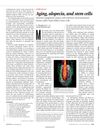
February 2016 in “Science” The document concludes that both internal stem cell factors and external influences like the environment and hormones affect hair loss and aging, with potential treatments focusing on these areas.
22 citations
,
January 2009 in “Advances in experimental medicine and biology” FOXN1 mutations cause severe immunodeficiency, hair loss, nail issues, and thymus defects.
20 citations
,
August 2020 in “Stem Cell Research & Therapy” miR-150 helps blood vessel cells develop and speeds up blood clot healing.
 17 citations
,
June 2017 in “Gene”
17 citations
,
June 2017 in “Gene” A rare genetic mutation found in an Indian family can be detected through prenatal screening.
1 citations
,
April 2008 in “Pigment Cell & Melanoma Research” Foxn1 is essential for hair pigmentation by directing pigment transfer to hair cells.
 December 2022 in “Scientific Reports”
 Stem cells from whiskers can be transplanted to stimulate hair growth.
A rare genetic mutation causes severe immune issues, hair loss, and nail problems.
 November 2020 in “International journal of contemporary pediatrics”
 Two siblings had a rare immune disorder caused by a FOXN1 gene mutation.
 April 2018 in “Journal of Investigative Dermatology”
 NDRG1 protein helps infantile hemangioma, a common infant tumor, to grow, and its mismanagement by FOXO1 protein plays a big role in causing the tumor.
 May 2021 in “Experimental Cell Research”
 FOXC1 boosts SFRP1 in hair loss, suggesting new treatments.
January 2007 in “Queen Mary Research Online (Queen Mary University of London)” GLI and EGF signalling affect Basal Cell Carcinoma development and could be therapeutic targets.
 21 citations
,
November 2010 in “Journal of molecular medicine”
21 citations
,
November 2010 in “Journal of molecular medicine” FoxN1 gene is essential for proper thymus structure and preventing hair loss.
 17 citations
,
June 2019 in “The journal of immunology/The Journal of immunology”
17 citations
,
June 2019 in “The journal of immunology/The Journal of immunology” A specific DNA region is crucial for Foxn1 gene expression in thymus cells but not in hair follicles.
 January 2025 in “Frontiers in Cell and Developmental Biology”
 Hox proteins help maintain keratinocyte identity by regulating miRNA expression.
 87 citations
,
September 2014 in “International Journal of Molecular Sciences”
87 citations
,
September 2014 in “International Journal of Molecular Sciences” FOXO1 is important for wound healing, but its dysfunction in diabetes can slow the healing process.