September 2025 in “Genes” Certain gene variations in Jiangnan cashmere goats are linked to important traits like birth weight and fiber quality, useful for breeding.
28 citations
,
November 2013 in “Cell and Tissue Research” January 2000 in “Medical Entomology and Zoology” 23 citations
,
April 2010 in “Comparative Biochemistry and Physiology Part C Toxicology & Pharmacology” The piRNA pathway genes are crucial in early development and may influence sex differentiation through hormone regulation.
April 2021 in “The journal of investigative dermatology/Journal of investigative dermatology” CTCF protein is essential for skin and hair follicle development in mice.
19 citations
,
November 2012 in “Cell Communication and Signaling” FGF-9 speeds up the early development of certain organs, showing potential for organ regeneration.
10 citations
,
October 2018 in “Journal of molecular and cellular cardiology/Journal of Molecular and Cellular Cardiology” The gene NM_026333 slows down aging by affecting the NCX1 pathway and could be targeted for anti-aging treatments.
 May 2025 in “Science Advances”
 PIEZO1 helps keep hair follicle stem cells inactive, affecting hair growth.
22 citations
,
October 2004 in “Journal of Investigative Dermatology” The gene causing hair loss and heart issues in rough coat mice is still unknown.
January 2024 in “Neuroscience Applied” Oxytocin receptor changes in hair cells may help identify autism, especially in males.
67 citations
,
December 2011 in “Stem Cells and Development” NADPH oxidase 4 is key for stem cell activity and growth under low oxygen.
 17 citations
,
June 2011 in “The journal of investigative dermatology/Journal of investigative dermatology”
17 citations
,
June 2011 in “The journal of investigative dermatology/Journal of investigative dermatology” The G60S Connexin43 mutation causes hair growth issues and poor hair quality in mice, similar to human ODDD patients.
3 citations
,
July 2017 in “Endogenous locus-driven H-Ras G12V expression induces senescence-like phenotype in primary fibroblasts of the Costello syndrome mouse model” Mouse hair follicle stem cells have a flexible chromatin state that supports skin health and hair growth.
 15 citations
,
June 2019 in “eLife”
15 citations
,
June 2019 in “eLife” Activin A and follistatin control when hair cells develop in mouse ears.
 40 citations
,
November 1998 in “The journal of investigative dermatology/Journal of investigative dermatology”
40 citations
,
November 1998 in “The journal of investigative dermatology/Journal of investigative dermatology” S100A3 protein is crucial for hair shaft formation in mice.
46 citations
,
August 2006 in “Mechanisms of Development” Runx1 is crucial for proper hair structure and development.
 9 citations
,
January 2005 in “Pediatric Dermatology”
9 citations
,
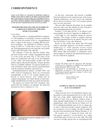
January 2005 in “Pediatric Dermatology” Fox Fordyce disease can occur in prepubertal girls and may be underdiagnosed.
August 2009 in “Mechanisms of Development”  April 2018 in “Journal of Investigative Dermatology”
 Ovol2 is important for proper skin healing and hair growth.
 24 citations
,
July 2018 in “Stem cells”
24 citations
,
July 2018 in “Stem cells” Runx1 controls fat-related genes important for normal and cancer cell growth, affecting skin and hair cell behavior.
 February 2025 in “FASEB BioAdvances”
 Verteporfin reduces growth and stem cell traits in rat hair follicle cells by blocking the Hippo pathway.
Activin A increases inner ear hair cell development, while follistatin decreases it.
7 citations
,
January 2024 in “Cancer Research Communications” TAp63 and NRF2 work together to manage oxidative stress, preventing premature aging and aiding skin functions.
7 citations
,
October 2022 in “Development” Overactive Wnt5a disrupts hair follicle orientation in mice.
158 citations
,
December 2002 in “Development” Msx2-deficient mice experience irregular hair growth and loss due to disrupted hair cycle phases.
 17 citations
,
January 2019 in “Journal of cancer”
17 citations
,
January 2019 in “Journal of cancer” The formula YH0618 can reduce the harmful side effects of the chemotherapy drug Doxorubicin and protect healthy cells.
3 citations
,
June 2021 in “Frontiers in genetics” The protein STAT3 slows down cell growth by blocking the FST gene, which affects hair development in sheep.
79 citations
,
January 2002 in “Nucleic Acids Research” BMP-2 activates the Dlx3 gene in mouse skin cells, important for hair and skin development.

Ovol2 is crucial for hair growth and skin healing by controlling cell movement and growth.
FoxA is crucial for pharynx regeneration in planarian flatworms.