 17 citations
,
June 1996 in “The Journal of Steroid Biochemistry and Molecular Biology”
17 citations
,
June 1996 in “The Journal of Steroid Biochemistry and Molecular Biology” FCE 28260 is a stronger and longer-lasting inhibitor of 5α-reductase than finasteride, which may make it a better treatment for certain medical conditions.
 March 2025 in “Journal of Clinical Medicine”
 Frontal fibrosing alopecia in men is often misdiagnosed and needs better diagnostic criteria and treatment strategies.
 8 citations
,
December 2017 in “Journal of The American Academy of Dermatology”
8 citations
,
December 2017 in “Journal of The American Academy of Dermatology” The authors updated the criteria for diagnosing frontal fibrosing alopecia, making it easier to diagnose without a biopsy.
 April 2023 in “Journal of Investigative Dermatology”
 POUF51 and HES3 are key in controlling stem cell numbers in psoriasis.
 5 citations
,
June 2023 in “BMC genomics”
5 citations
,
June 2023 in “BMC genomics” A specific gene mutation causes long hair in Angora rabbits.
18 citations
,
January 2021 in “Skin Research and Technology” High-frequency ultrasound effectively measures basal cell carcinoma depth.
 27 citations
,
January 2006 in “Dermatologic Surgery”
27 citations
,
January 2006 in “Dermatologic Surgery” The SAFE System for hair transplants results in low damage to follicles and could make the procedure suitable for more patients.
 4 citations
,
January 2016 in “International journal of reproduction, contraception, obstetrics and gynecology”
4 citations
,
January 2016 in “International journal of reproduction, contraception, obstetrics and gynecology” A certain genetic variation is linked to a higher risk of polycystic ovarian syndrome.
 14 citations
,
November 2020 in “International Journal of Biological Macromolecules”
14 citations
,
November 2020 in “International Journal of Biological Macromolecules” Mushroom-based scaffolds help heal skin wounds and regrow hair.
1 citations
,
March 2024 in “Genes & Diseases” EBF1 controls hair type and length.
June 2026 in “British Journal of Dermatology” Frontal fibrosing alopecia is linked to thyroid disease, lupus, vitiligo, and heart disease.
 July 2015 in “Journal of the Dermatology Nurses’ Association”
 A 66-year-old woman experienced hair loss due to Frontal Fibrosing Alopecia, a condition with no consistently effective treatment, but it usually stabilizes over time. More research is needed for better understanding and treatment options.
 August 2025 in “Journal of Applied Pharmaceutical Research”
 F4 and F6 hair gels showed promise for improving hair care but need more testing.
 1 citations
,
July 2016 in “British Journal of Dermatology”
1 citations
,
July 2016 in “British Journal of Dermatology” Men with a certain type of hair loss often use facial moisturizers, and a specific antibiotic treatment may help another hair condition.
 August 2023 in “Revista Contemporânea”
 Early life factors, including a mother's health and environment, can affect the chances of developing polycystic ovary syndrome later in life.
 6 citations
,
February 2023 in “Journal of nanobiotechnology”
6 citations
,
February 2023 in “Journal of nanobiotechnology” The new anti-acne treatment HA-P5 effectively reduces acne by targeting two key receptors and avoids an enzyme that can hinder treatment.
 23 citations
,
May 2020 in “Cell Death and Disease”
23 citations
,
May 2020 in “Cell Death and Disease” Blocking the FGF5 gene in sheep leads to more fine wool and active hair follicles due to changes in certain cell signaling pathways.
 February 2011 in “Journal of the American Academy of Dermatology”
 A 60-year-old man with a long-term balding condition also developed a rare hair loss condition usually seen in postmenopausal women.
The protein's size was reduced, but more work is needed to confirm its function.
 April 2012 in “Informa Healthcare eBooks”
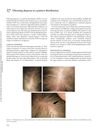
 Fibrosing alopecia in a pattern distribution is a unique hair loss condition with inflammation and scarring, resembling but distinct from common balding.
 July 2021 in “British Journal of Dermatology”
 A woman with systemic sclerosis developed a unique scarring hair loss combining features of systemic sclerosis and frontal fibrosing alopecia.
 5 citations
,
October 2020 in “Brain Research Bulletin”
5 citations
,
October 2020 in “Brain Research Bulletin” Etifoxine, an anxiety drug, can lessen brain inflammation and cognitive issues in mice, partly by increasing production of protective brain steroids.
7 citations
,
August 2019 in “American Journal of Dermatopathology” Frontal fibrosing alopecia on limbs shows permanent inflammatory hair loss, not typical scarring.
Suppressing ODC activity reduces tumor growth in hair follicles.
22 citations
,
December 2020 in “mSphere” A fungal enzyme was used to make compounds more soluble, aiding drug discovery and crop protection.
 6 citations
,
June 2021 in “Developmental biology”
6 citations
,
June 2021 in “Developmental biology” Dermal EZH2 controls skin cell development and hair growth in mice.
November 2025 in “Contact Dermatitis” Avoiding salicylates improved skin issues and stabilized hair loss in a woman with frontal fibrosing alopecia.
 4 citations
,
April 2018 in “Biotechnology Letters”
4 citations
,
April 2018 in “Biotechnology Letters” Human growth factor 20 can boost mouse whisker growth.
August 2016 in “Journal of Investigative Dermatology” EZH2 is essential for hair growth and skin cell development.
12 citations
,
August 2004 in “Veterinary Dermatology” Fipronil effectively treats Lynxacarus radovskyi in outdoor cats.