47 citations
,
November 2000 in “Archives of dermatology” Pulsed infrared laser can effectively reduce symptoms of pseudofolliculitis barbae.
 April 2018 in “Journal of Cosmetic and Laser Therapy”
 The editorial introduces studies on various cosmetic and laser treatments, their effectiveness, and posttreatment care.
 January 2024 in “RSC pharmaceutics”
 Removing the outer skin layer increases drug absorption and offers non-invasive treatment options, with some methods allowing for quick skin recovery.
26 citations
,
January 2012 in “Journal of the American Academy of Dermatology” Eflornithine cream makes laser hair removal more effective for treating pseudofolliculitis barbae.
7 citations
,
January 2003 in “Journal of cosmetic and laser therapy” The filterless flashlamp-based system effectively delays hair regrowth and improves skin condition.
27 citations
,
July 2013 in “The journal of investigative dermatology/Journal of investigative dermatology” Lasers have become precise tools in skin treatment and diagnosis, with ongoing advancements improving their effectiveness.
 February 2009 in “Journal of The American Academy of Dermatology”
 Fractional infrared technology is effective and safe for treating cervical laxity.
7 citations
,
August 2024 in “Skin Research and Technology” The study's findings are unreliable due to retraction.
 April 2019 in “Journal of Investigative Dermatology”
 Fractional photothermolysis helps wounds heal with minimal scarring.
 10 citations
,
January 2007 in “Journal of cosmetic and laser therapy”
10 citations
,
January 2007 in “Journal of cosmetic and laser therapy” The IPL device is safe, effective, and has high patient satisfaction for hair removal.
1 citations
,
May 2017 in “Journal of cosmetic and laser therapy” Lasers can help reduce skin side effects from cancer treatment.
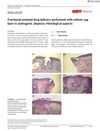 January 2021 in “Dermatologic Therapy”
 Channels stay open for 24 hours, making laser treatment potentially effective for hair loss.
11 citations
,
August 2022 in “Journal of Investigative Dermatology” October 2006 in “Dermatologic Surgery” Combining eflornithine cream with laser therapy effectively reduces unwanted facial hair in women.
April 2025 in “ALEXMED ePosters” Combining nanofat with FUE improves scar appearance and function better than FUE alone.
 73 citations
,
April 1999 in “Dermatologic Clinics”
73 citations
,
April 1999 in “Dermatologic Clinics” Lasers and light sources can effectively remove hair, work best on fair skin with dark hair, and usually need multiple treatments.
 28 citations
,
February 2021 in “Dermatologic Surgery”
28 citations
,
February 2021 in “Dermatologic Surgery” Radiofrequency microneedling is an effective and safe treatment for various skin conditions and works well with other treatments and on darker skin.

The 1550 nm fractional Er:Glass laser improved hair regrowth in patients with androgenic alopecia, but didn't significantly change collagen type I, skin fibroblasts, or macrophages. More research is needed for optimal results.
 22 citations
,
June 2002 in “Seminars in cutaneous medicine and surgery”
22 citations
,
June 2002 in “Seminars in cutaneous medicine and surgery” Laser hair removal works well for people with dark hair and light skin, but it's less effective for light hair or dark skin; improvements are expected.
7 citations
,
June 2024 in “Skin Research and Technology” Combining treatments significantly reduces dark circles and wrinkles better than nanofat alone.
 2 citations
,
December 2019 in “Electronic Journal of General Medicine”
2 citations
,
December 2019 in “Electronic Journal of General Medicine” Combining microfocused ultrasound with PRP-therapy improves skin quality and patient satisfaction more than ultrasound alone.
1 citations
,
November 2016 in “Experimental and Therapeutic Medicine” Low-dose 800 nm laser effectively treats blackheads and coarse pores without harming cell growth.
 4 citations
,
January 2002 in “Journal of Cosmetic Dermatology”
4 citations
,
January 2002 in “Journal of Cosmetic Dermatology” Long-pulsed ruby laser effectively reduces hair in male-to-female transsexuals.
85 citations
,
November 2004 in “Journal of the American Academy of Dermatology” The 308-nm excimer laser helps hair regrowth in some alopecia areata cases but not all.
28 citations
,
December 1999 in “British Journal of Plastic Surgery”  January 2019 in “Chulalongkorn Medical Journal”
 Using a special laser and platelet-rich plasma together is safe and improves hair growth in men with hair loss.
May 2026 in “Cell Reports Medicine” FR-1 reduces skin scarring and promotes healing without harmful effects.
 9 citations
,
July 2022 in “Dermatology and Therapy”
9 citations
,
July 2022 in “Dermatology and Therapy” The laser treatment effectively and safely improved keratosis pilaris.
8 citations
,
May 2004 in “Facial plastic surgery clinics of North America” Laser hair removal is now more effective, but the best treatment schedule is still uncertain.
25 citations
,
January 1999 in “Journal of cutaneous laser therapy” Diode laser effectively treats pseudofolliculitis barbae.