November 2025 in “Free Radical Biology and Medicine” SOD1 and KL are promising targets for new hair loss treatments.
May 2026 in “Free Radical Biology and Medicine”  20 citations
,
December 2000 in “Fertility and Sterility”
20 citations
,
December 2000 in “Fertility and Sterility” The N363S gene variant does not cause higher adrenal androgen levels in women with polycystic ovary syndrome.
 2 citations
,
September 2004 in “Fertility and sterility”
2 citations
,
September 2004 in “Fertility and sterility” High androgen levels can cause excessive hair growth and may indicate serious health issues, including heart disease and fertility problems.
 233 citations
,
November 2002 in “The journal of investigative dermatology/Journal of investigative dermatology”
233 citations
,
November 2002 in “The journal of investigative dermatology/Journal of investigative dermatology” Creating stronger blockers for skin enzymes might lead to better treatment for conditions like acne and excessive hair growth.
 40 citations
,
January 1994 in “Skin Pharmacology and Physiology”
40 citations
,
January 1994 in “Skin Pharmacology and Physiology” Male hormones affect oil-producing skin cells differently based on their body location, and the drug spironolactone can reduce these effects.
 20 citations
,
January 2007 in “Fertility and Sterility”
20 citations
,
January 2007 in “Fertility and Sterility” A woman developed male traits from accidental contact with her husband's testosterone gel.
 July 2026 in “Pharmacological Reports”
 Topical latanoprost acid may help hair growth in women with hair loss.
 August 1994 in “Journal of dermatological science”
 Active oxygen scavengers can reverse the suppression of hair cell growth caused by androgens.
 August 1994 in “Journal of dermatological science”
 Mouse hair cells respond to male hormones by growing less, and this can be stopped by certain blockers.
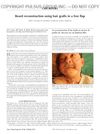 January 2011 in “Plastic Surgery”
 Hair grafts successfully restored a realistic beard and hid scars, satisfying the patient.
 March 2011 in “European Urology Supplements”
 Gene variation affects prostate issues and hair loss.
 253 citations
,
March 2006 in “The Journal of Clinical Endocrinology and Metabolism”
253 citations
,
March 2006 in “The Journal of Clinical Endocrinology and Metabolism” Exposure to too much androgen before birth might cause polycystic ovary syndrome later in life.
 99 citations
,
August 2003 in “Fertility and Sterility”
99 citations
,
August 2003 in “Fertility and Sterility” Too much male hormone is the main cause of Polycystic Ovary Syndrome.
 31 citations
,
September 2006 in “The Journal of Clinical Endocrinology & Metabolism”
31 citations
,
September 2006 in “The Journal of Clinical Endocrinology & Metabolism” Testosterone therapy may slightly improve sexual function in postmenopausal women, but its long-term safety is unknown.
 18 citations
,
December 2010 in “Journal of Trace Elements in Medicine and Biology”
18 citations
,
December 2010 in “Journal of Trace Elements in Medicine and Biology” Women with AGA have more androstenedione and dihydrotestosterone, less copper and zinc; copper imbalance affects AGA; treatment improves hormones and minerals.
 14 citations
,
September 1986 in “Archives of Dermatology”
14 citations
,
September 1986 in “Archives of Dermatology” Women with low SHBG levels and a high 3a-diol G to SHBG ratio are likely to experience female pattern baldness, possibly due to a slight excess of androgens affecting sensitive hair bulbs.
 9 citations
,
September 2015 in “Reproductive Biomedicine Online”
9 citations
,
September 2015 in “Reproductive Biomedicine Online” Longer GGN repeats in the androgen receptor gene are linked to polycystic ovary syndrome.
 February 2010 in “Journal of The American Academy of Dermatology”
 Lower nitric oxide and higher fibrinogen found in hirsute women; impaired sexual function in 22.6% of hair loss patients, linked to psoriasis severity.
 41 citations
,
November 2003 in “Annals of the New York Academy of Sciences”
41 citations
,
November 2003 in “Annals of the New York Academy of Sciences” Male hormones, or androgens, affect women's health in areas like mood and bone density, and hormone replacement therapy using antiandrogenic progestogens can improve mood disorders and alertness in menopausal women.
 196 citations
,
May 2001 in “The journal of investigative dermatology/Journal of investigative dermatology”
196 citations
,
May 2001 in “The journal of investigative dermatology/Journal of investigative dermatology” Sebocytes play a key role in controlling androgen levels in human skin.
 100 citations
,
June 2011 in “Journal of The American Academy of Dermatology”
100 citations
,
June 2011 in “Journal of The American Academy of Dermatology” 5% minoxidil foam once daily works as well as 2% minoxidil solution twice daily for female hair growth and is more convenient.
 93 citations
,
June 2001 in “The Journal of Clinical Endocrinology and Metabolism”
93 citations
,
June 2001 in “The Journal of Clinical Endocrinology and Metabolism” Certain genetic variations in the AR and ERβ genes can affect androgen levels in women.
 58 citations
,
September 1991 in “British Journal of Dermatology”
58 citations
,
September 1991 in “British Journal of Dermatology” Women with AGA often face anxiety, depression, and low self-esteem; psychological support is important.
 50 citations
,
July 2000 in “Dermatologic Surgery”
50 citations
,
July 2000 in “Dermatologic Surgery” Female and male AGA are different diseases.
 48 citations
,
May 2015 in “PLOS ONE”
48 citations
,
May 2015 in “PLOS ONE” DNA variants can predict male pattern baldness, with higher risk scores increasing baldness likelihood.
 47 citations
,
December 2000 in “Archives of Dermatological Research”
47 citations
,
December 2000 in “Archives of Dermatological Research” Androgens significantly affect female hair loss, and hormonal treatments may help.
 44 citations
,
January 2013 in “International Journal of Trichology”
44 citations
,
January 2013 in “International Journal of Trichology” Finasteride 5 mg/day effectively treats hair loss in postmenopausal women without hyper-androgenism.
 43 citations
,
January 2016 in “International Journal of Andrology”
43 citations
,
January 2016 in “International Journal of Andrology” Finasteride caused long-term sexual and non-sexual side effects in young men with hair loss.
 21 citations
,
October 2009 in “Dermatology”
21 citations
,
October 2009 in “Dermatology” Men with male pattern hair loss have different levels of certain hormones compared to men without hair loss.