 23 citations
,
October 2018 in “Australasian Journal of Dermatology”
23 citations
,
October 2018 in “Australasian Journal of Dermatology” The current understanding of frontal fibrosing alopecia involves immune, genetic, hormonal factors, and possibly environmental triggers, but more research is needed for effective treatments.
Managing telogen effluvium is challenging due to limited scientific evidence.
 33 citations
,
June 2016 in “Pediatric Dermatology”
33 citations
,
June 2016 in “Pediatric Dermatology” Some congenital hair disorders improve in childhood or with treatments like minoxidil and retinoids, while others like Netherton syndrome and trichothiodystrophy have a poor prognosis.
37 citations
,
October 2015 in “PeerJ” Perming significantly changes hair's molecular structure, while shampoo and conditioner do not.
 January 2005 in “Seibutsu Butsuri/Seibutsu butsuri”
 Chemical treatments damage hair more than UV exposure, making it thinner and less flexible.
7 citations
,
October 2022 in “Development” Overactive Wnt5a disrupts hair follicle orientation in mice.
 1 citations
,
July 2022 in “Clinical and Experimental Dermatology”
1 citations
,
July 2022 in “Clinical and Experimental Dermatology” Menopause can cause hair problems.
 63 citations
,
October 2011 in “Archives of Dermatology”
63 citations
,
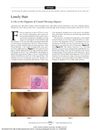
October 2011 in “Archives of Dermatology” Isolated long hairs at the original hairline can help diagnose Frontal Fibrosing Alopecia.
January 2016 in “Indian dermatology online journal” Frontal fibrosing alopecia causes hair loss at the front hairline, and no effective treatment exists.
 July 2018 in “Elsevier eBooks”
 Stopping tight hairstyles can prevent and reduce traction alopecia.
 1 citations
,
January 2009 in “Journal of S C C J”
1 citations
,
January 2009 in “Journal of S C C J” Changing disulfide bonds in human hair affects its melting behavior and thermal stability.
 4 citations
,
August 1978 in “PubMed”
4 citations
,
August 1978 in “PubMed” Many women's hair loss is due to health issues, medication, nutrition, or stress.

Modern hair styling products don't repair hair but improve its surface and stability.
17 citations
,
June 2016 in “Archives de Pédiatrie” Frontal fibrosing alopecia can occur in children, not just postmenopausal women.
10 citations
,
January 1925 in “Archives of Dermatology” Trichostasis spinulosa is a rare skin condition with hair-filled plugs in hair follicles.
 2 citations
,
April 2017 in “Actas Dermo-Sifiliográficas”
2 citations
,
April 2017 in “Actas Dermo-Sifiliográficas” Best treatment for Frontal Fibrosing Alopecia is 5-alpha-reductase inhibitors and intralesional corticosteroids.
 1 citations
,
April 2023 in “Langmuir”
1 citations
,
April 2023 in “Langmuir” Damaged hair allows water to penetrate more easily, and fatty acids from shampoos can deposit on hair surfaces.
 May 2026 in “Zenodo (CERN European Organization for Nuclear Research)”
 The herbal cream effectively smooths and straightens hair safely.
 2 citations
,
July 2022 in “Frontiers in Medicine”
2 citations
,
July 2022 in “Frontiers in Medicine” The cause of Frontal fibrosing alopecia, a type of hair loss, is complex, likely involving immune responses and genetics, but is not fully understood.
December 2023 in “JEADV Clinical Practice” Brownish halos around axillary hair can help diagnose frontal fibrosing alopecia.
 April 2012 in “Informa Healthcare eBooks”
 Telogen effluvium is a common hair loss condition where many hairs enter the resting phase, often not noticeable until significant loss occurs, and treatment focuses on the underlying cause.
November 2024 in “International Journal of Women’s Dermatology” Frontal fibrosing alopecia in Bogotá mainly affects postmenopausal women, with possible links to hormonal changes and sunscreen use.
 29 citations
,
February 2013 in “Proceedings of the National Academy of Sciences of the United States of America”
29 citations
,
February 2013 in “Proceedings of the National Academy of Sciences of the United States of America” Loss of Fz6 disrupts hair follicle and associated structures' orientation.
 26 citations
,
June 2018 in “Australasian Journal of Dermatology”
26 citations
,
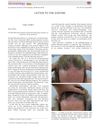
June 2018 in “Australasian Journal of Dermatology” Stopping sunscreen use on the forehead led to hair regrowth in a woman with frontal fibrosing alopecia.
 1 citations
,
May 2024 in “Dermatology and Therapy”
1 citations
,
May 2024 in “Dermatology and Therapy” Frontal Fibrosing Alopecia needs better diagnostics and treatments, with dutasteride showing promise.
 November 2022 in “Research Square (Research Square)”
 Using facial sunscreen and moisturizer may increase the risk of frontal fibrosing alopecia.
1 citations
,
January 2006 High temperatures and cosmetic processes can damage hair keratin, affecting its structure and strength.
September 2021 in “CRC Press eBooks” Traumatic alopecia causes hair loss from pulling or rubbing, leading to broken hairs and changes in the scalp.
 14 citations
,
January 2006 in “Australasian journal of dermatology”
14 citations
,
January 2006 in “Australasian journal of dermatology” Alopecia areata can look like frontal fibrosing alopecia, making diagnosis hard.
3 citations
,
March 2010 in “International Journal of Cosmetic Science” Functionalized silicones improve hair appearance, combing, and manageability.