Search
forProducts matching "frizziness"
Tracking 2 products like 759 L LUSETA Argan Oil Hair Serum, 100% Pure Argan Oil for Frizzy Control Dry Damage and 205 2x Organic Rosemary Essential Oil For Hair Growth from by companies like Amazon and ZeeMoreUncle. View all 2 products »
Sort by
Research
150-180 / 1000+ results
research Clinicopathological Features of Frontal Fibrosing Alopecia (FFA) in 26 females: A Retrospective Study
Frontal fibrosing alopecia mainly affects women over 50, causing hair loss and specific skin changes.
research Alfatradiol/minoxidil/trichofoam
research The twisting tale of woolly hair: a trait with many causes
New genes linked to woolly hair have been found, which could help treat it and change hair texture.
research Microscopic Hair Changes Associated with Hair Coloring, Hair Waving and Hair Ironing in Iranian Women
Hair coloring, waving, and ironing cause more hair damage than not using these treatments.
research Effects of permanent waving on changes of protein and physicomorphological properties in human head hair.
Repeated digital perming with sodium thioglycolate lotion significantly damages hair protein and structure.
research Towards a Better Physical Understanding of Human Hair : Development of Fiber Tribology-Methods at the Micro- and Nanoscale
Polyquaternium-87 reduces hair friction the most among tested polymers.
research Telogen Effluvium

research Telogen effluvium cronico
Chronic telogen effluvium is a condition where there is prolonged shedding of hair.
research J. Cosmet. Sci., 59, 203-215 (May/June 2008) �Effects of permanent waving on changes of protein and physicomorphological properties in human head hair
Permanent waving damages hair protein and weakens hair, especially with repeated treatments using sodium thioglycolate.
research An Examination of the Potential Hair Damage Caused by Coconut Oil’s Dark Side
Coconut oil can damage hair by clogging pores, causing frizz, and disrupting moisture balance.
research Frontal Fibrosing Alopecia
Frontal fibrosing alopecia is a scarring hair loss condition mainly affecting postmenopausal women, with unclear causes.
research FFA Patient Profile Analysis Based on the Authors’ Observations and a Review of the Literature—An Original Survey
Frontal fibrosing alopecia often occurs after menopause, with delayed diagnosis and possible links to certain medications and conditions.

research Frontal fibrosing alopecia in postmenopausal women
Some postmenopausal women with frontal fibrosing alopecia stopped losing hair with finasteride treatment, hinting at a possible hormonal cause.
research Trichoscopic Findings of Frontal Fibrosing Alopecia
Trichoscopy is useful for diagnosing Frontal Fibrosing Alopecia.
research Bubble Hair and the Usefulness of Trichoscopy
Bubble hair damage is caused by high heat from styling tools, and trichoscopy helps diagnose it.
research Stiffness of Human Hair Correlates with the Fractions of Cortical Cell Types
Hair stiffness is higher when it has more para-like cortical cells.
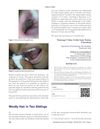
research Woolly Hair in Two Siblings
Two siblings have a rare genetic condition causing curly, coarse hair.
research Frontalna fibrozirajuća alopecija
Early diagnosis and treatment of frontal fibrosing alopecia are crucial to prevent permanent hair loss.
research Steven Kossards postmenopausal frontal fibrosing alopecia (PFFA)--a therapeutic dilemma.
Current treatments for postmenopausal frontal fibrosing alopecia stop hair loss but don't regrow hair.
research Measuring Hair
Hair conditioner makes wet hair easier to comb by reducing friction.
research Frontal fibrosing alopecia: A multicenter review of 355 patients
Most patients with frontal fibrosing alopecia are postmenopausal women, and treatments like finasteride and dutasteride can improve or stabilize the condition.
research 283 Thermal imaging and trichoscopy for detecting inflammation in frontal fibrosing alopecia
Thermal imaging is a useful non-invasive method to diagnose active inflammation in frontal fibrosing alopecia.
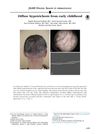
research Diffuse hypotrichosis from early childhood
The girl has a genetic hair condition causing thin hair since childhood.

research Chemical relaxers and curlers: Hidden danger
Continuous use of hair relaxers and curlers can cause hair loss, dryness, dandruff, thinning, greying, and split ends.
research Stress And Hair Loss in Miami .108
research ESDR382 - Environmental pathobiology of frontal fibrosing alopecia (FFA): Does linalool promote FFA development and progression by inducing epithelial hair follicle stem cell damage and MICA expression in the bulge?
Linalool in personal care products may worsen frontal fibrosing alopecia by damaging hair follicle stem cells and triggering harmful immune responses.
research Failure of intercellular adhesion in hair fibers with regard to hair condition and strain conditions
Hair breaks differently when wet or dry and is affected by its condition and treatments like perms and bleaching.
research Structural analysis of human hair single fibres by scanning microbeam SAXS
Hair curliness is due to uneven distribution of different cortices within the hair fiber.
research Spontaneous Super-Contraction of Animal Hair
Animal hair can curl tightly on its own, especially in foxes, due to changes in keratin.