 8 citations
,
April 2001 in “Dermatologic Surgery”
8 citations
,
April 2001 in “Dermatologic Surgery” Michael L. Beehner proposed a standardized way to describe balding areas on the scalp to help hair restoration experts communicate better.
 April 2001 in “Dermatologic Surgery”
 Michael L. Beehner proposed a standardized naming system for balding scalp areas to help hair restoration surgery.
 12 citations
,
March 2013 in “Cancer Causes & Control”
12 citations
,
March 2013 in “Cancer Causes & Control” Early balding, especially frontal, increases prostate cancer risk; more research needed.
 9 citations
,
January 2014 in “Medical Hypotheses”
9 citations
,
January 2014 in “Medical Hypotheses” Higher DHT in male baldness may protect against prostate cancer.
 1 citations
,
September 2020 in “Journal of Dermatological Science”
1 citations
,
September 2020 in “Journal of Dermatological Science” The gene LRRC15 is more active in balding areas of the scalp compared to non-balding areas.
 1 citations
,
August 2013 in “Journal of the National Cancer Institute”
1 citations
,
August 2013 in “Journal of the National Cancer Institute” Early hair loss may increase the risk of prostate cancer, especially in African American men and those with frontal baldness.
 November 2022 in “Journal of the Endocrine Society”
 Taking biotin can lead to incorrect low results in free testosterone tests.
April 2021 in “Sri Lanka Journal of Diabetes Endocrinology and Metabolism” Giant pituitary macroadenomas causing Cushing disease are rare and may need extra treatment if surgery fails.
 November 2018 in “Endocrine Abstracts”
 A woman's high testosterone levels were caused by a rare ovarian tumor, not the initially diagnosed condition.
 April 2012 in “The Journal of Urology”
 Eating more omega-3 and less omega-6 fatty acids may lower the risk of developing prostate cancer.
 2 citations
,
July 2018 in “Journal of Cosmetic Dermatology”
2 citations
,
July 2018 in “Journal of Cosmetic Dermatology” Common latent viruses might contribute to male-pattern baldness by disrupting cell processes that normally suppress hair loss-related proteins.
 December 2025 in “Zenodo (CERN European Organization for Nuclear Research)”
 Hair loss is caused by mechanical, thermal, and metabolic factors, not just hormones.
 August 2007 in “CRC Press eBooks”
 Hair loss is mainly caused by a testosterone byproduct, and hair restoration surgery uses hair from the back and sides of the scalp.
July 2022 in “Journal of Investigative Dermatology” TRPS1 loss in balding scalp areas contributes to hair loss in androgenic alopecia.
 3 citations
,
February 2009 in “Journal of The European Academy of Dermatology and Venereology”
3 citations
,
February 2009 in “Journal of The European Academy of Dermatology and Venereology” Sparse hairs below frontal hairline can indicate early male balding.
 February 2011 in “Journal of the American Academy of Dermatology”
 A 60-year-old man with a long-term balding condition also developed a rare hair loss condition usually seen in postmenopausal women.
 December 2023 in “Scientific Reports”
 Scientists created cell lines from balding patients and found that cells from the front of the scalp are more affected by hormones that cause hair loss than those from the back.
 2 citations
,
January 2020 in “Journal of The European Academy of Dermatology and Venereology”
2 citations
,
January 2020 in “Journal of The European Academy of Dermatology and Venereology” Balding men have harder scalps.
 June 2016 in “Experimental Dermatology”
 Changing hair follicle identity could potentially reverse balding.
4 citations
,
January 2018 in “Annals of dermatology/Annals of Dermatology” Hair transplantation successfully treated hair loss in a patient with Trichorhinophalangeal syndrome.
 September 1997 in “Dermatologic Surgery”
 The article concludes that uniform density hair restoration is generally preferred for its natural look, but the best approach depends on the individual's characteristics and preferences.
 March 2017 in “Journal of Dermatology”
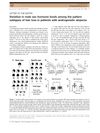
 Different hair loss patterns may be linked to varying male hormone levels.
 4 citations
,
February 2022 in “International Journal of Molecular Sciences”
4 citations
,
February 2022 in “International Journal of Molecular Sciences” Myotonic Dystrophy may age cells faster, and drugs that target aging could be potential treatments.
 9 citations
,
November 1993 in “Journal of The American Academy of Dermatology”
9 citations
,
November 1993 in “Journal of The American Academy of Dermatology” Some men can have female pattern baldness without hormonal abnormalities or signs of feminization.
 3 citations
,
March 1998 in “Aesthetic Surgery Journal”
3 citations
,
March 1998 in “Aesthetic Surgery Journal” Experts suggest various surgical methods for hair restoration, including scalp reduction, transplantation using minigrafts, and establishing a permanent frontal hairline with follicular units. The drug finasteride may also be used alongside these procedures.
 1 citations
,
September 1997 in “PubMed”
1 citations
,
September 1997 in “PubMed” The uniform density approach in hair restoration is less noticeable in situations like wind or exercise.
 21 citations
,
March 2013 in “Cancer Epidemiology, Biomarkers & Prevention”
21 citations
,
March 2013 in “Cancer Epidemiology, Biomarkers & Prevention” Early-onset baldness is linked to a higher risk of aggressive prostate cancer in African-American men, especially before age 60.
 1 citations
,
May 2017 in “InTech eBooks”
1 citations
,
May 2017 in “InTech eBooks” Hair loss in Androgenetic alopecia (AGA) is due to altered cell sensitivity to hormones, not increased hormone levels. Hair growth periods shorten over time, causing hair to become thinner and shorter. This is linked to miscommunication between cell pathways in hair follicles. There's also a change in gene expression related to blood vessels and cell growth in balding hair follicles. The exact molecular causes of AGA are still unclear.
January 2006 in “Bohn Stafleu van Loghum eBooks” Long-term use of finasteride can help treat hair loss.
 9 citations
,
June 2014 in “British Journal of Dermatology”
9 citations
,
June 2014 in “British Journal of Dermatology” The study found that balding scalps have more thin hairs and larger oil glands, which might contribute to skin conditions related to hair loss.