 July 2023 in “International journal of trichology”
 Cellcurin therapy with microneedling increases hair density and thickness in treating hair loss in men and women.
 2 citations
,
August 2013 in “Facial Plastic Surgery Clinics of North America”
2 citations
,
August 2013 in “Facial Plastic Surgery Clinics of North America” Treat the front and middle scalp before the vertex in hair transplants, aim for good density, use non-surgical options for young people, and customize treatment for natural results.
 March 2012 in “Journal of The American Academy of Dermatology”
 Dermoscopy helps diagnose different hair loss conditions, and characteristics vary among ethnicities and individual cases.
 86 citations
,
July 2002 in “Clinical and Experimental Dermatology”
86 citations
,
July 2002 in “Clinical and Experimental Dermatology” FPHL is a common, age-related, genetic hair loss with unclear causes and limited treatment options.
 42 citations
,
August 2013 in “International Journal of Women's Health”
42 citations
,
August 2013 in “International Journal of Women's Health” Female pattern hair loss is caused by multiple factors and while treatments like topical minoxidil, hormone therapy, and low-level light therapy can help, none can fully cure it.
 April 2026 in “Brazilian Journal of Hair Health”
 Combining exosomes with microneedling may improve hair growth in androgenetic alopecia.
 October 2024 in “Skin Research and Technology”
 Extracorporeal shock waves significantly improve hair growth in women with female pattern hair loss.
 42 citations
,
December 1990 in “The Journal of Dermatologic Surgery and Oncology”
42 citations
,
December 1990 in “The Journal of Dermatologic Surgery and Oncology” The study found that horizontal sections of scalp biopsies are better for analyzing hair loss, showing fewer hairs and more fine hairs in balding areas.
 4 citations
,
February 2022 in “International Journal of Molecular Sciences”
4 citations
,
February 2022 in “International Journal of Molecular Sciences” Myotonic Dystrophy may age cells faster, and drugs that target aging could be potential treatments.
6 citations
,
November 2019 in “Journal of Cosmetic Dermatology” The compound improved hair growth and reduced hair loss.
 1 citations
,
May 2015 in “Dermatologic Therapy”
1 citations
,
May 2015 in “Dermatologic Therapy” The microstrip technique for hair transplantation is effective and discreet for patients needing fewer than 1500 grafts.
 4 citations
,
May 2002 in “Dermatologic Surgery”
4 citations
,
May 2002 in “Dermatologic Surgery” The method improves natural appearance in hair restoration by properly evaluating and treating the temporal peak region.
research Hair
May 2024 in “Australasian Journal of Dermatology” Alopecia areata causes significant emotional and social challenges, especially with more hair loss.
 February 2024 in “Benha Journal of Applied Sciences”
 Androgenetic alopecia is common hair loss caused by genetics and hormones.
 January 2022 in “Clinical Cases in Dermatology”
 Stress can cause temporary hair loss, which usually gets better after the stress is gone.
Cellcurin serum significantly increased hair growth in people with androgenetic alopecia.
 May 2002 in “Dermatologic Surgery”
 The method improves natural appearance in hair restoration by properly evaluating and treating the temporal peak region.
 26 citations
,
June 2018 in “Australasian Journal of Dermatology”
26 citations
,
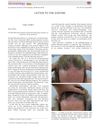
June 2018 in “Australasian Journal of Dermatology” Stopping sunscreen use on the forehead led to hair regrowth in a woman with frontal fibrosing alopecia.
 30 citations
,
December 2017 in “Clinical, Cosmetic and Investigational Dermatology”
30 citations
,
December 2017 in “Clinical, Cosmetic and Investigational Dermatology” Parietal scalp area has lower hair density and smaller hair diameter in women with hair loss.
 234 citations
,
February 2001 in “British Journal of Dermatology”
234 citations
,
February 2001 in “British Journal of Dermatology” FPHL affects hair density and diameter, causing visible hair loss in older women.
 86 citations
,
July 2012 in “British journal of dermatology/British journal of dermatology, Supplement”
86 citations
,
July 2012 in “British journal of dermatology/British journal of dermatology, Supplement” There may be a connection between Frontal Fibrosing Alopecia and Lichen Planus Pigmentosus, and more research is needed to confirm this.
 32 citations
,
September 1997 in “Dermatologic Surgery”
32 citations
,
September 1997 in “Dermatologic Surgery” Mini-micrografting in hair transplants can give similar density to older methods with fewer sessions.
 14 citations
,
January 2006 in “Australasian journal of dermatology”
14 citations
,
January 2006 in “Australasian journal of dermatology” Alopecia areata can look like frontal fibrosing alopecia, making diagnosis hard.
 12 citations
,
January 2015 in “Indian Journal of Dermatology, Venereology and Leprology”
12 citations
,
January 2015 in “Indian Journal of Dermatology, Venereology and Leprology” A mother and daughter with similar hair loss conditions and identical HLA types suggest a genetic link between the conditions.
 5 citations
,
April 2019 in “Journal of The American Academy of Dermatology”
5 citations
,
April 2019 in “Journal of The American Academy of Dermatology” Frontal Fibrosing Alopecia may be a complex condition linked to hormonal changes in women, not just a form of Lichen Planopilaris.
 1 citations
,
January 2020 in “Skin appendage disorders”
1 citations
,
January 2020 in “Skin appendage disorders” Finasteride may help treat frontal fibrosing alopecia, but more research is needed.
 1 citations
,
June 2017 in “Skin”
1 citations
,
June 2017 in “Skin” Apremilast may help treat lichen planopilaris and frontal fibrosing alopecia when other treatments fail.
 1 citations
,
March 2016 in “Journal of The American Academy of Dermatology”
1 citations
,
March 2016 in “Journal of The American Academy of Dermatology” More research needed to confirm finasteride as standard treatment for FFA.

Frontal fibrosing alopecia can be managed with personalized combination therapies, but no cure exists yet.
 November 2014 in “British Journal of Dermatology”
 Hair loss is due to thinner hairs, not less hairs; hair diameter indicates balding progression and treatment effectiveness.