 2 citations
,
September 2021 in “JAAD case reports”
2 citations
,
September 2021 in “JAAD case reports” Dupilumab helped a woman with severe hair loss regrow her hair quickly and maintain it for six months after stopping treatment.
 2 citations
,
January 2019 in “BMC Cancer”
2 citations
,
January 2019 in “BMC Cancer” Baldness may lower the risk of testicular cancer.
 1 citations
,
November 2020 in “Journal of The American Academy of Dermatology”
1 citations
,
November 2020 in “Journal of The American Academy of Dermatology” The commentary suggests that certain hair and skin care products may be linked to frontal fibrosing alopecia, but not sunscreens, and calls for more thorough research on the causes.
 1 citations
,
October 2008 in “Expert Review of Dermatology”
1 citations
,
October 2008 in “Expert Review of Dermatology” Frontal Fibrosing Alopecia is a slowly progressing hair loss condition, likely underdiagnosed, with ineffective treatments, needing more research to understand it fully.
 1 citations
,
January 2011 in “Journal of S C C J”
1 citations
,
January 2011 in “Journal of S C C J” Adenosine lotion improves hair thickness and density in women with thinning hair.
 1 citations
,
May 2002 in “British Journal of Dermatology”
1 citations
,
May 2002 in “British Journal of Dermatology” Hair loss caused by longer latent hair cycle and sudden miniaturization, not gradual follicle size reduction.
 September 2025 in “Dermatology Online Journal”
 Biopsy is crucial for diagnosing unusual hair loss causes like lymphoma.

Microneedling may improve quality of life and reduce inflammation in frontal fibrosing alopecia.
 September 2024 in “Cutis”
 Sunscreen use may increase the risk of frontal fibrosing alopecia.

The article suggests that patients with Frontal Fibrosing Alopecia may have more contact allergies, but it doesn't prove that allergies cause the condition.

Clinical signs don't match inflammation levels in lichen planopilaris and frontal fibrosing alopecia.
 January 2022 in “Дерматологія та венерологія”
 Frontal fibrosing alopecia causes hair loss along the frontal hairline, mainly in postmenopausal women, and needs better treatments.
 September 2019 in “Actas dermo-sifiliográficas/Actas dermo-sifiliográficas”
 Isotretinoin at low doses effectively treats facial papules in frontal fibrosing alopecia.

Antimalarial agents are effective for LPP, and intralesional steroids are effective for FFA.
 April 2018 in “Journal of Investigative Dermatology”
 Macrophages are more involved in Lichen planopilaris than in Frontal fibrosing alopecia.
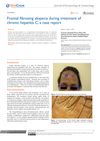 September 2017 in “Journal of Dermatology & Cosmetology”
 Hepatitis C treatment may cause frontal fibrosing alopecia.
 November 2015 in “European journal of dermatology/EJD. European journal of dermatology”
 A 55-year-old woman with several health conditions did not see hair regrowth after a transplant.
 November 2025 in “International Journal of Research in Medical Sciences”
 Unani medicine may help treat a rare, hard-to-treat hair loss pattern in children.
 May 2024 in “International Seven Journal of Multidisciplinary”
 More research is needed to better understand and treat Fibrosing Frontal Alopecia.

A 32-year-old man with early graying hair shows a unique pattern, suggesting more research is needed on why hair grays early.
 December 2023 in “EPRA international journal of multidisciplinary research”
 Alopecia areata causes sudden hair loss, has genetic links, and can be managed but not cured.
 July 2021 in “British Journal of Dermatology”
 Low testosterone levels may contribute to female pattern hair loss in men.
 February 2021 in “Dermatologic Therapy”
 Injections improve hair growth, density, and thickness in women safely.
 November 2020 in “Skin Research and Technology”
 Videodermoscopy better identifies female hair loss than clinical diagnosis.
 May 2002 in “British Journal of Dermatology”
 Hair loss caused by longer latent hair cycle and sudden miniaturization, not gradual follicle size reduction.
 13 citations
,
January 2019 in “Skin appendage disorders”
13 citations
,
January 2019 in “Skin appendage disorders” FAPD is a possible diagnosis for hair loss in patients of color and requires multiple evaluations for accurate diagnosis.
 10 citations
,
May 2020 in “Dermatology Research and Practice”
10 citations
,
May 2020 in “Dermatology Research and Practice” Proteoglycans are important for hair growth, and a specific treatment can help reduce hair loss.
 6 citations
,
December 2013 in “Journal of Cutaneous Pathology”
6 citations
,
December 2013 in “Journal of Cutaneous Pathology” Certain immune cells are more common on the top of the head and might help predict or treat common hair loss.
 October 2025 in “Journal of Bahria University Medical and Dental College”
 Free testosterone is the most common hormone marker in PCOS, and age affects DHEAS levels.
 September 2025 in “IP Indian Journal of Clinical and Experimental Dermatology”
 Minoxidil effectively treats patterned hair loss in both males and females.