 March 2025 in “Journal of Clinical Medicine”
 Frontal fibrosing alopecia in men is often misdiagnosed and needs better diagnostic criteria and treatment strategies.

Tumid lupus erythematosus can cause non-scarring hair loss on the scalp and requires careful diagnosis.
 September 2024 in “Kuban Scientific Medical Bulletin”
 Accurate diagnosis and early treatment are crucial for managing hair loss effectively.
 September 2024 in “Archiv Euromedica”
 Trichoscopy is a quick, accurate, and non-invasive method to diagnose and treat non-scarring hair loss.
 August 2024 in “EMJ Dermatology”
 Non-scarring alopecia in females affects emotional well-being and requires accurate diagnosis and personalized treatment.
July 2024 in “Clinical Case Reports” Recognizing rare hair loss patterns in young females can improve understanding and treatment.
 February 2024 in “Skin research and technology”
 The research suggests that immune cells and a specific type of cell death called ferroptosis are involved in Frontal fibrosis alopecia.
 January 2024 in “Pan African Medical Journal”
 Non-scarring hair loss is common in lupus patients and can be diagnosed with specific hair and tissue tests.
December 2023 in “JEADV Clinical Practice” Brownish halos around axillary hair can help diagnose frontal fibrosing alopecia.
 December 2023 in “EPRA international journal of multidisciplinary research”
 Alopecia areata causes sudden hair loss, has genetic links, and can be managed but not cured.
 September 2023 in “Ain Shams medical journal”
 31% of female high school students in Minia have hair loss from tight hairstyles, which can become permanent if not treated early.
September 2023 in “Journal of the American Academy of Dermatology” Alopecia, especially androgenic, may increase cardiovascular risk, but more research is needed.
September 2023 in “Journal of the American Academy of Dermatology” Low-dose oral naltrexone may help reduce inflammation in some scarring alopecia patients.
 June 2023 in “Brazilian Journal of Case Reports”
 Botulinum Toxin Type A delivered through the skin may be a promising treatment for Frontal Fibrosing Alopecia.
 November 2022 in “Skin health and disease”
 People with hair loss conditions often have more mental health issues like depression and anxiety compared to those without hair loss.
 April 2022 in “JAAD International”
 Women with frontal fibrosing alopecia have similar vitamin D levels to those with other hair loss types, suggesting vitamin D is not a key factor in this condition.
 April 2022 in “Cermin Dunia Kedokteran”
 Accurate diagnosis and understanding of alopecia areata in children are crucial for proper treatment.
 August 2021 in “Case Reports”
 A woman thought to have rosacea was actually suffering from Frontal Fibrosing Alopecia, a hair loss condition. Despite treatment, her condition didn't change, showing the importance of accurate early diagnosis.
 April 2019 in “Journal of Investigative Dermatology”
 The research found that certain characteristics like age, sex, race, marital status, and education level can influence whether alopecia patients stick to their hair loss treatment with topical minoxidil.
 May 2017 in “InTech eBooks”
 Some hair loss disorders cause permanent loss due to scarring, and treatments like steroids don't always work well.
April 2016 in “Journal of the American Academy of Dermatology” Treatment improved some symptoms but not all.
 February 2014 in “Medicine - Programa De Formación Médica Continuada Acreditado”
 The document concludes that non-scarring alopecias can be reversed, but scarring alopecias cause permanent hair loss.
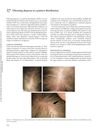 April 2012 in “Informa Healthcare eBooks”
 Fibrosing alopecia in a pattern distribution is a unique hair loss condition with inflammation and scarring, resembling but distinct from common balding.
 September 1998 in “Journal of the European Academy of Dermatology and Venereology”
 Autoimmune and inflammatory processes are involved in both scarring and non-scarring types of hair loss.
Protein profiling of forehead skin can help distinguish between frontal fibrosing alopecia and androgenetic alopecia.
21 citations
,
March 2018 in “JEADV. Journal of the European Academy of Dermatology and Venereology/Journal of the European Academy of Dermatology and Venereology” 5-alpha-reductase inhibitors may help stabilize or slow down hair loss in some frontal fibrosing alopecia patients, but more research is needed to confirm their effectiveness and safety.
 19 citations
,
June 2002 in “American Journal of Dermatopathology”
19 citations
,
June 2002 in “American Journal of Dermatopathology” Apoptosis contributes to hair loss in androgenetic alopecia.
 4 citations
,
February 2020 in “Journal of Cosmetic Dermatology”
4 citations
,
February 2020 in “Journal of Cosmetic Dermatology” Trichoscopy helps diagnose hairline recession causes in Egyptian women, with androgenetic alopecia being the most common.
 1 citations
,
March 2020 in “Australasian Journal of Dermatology”
1 citations
,
March 2020 in “Australasian Journal of Dermatology” The paper concludes that recognizing bitemporal alopecia areata is important for early treatment and preventing its progression.
 1 citations
,
April 2019 in “Journal of Investigative Dermatology”
1 citations
,
April 2019 in “Journal of Investigative Dermatology” Oral minoxidil can potentially increase hair growth in people suffering from Central Centrifugal Cicatricial Alopecia.