 56 citations
,
March 2010 in “Journal of Dermatology”
56 citations
,
March 2010 in “Journal of Dermatology” Most cases of Temporal Triangular Alopecia are found in early childhood and may be related to genetic conditions.
July 2026 in “Journal of the American Academy of Dermatology” The occipital scalp is affected in advanced hair loss, so it shouldn't be used as a control.
 149 citations
,
July 2014 in “Cold Spring Harbor Perspectives in Medicine”
149 citations
,
July 2014 in “Cold Spring Harbor Perspectives in Medicine” The dermal papilla is crucial for hair growth and health, and understanding it could lead to new hair loss treatments.
 56 citations
,
August 2005 in “Journal of Investigative Dermatology Symposium Proceedings”
56 citations
,
August 2005 in “Journal of Investigative Dermatology Symposium Proceedings” Different women's hair and skin glands respond to hormones in varied ways, which can cause unwanted hair growth even with normal hormone levels, and more research is needed to treat this effectively.
 18 citations
,
April 1986 in “International Journal of Cosmetic Science”
18 citations
,
April 1986 in “International Journal of Cosmetic Science” Minoxidil promotes hair regrowth in early baldness stages and prevents baldness in non-bald scalps.
 1 citations
,
August 2021 in “Canadian journal of neurological sciences”
1 citations
,
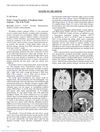
August 2021 in “Canadian journal of neurological sciences” Woodhouse-Sakati syndrome can cause writer's cramp and other varied symptoms, highlighting the importance of genetic testing for diagnosis.
 August 2025 in “International Journal of Contemporary Pediatrics”
 HLD10 can include increased body hair and Mongolian spots.

There's no clear link between female pattern hair loss, insulin resistance, and metabolic syndrome.
 33 citations
,
August 2013 in “British Journal of Dermatology”
33 citations
,
August 2013 in “British Journal of Dermatology” Lack of small, fine hair on the front hairline is a key sign of frontal fibrosing alopecia.
2 citations
,
September 2020 in “bioRxiv (Cold Spring Harbor Laboratory)” The laser system helps study brain cell functions by precisely removing specific cells and observing changes.
1 citations
,
August 2024 in “Anais Brasileiros de Dermatologia” Recognizing skin symptoms helps diagnose and treat frontal fibrosing alopecia.
January 2024 in “Revista Dermatológica Centro Uraga” Frontal fibrosing alopecia is increasingly affecting men, causing hair loss around the hairline and possibly other areas.
 3 citations
,
April 2015 in “Dermatology practical & conceptual”
3 citations
,
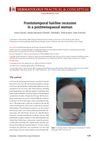
April 2015 in “Dermatology practical & conceptual” Postmenopausal women can experience hairline recession, affecting their quality of life, and more research is needed for treatments.
August 2019 in “Journal of the American Academy of Dermatology” Frontal fibrosing alopecia may be caused by an autoimmune reaction and hormonal imbalance.
 April 2018 in “Journal of Investigative Dermatology”
 Macrophages are more involved in Lichen planopilaris than in Frontal fibrosing alopecia.
 39 citations
,
July 2015 in “British Journal of Dermatology”
39 citations
,
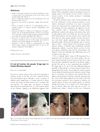
July 2015 in “British Journal of Dermatology” The pseudo 'fringe sign' can also appear in frontal fibrosing alopecia, not just in traction alopecia, showing that this condition may be more common than thought.
 May 2024 in “International Seven Journal of Multidisciplinary”
 More research is needed to better understand and treat Fibrosing Frontal Alopecia.
 November 2023 in “Indian Journal of Dermatology”
 The study found that Frontal Fibrosing Alopecia in North-East India mainly affects middle-aged women and is often associated with lichen planus pigmentosus.
January 2024 in “Updates in clinical dermatology” Frontal fibrosing alopecia is a scarring hair loss condition mainly affecting postmenopausal women, with unclear causes.
9 citations
,
April 2025 in “Psychoneuroendocrinology” The occipital region is best for measuring cortisol and cortisone, while the posterior vertex is better for OEA, SEA, and PEA.
Early diagnosis and treatment of frontal fibrosing alopecia are crucial to prevent permanent hair loss.
March 2025 in “Revista Foco” Early diagnosis of Alopecia Frontal Fibrosante is crucial for effective treatment.
 October 2020 in “International Journal of Research in Dermatology”
 The review suggests more research is needed to understand Frontal fibrosing alopecia, a condition causing hairline recession in postmenopausal women.
 1 citations
,
September 2021 in “CRC Press eBooks”
1 citations
,
September 2021 in “CRC Press eBooks” Frontal Fibrosing Alopecia is a hair loss condition mainly affecting postmenopausal women, with unclear causes and various clinical patterns.
 April 2016 in “Plastic and reconstructive surgery. Global open”
 Surgery may help infants with sagittal craniosynostosis develop more typical language processing.
 March 2026 in “Frontiers in Medicine”
 Diffuse unpatterned alopecia can affect donor areas, but treatment with finasteride and minoxidil can improve hair density.
February 2013 in “Journal of the American Academy of Dermatology”  April 2021 in “Journal of Investigative Dermatology”
 The research found genes that may protect certain scalp cells from hair loss.
October 2025 in “Diagnostics” Temporal triangular alopecia is a harmless, non-progressive hair loss condition.
January 2015 in “프로그램북(구 초록집)” Many Korean women with female-pattern hair loss have reduced hair density at the temples.