2 citations
,
January 2016 in “Dermatology online journal” A 46-year-old man was diagnosed with frontal fibrosing alopecia, a condition usually seen in postmenopausal women.
January 2022 in “Springer eBooks” January 2010 in “Springer eBooks” 4 citations
,
June 2017 in “Annales de dermatologie et de vénéréologie” The study found that a specific type of hair loss is increasingly common in premenopausal women and can be effectively diagnosed and treated with various medications.
December 2015 in “European Journal of Pediatric Dermatology” Newborns can experience temporary hair loss in bands, unrelated to sleeping position.
June 2026 in “British Journal of Dermatology” Menopause often causes hair changes, and many women need better support and information.
 January 2020 in “Revista da Sociedade Portuguesa de Dermatologia e Venereologia”
 Frontal fibrosing alopecia in Brazil mostly affects postmenopausal women, often linked with hypothyroidism and eyebrow hair loss.
 1 citations
,
January 2017 in “Yonsei Medical Journal”
1 citations
,
January 2017 in “Yonsei Medical Journal” Hair is thinner near the scalp in acute hair shedding conditions.
 5 citations
,
March 2014 in “Journal of The American Academy of Dermatology”
5 citations
,
March 2014 in “Journal of The American Academy of Dermatology” The study suggests hormonal factors may play a role in Frontal Fibrosing Alopecia and that treatments like oral antiandrogens and steroids could be beneficial.
September 2025 in “Brazilian Journal of Health Review” Early diagnosis and less aggressive hair care improve outcomes for Black women with frontal fibrosing alopecia.
 1 citations
,
October 2008 in “Expert Review of Dermatology”
1 citations
,
October 2008 in “Expert Review of Dermatology” Frontal Fibrosing Alopecia is a slowly progressing hair loss condition, likely underdiagnosed, with ineffective treatments, needing more research to understand it fully.
 4 citations
,
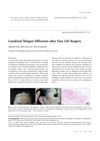
January 2015 in “Annals of Dermatology”
4 citations
,
January 2015 in “Annals of Dermatology” A woman's temporary hair loss after face lift surgery stopped on its own, and hair grew back.
 January 2015 in “Hair transplant forum international”
 The document's conclusion cannot be provided because the content is not available.
 18 citations
,
March 2016 in “Cosmetics”
18 citations
,
March 2016 in “Cosmetics” Telogen Effluvium is a condition causing excessive hair loss due to stress, illness, drugs, or hormonal changes, and can be treated with specific products or naturally resolves after 3-4 years.
 1 citations
,
January 2022 in “Skin appendage disorders”
1 citations
,
January 2022 in “Skin appendage disorders” Hair shedding after childbirth can reveal a pre-existing condition of hair loss due to tight hairstyles.
 1 citations
,
July 2023 in “Journal of the European Academy of Dermatology and Venereology”
1 citations
,
July 2023 in “Journal of the European Academy of Dermatology and Venereology” Portraits show women's hairlines have moved forward over time, suggesting changes in the occurrence of frontal hair loss.
 2 citations
,
July 2021 in “JAAD Case Reports”
2 citations
,
July 2021 in “JAAD Case Reports” Trichoscopy of the beard is useful for diagnosing frontal fibrosing alopecia in men.
 December 2025 in “Zenodo (CERN European Organization for Nuclear Research)”
 Hair loss is caused by mechanical, thermal, and metabolic factors, not just hormones.
 40 citations
,
May 2010 in “Australasian Journal of Dermatology”
40 citations
,
May 2010 in “Australasian Journal of Dermatology” Chronic hair shedding may be caused by less variation in hair growth times and might stop on its own after several years.
 May 2014 in “JAMA Dermatology”
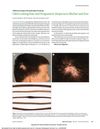
 Mother and son diagnosed with a rare genetic hair loss condition with no effective treatment.
 June 2016 in “Experimental Dermatology”
 Changing hair follicle identity could potentially reverse balding.

Telogen effluvium causes temporary hair loss, especially in women.
 18 citations
,
June 2008 in “Archives of Dermatology”
18 citations
,
June 2008 in “Archives of Dermatology” Men typically shed about 10 hairs in 60 seconds, and this amount doesn't increase with age.
 March 2025 in “Journal of Clinical Medicine”
 Frontal fibrosing alopecia in men is often misdiagnosed and needs better diagnostic criteria and treatment strategies.
 3 citations
,
March 2022 in “Annals of Medicine”
3 citations
,
March 2022 in “Annals of Medicine” Hair shedding after COVID-19 is more linked to the disease's severity and inflammation rather than hormones, with women at higher risk.
 November 2014 in “British Journal of Dermatology”
 Male hair loss is mainly due to thinner hair, not less hair.
8 citations
,
March 1990 in “Indian Journal of Dermatology Venereology and Leprology” Cutting matted hair stopped further hair loss caused by homemade shampoo.
 September 2019 in “The journal of investigative dermatology/Journal of investigative dermatology”
 Eyebrow hair transplants in patients with frontal fibrosing alopecia may look good at first but often lose the new hair after a few years.
January 2026 in “Skin Appendage Disorders” Hair shedding is common in GLP-1 users, affecting treatment adherence.
August 2019 in “Journal of the American Academy of Dermatology” Frontal fibrosing alopecia may be caused by an autoimmune reaction and hormonal imbalance.