May 2025 in “Actas Dermo-Sifiliográficas” Botulinum toxin is not effective for treating androgenetic alopecia.
 April 2021 in “Advances in Cosmetic Surgery”
 Hair restoration can be achieved through non-surgical treatments like minoxidil, antiandrogens, phototherapy, and PRP procedures, or through surgical methods like hair transplantation. Continued treatment is needed to maintain results, and full results are visible after 12-18 months.
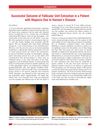 January 2021 in “Journal of Cutaneous and Aesthetic Surgery”
 Follicular unit extraction successfully restored hair growth in a leprosy patient without disease relapse.
 November 2018 in “Springer eBooks”
 The document concludes that hair transplant methods are often selected for provider convenience over patient benefit, highlighting the need for less invasive techniques and careful physician involvement for better results.
 November 2018 in “Springer eBooks”
 The document concludes that specialized hair transplant techniques can be effective, with varying success rates depending on the donor area and patient factors.
 January 2016 in “Springer eBooks”
 The document concludes that there are various causes and treatments for hair loss, with hair transplantation being a notable option.
 March 2015 in “Aesthetic Surgery Journal”
 The book is a valuable, comprehensive guide on hair transplantation, recommended for surgeons and students, with minor areas for improvement.

Robotic-assisted hair transplant is effective and less painful, but needs more evaluation for long-term results.
 153 citations
,
August 2002 in “Dermatologic Surgery”
153 citations
,
August 2002 in “Dermatologic Surgery” Follicular Unit Extraction (FUE) is a less invasive hair transplant method with minimal scarring, suitable for about 60% of patients, especially those needing fewer grafts and quicker recovery.
 32 citations
,
July 2011 in “Facial Plastic Surgery”
32 citations
,
July 2011 in “Facial Plastic Surgery” New hair transplant methods offer more natural results and better graft survival, with ongoing research to increase donor hair options.
 31 citations
,
October 2017 in “Dermatologic Surgery”
31 citations
,
October 2017 in “Dermatologic Surgery” Hair transplants look natural, but the best method is debated, and PRP shows promise for hair regrowth.
 27 citations
,
November 2008 in “Facial Plastic Surgery”
27 citations
,
November 2008 in “Facial Plastic Surgery” Follicular Unit Extraction is a less invasive hair transplant method with potential for natural results but has challenges like longer surgery time and higher cost.
 15 citations
,
January 2019 in “International Journal of Women's Dermatology”
15 citations
,
January 2019 in “International Journal of Women's Dermatology” Early treatment helps stop hair loss in women of color.
 15 citations
,
September 2016 in “Hair transplant forum international”
15 citations
,
September 2016 in “Hair transplant forum international” The "open punch" technique for hair transplantation can help reduce damage to hair grafts and may be especially useful for beginners and in cases with curly hair.
 13 citations
,
November 2018 in “Annals of Plastic Surgery”
13 citations
,
November 2018 in “Annals of Plastic Surgery” Nonshaven follicular unit extraction is a good hair transplant option that doesn't require shaving and can transplant up to 3000 grafts daily.
 13 citations
,
September 2002 in “Dermatologic Surgery”
13 citations
,
September 2002 in “Dermatologic Surgery” Effective repair of bad hair transplants requires skilled techniques and careful use of donor hair, with strategies like reimplantation and camouflage, and new methods to minimize scarring.
 13 citations
,
August 2002 in “Dermatologic Surgery”
13 citations
,
August 2002 in “Dermatologic Surgery” FUE is a less invasive hair transplant method suitable for many patients, but it has limitations and may not replace traditional techniques.
 12 citations
,
February 2007 in “Facial Plastic Surgery”
12 citations
,
February 2007 in “Facial Plastic Surgery” Hair transplantation techniques have improved over 12 years, with follicular unit grafting providing more natural results and potential future advances in automation and genetics.
 11 citations
,
January 2010 in “Indian Journal of Dermatology, Venereology and Leprology”
11 citations
,
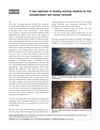
January 2010 in “Indian Journal of Dermatology, Venereology and Leprology” Hair transplant and applying 5% minoxidil solution can effectively treat permanent hair loss, but it may change hair direction in some cases.
 9 citations
,
September 2016 in “Plastic and reconstructive surgery. Global open”
9 citations
,
September 2016 in “Plastic and reconstructive surgery. Global open” The curved nonrotary punch is better for hair extraction in people with tightly curled hair.
 9 citations
,
March 2020 in “Dermatologic Surgery”
9 citations
,
March 2020 in “Dermatologic Surgery” Both Follicular Unit Transplantation (FUT) and Follicular Unit Excision (FUE) are effective hair transplant methods; the best choice depends on the patient's needs and the surgeon's preference.
 9 citations
,
January 2018 in “Hair transplant forum international”
9 citations
,
January 2018 in “Hair transplant forum international” Researchers concluded that safe hair follicle extraction limits in FUE vary by individual characteristics and proposed a method to calculate these limits to maintain appearance.
 9 citations
,
February 2013 in “Plastic and Reconstructive Surgery”
9 citations
,
February 2013 in “Plastic and Reconstructive Surgery” The article explains how to rebuild parts of the head and face and how to transplant hair to cover scars, highlighting the need for careful planning and choosing the right method for each patient.
 8 citations
,
January 2015 in “Journal of Cutaneous Medicine and Surgery”
8 citations
,
January 2015 in “Journal of Cutaneous Medicine and Surgery” Hair restoration techniques have improved but still rely on limited donor hair, with new methods like cloning and gene therapy being explored.
 8 citations
,
January 2015 in “Scars, burns & healing”
8 citations
,
January 2015 in “Scars, burns & healing” Hair transplantation effectively treats burn scar alopecia, improving self-esteem and confidence.
 7 citations
,
November 2017 in “Plastic and reconstructive surgery. Global open”
7 citations
,
November 2017 in “Plastic and reconstructive surgery. Global open” FUE and SMP together can effectively treat hair loss, needing fewer procedures.
 4 citations
,
January 2018 in “Hair transplant forum international”
4 citations
,
January 2018 in “Hair transplant forum international” The document suggests changing "Follicular Unit Extraction" to "Follicular Unit Excision" to more accurately describe the surgical hair transplant procedure.
 4 citations
,
January 2005 in “Elsevier eBooks”
4 citations
,
January 2005 in “Elsevier eBooks” Follicular Unit Transplantation is a precise hair restoration technique that requires careful planning and a skilled team, and Follicular Unit Extraction offers a less invasive option.
 3 citations
,
December 2008 in “The American Journal of Cosmetic Surgery”
3 citations
,
December 2008 in “The American Journal of Cosmetic Surgery” Hair transplantation has evolved to refined techniques like FUE and FUT, with Finasteride and Minoxidil as the only other proven treatments for hair loss.
2 citations
,
March 2023 in “Aesthetic Plastic Surgery” The new hair transplant method reduces scarring and wastage by combining two techniques.