 63 citations
,
May 2011 in “Clinical cancer research”
63 citations
,
May 2011 in “Clinical cancer research” The topical inhibitor CUR61414 was not effective in treating basal cell carcinoma in human trials.
January 2014 in “Journal of Central South University(Science and Technology)” PPCM microspheres can effectively release finasteride over 42 days.
May 2026 in “Advanced Pharmaceutical Bulletin” Black cumin oil-based carriers improve psoriasis treatment better than standard creams.
4 citations
,
October 2021 in “International Journal of Cosmetic Science” Cirsium japonicum flower extract increases melanin production and could help treat depigmentation conditions.
 2 citations
,
February 2017 in “Science”
2 citations
,
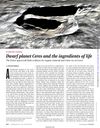
February 2017 in “Science” The Dawn spacecraft found that Ceres has complex organic molecules and a lot of water ice, hinting it might support life.
3 citations
,
January 2013 in “Journal of cosmetics, dermatological sciences and applications” HAIRCARECUBE TM (HCC) helps hair products work better by getting active ingredients deeper into the hair.
September 2025 in “Chemical Engineering Journal” A new sustainable polyester is tough, recyclable, biodegradable, and aids wound healing, supporting a circular economy.
 January 2025 in “Nanoscale”
 Boron/nitrogen-doped carbon nano-onions improve targeted breast cancer treatment by enhancing drug delivery and reducing side effects.

The treatment was ineffective in humans.
 7 citations
,
July 2018 in “International Journal of Applied Pharmaceutics”
7 citations
,
July 2018 in “International Journal of Applied Pharmaceutics” Chitosan nanoparticles are promising for sustained caffeine delivery through the skin.
 February 2026 in “Nature Synthesis”
 A new method creates unique chemical structures that could improve drug discovery.
 26 citations
,
August 2016 in “ACS Applied Materials & Interfaces”
26 citations
,
August 2016 in “ACS Applied Materials & Interfaces” A boronic acid copolymer quickly forms cell clusters, useful for tissue and tumor modeling.
2 citations
,
October 2025 in “Antimicrobial Agents and Chemotherapy” Cepharanthine can block enterovirus entry and protect against infection.
January 2026 in “AAPS PharmSciTech” Liposomal formulations with caffeine and cafestol enhance skin penetration effectively.
 43 citations
,
August 2016 in “International Journal of Nanomedicine”
43 citations
,
August 2016 in “International Journal of Nanomedicine” Eupafolin nanoparticles help protect skin cells from damage caused by air pollution.
December 2025 in “Advanced Healthcare Materials” The Spherical Skin Model improves drug and cosmetic testing by accurately mimicking human skin for efficient compound screening.
25 citations
,
January 2024 in “Journal of Lipids” Cubosomes improve drug delivery for skin and eye diseases by enhancing adhesion, retention, and release.
8 citations
,
May 2024 in “ACS Applied Materials & Interfaces” PCL nanoscaffold-based liver spheroids are effective for drug screening and studying liver toxicity.
4 citations
,
June 2022 in “ACS applied materials & interfaces” New wig coating technique makes them more durable, UV resistant, and less static.
Encapsulating curcumin in nanoparticles improves its stability, release, and absorption in the body.
September 2025 in “Journal of Polymer Science” Functionalized bacterial cellulose can improve medical tissue engineering.
 15 citations
,
January 2022 in “Journal of Oleo Science”
15 citations
,
January 2022 in “Journal of Oleo Science” Phytosomal nanocarriers can significantly increase the bioavailability of Cuscuta reflexa extract.
43 citations
,
July 2017 in “International journal of pharmaceutics” Using β-cyclodextrin derivatives improves the solubility and bioavailability of steroidal drugs.
December 2022 in “Journal of Natural Remedies” Cucurbita maxima seed extract shows promise for breast cancer treatment.
 April 2026 in “BMC Biotechnology”
 Curcumin spanlastics are the most effective for cancer therapy due to their strong antimicrobial, antioxidant, and antitumor effects.
January 2026 in “RSC Medicinal Chemistry” 2,5-DBH shows promise for improving drugs in cancer, brain disorders, and infections.
3 citations
,
September 2023 in “Journal of Photochemistry and Photobiology A Chemistry”  6 citations
,
April 2022 in “Advanced Pharmaceutical Bulletin”
6 citations
,
April 2022 in “Advanced Pharmaceutical Bulletin” Cefazolin-loaded nanoparticles in nanofibers can help heal wounds and support regeneration.
March 2025 in “Carbohydrate Polymer Technologies and Applications” The new method improves finasteride's effectiveness for hair loss treatment.
Nanoparticles with caffeine can be used for slow, continuous hair growth stimulation.