 8 citations
,
October 2019 in “Immunological investigations”
8 citations
,
October 2019 in “Immunological investigations” The AIRE gene variant rs2075876 is linked to a higher risk of alopecia areata in males.
6 citations
,
March 2007 in “BioTechniques” PCR genotyping in cre-loxP mice can be inaccurate due to unintended gene deletions in non-target tissues.
12 citations
,
September 1990 in “The Anatomical Record” Human anagen hair follicles have unique carbohydrate patterns during keratinization.
 2 citations
,
January 2007 in “Acta Dermato Venereologica”
2 citations
,
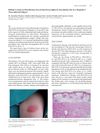
January 2007 in “Acta Dermato Venereologica” A patient developed a blister at the injection site after hepatitis C treatment.
1 citations
,
October 2023 in “BMC Genomics” miRNAs in the Dlk1-Gtl2 region may improve lamb fur quality.
30 citations
,
June 1993 in “The Journal of Cell Biology” The oncoprotein causes abnormal hair growth without increasing skin cancer risk.
EGF and EGFR are important for goat skin development, increasing from weeks 6 to 21.
2 citations
,
January 2012 in “Zhongguo nongye Kexue” EGF helps secondary hair follicles grow in young gray goats.
7 citations
,
July 2019 in “Animals” The KRTAP21-1 gene affects wool yield and can help improve wool production.
 November 2007 in “Hair transplant forum international”
 The document's conclusion cannot be provided because the content is not available to parse.
58 citations
,
July 2005 in “Molecular and Cellular Biology” A specific gene segment can make mouse skin cells glow, helping study hair growth and gene effects.

Meis2 is essential for touch sensation and nerve function in mice.
 17 citations
,
January 2019 in “International journal of biological sciences”
17 citations
,
January 2019 in “International journal of biological sciences” Researchers used CRISPR/Cas9 to create a goat with a gene that increased cashmere production by 74.5% without affecting quality.
 7 citations
,
August 2020 in “Animal biotechnology”
7 citations
,
August 2020 in “Animal biotechnology” A specific RNA in cashmere goats helps improve hair growth by interacting with certain molecules.
 1 citations
,
June 2022 in “JCRPE”
1 citations
,
June 2022 in “JCRPE” Metreleptin treatment significantly improved metabolic health in a boy with congenital generalized lipodystrophy.
January 2024 in “Frontiers research topics” Comprehensive genetic testing and international collaboration are crucial for better understanding and managing Ehlers-Danlos syndromes.
 April 2023 in “Journal of Investigative Dermatology”
 Both laser treatments improved acne scars similarly, but the Nd:YAG laser was safer and less painful, while the Er:YAG laser left patients slightly more satisfied.
September 2020 in “Eureka: Health Sciences” The emulgel with specific ingredients was effective for treating hair loss.
 47 citations
,
December 2019 in “Frontiers in immunology”
47 citations
,
December 2019 in “Frontiers in immunology” A new mutation in the STING protein causes a range of symptoms and its severity may be affected by other genetic variations; treatment with a specific inhibitor showed improvement in one patient.
 4 citations
,
September 2016 in “Molecular Medicine Reports”
4 citations
,
September 2016 in “Molecular Medicine Reports” Specific genes influence hair and cashmere growth in Laiwu black goats.
December 2019 in “Reproduction Fertility and Development” A new method helps grow skin stem cells better, which could improve skin grafts for burn victims.
3 citations
,
October 2001 in “British Journal of Ophthalmology” An isolated episcleral plasmacytoma can mimic episcleritis, making diagnosis challenging.
July 2026 in “Biochemical and Biophysical Research Communications” 26 citations
,
January 2011 in “Open Journal of Genetics” The KAP13-3 gene in sheep affects wool quality by influencing keratin assembly.
 4 citations
,
November 2021 in “Journal of Cosmetic Dermatology”
4 citations
,
November 2021 in “Journal of Cosmetic Dermatology” QR678 and QR678 Neo treatments, combined with corticosteroid injections, work better for alopecia areata than corticosteroid injections alone.
 April 2016 in “Journal of Investigative Dermatology”
 Gypenosides from Gynostemma pentaphyllum were found to have anti-aging effects, increasing skin collagen and reducing wrinkles.
 May 2013 in “Proceedings of SPIE”
 Researchers created a system that accurately aligns laser beams automatically.
354 citations
,
August 1991 in “Molecular Endocrinology” Human adrenals and gonads have a unique enzyme for steroid hormone production.
6 citations
,
March 2023 in “Materials” The GNP crosslinked scaffold with antibacterial coating is effective for rapid wound healing and infection prevention.