January 2026 in “OSF Preprints (OSF Preprints)” A new treatment plan for hair loss combines targeted therapies and regenerative strategies to stabilize, reverse, and maintain hair growth.
4 citations
,
June 2013 in “PubMed” Minoxidil in Espumil foam stays stable for at least 90 days at room temperature.
 April 2025 in “ACS Applied Nano Materials”
 A new treatment using dissolvable microneedles with nickel-copper and minoxidil improves hair growth and health in androgenetic alopecia.
1 citations
,
September 2021 in “Frontiers in Endocrinology” Minoxidil can help transgender males grow facial hair before starting testosterone therapy.
 May 2023 in “International Journal of Trichology”
 A witch-hazel-based 5% minoxidil solution is effective and safe for women with hair loss who didn't respond to regular minoxidil, especially if they're sensitive to propylene glycol.
 December 2025 in “Lasers in Medical Science”
 Combining red laser therapy with minoxidil improves hair growth more effectively than minoxidil alone in women with hair loss.
 August 2024 in “Life Science Alliance”
 Helminth protein helps wounds heal better by reducing scarring and promoting tissue growth.
 September 2025 in “Journal of the American Academy of Dermatology”
 Combining topical finasteride with minoxidil significantly improves hair density in treating hair loss.

Sinapic acid and glabridin together help hair growth in androgenetic alopecia.
 July 1995 in “Journal of Dermatological Science”
 Cyclosporine starts hair growth faster, while minoxidil makes it last longer.
12 citations
,
July 2011 in “Experimental Dermatology” The ethosomal delivery system improves topical drug delivery and promotes hair growth.
 24 citations
,
July 1983 in “Clinical and Experimental Dermatology”
24 citations
,
July 1983 in “Clinical and Experimental Dermatology” Tigason improved hair growth in a boy with monilethrix without side effects.
 37 citations
,
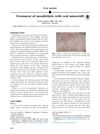
May 2016 in “JAAD case reports”
37 citations
,
May 2016 in “JAAD case reports” Oral minoxidil shows promise in treating monilethrix-related hair loss.

Minoxidil nanoliposomes boost hair growth and reduce scalp bacteria better than regular minoxidil.
Melatonin reduces BMP2 gene expression in goat hair follicles during the resting period.
2 citations
,
December 2024 in “International Journal of Pharmaceutics” Microneedles offer a painless, effective, and easy-to-use hair loss treatment.
March 2026 in “International Journal of Biological Macromolecules” Recombinant Filaggrin-2 microneedles effectively promote hair growth and repair in hair loss.
 November 2025 in “PARIPEX-INDIAN JOURNAL OF RESEARCH”
 GFC is more effective than PRP for treating hair loss.
 5 citations
,
September 2021 in “Journal of Medical Biochemistry”
5 citations
,
September 2021 in “Journal of Medical Biochemistry” wAMD patients have higher oxidative stress, suggesting antioxidant treatment may help.
 February 2024 in “Current Medicinal Chemistry”
 Minoxidil nanocrystals improved hair growth in mice more effectively and safely than regular Minoxidil.
 41 citations
,
June 2003 in “Journal of The American Academy of Dermatology”
41 citations
,
June 2003 in “Journal of The American Academy of Dermatology” Long-term minoxidil use can cause pseudoacromegaly, but stopping it improves symptoms.
2 citations
,
March 2009 in “Journal of Clinical Dermatology” Topical 5% minoxidil is safe and effective for treating hair loss in Korean men.
 7 citations
,
July 2019 in “International Journal of Molecular Sciences”
7 citations
,
July 2019 in “International Journal of Molecular Sciences” PGA-4HGF may help treat hair loss by activating hair growth pathways and extending the hair growth phase.
 5 citations
,
April 2018 in “Journal of Cosmetic Dermatology”
5 citations
,
April 2018 in “Journal of Cosmetic Dermatology” New 5% minoxidil formula safely and effectively treats male hair loss.
 May 2015 in “Journal of The American Academy of Dermatology”
 Oral minoxidil effectively increases hair growth in male baldness but can cause side effects like excessive hair growth and swelling.
Polyglutamic acid is a valuable, sustainable ingredient for skincare and haircare products.

Machine learning optimized microneedles for hair loss treatment showed better hair regrowth than minoxidil without safety risks.
November 2025 in “Mendeley Data” November 2025 in “Mendeley Data”  4 citations
,
August 2011 in “Aktuelle Dermatologie”
4 citations
,
August 2011 in “Aktuelle Dermatologie” Topical melatonin is a safe treatment that may reduce hair loss in people with androgenetic alopecia.