8 citations
,
March 2024 in “Regenerative Therapy” Delivering IGF-1 with PLGA microspheres improves stem cell regeneration for tissues.
January 2025 in “International Journal of Pharmaceutics” The treatment showed significant hair regrowth in alopecia areata patients without side effects.
6 citations
,
March 2009 in “Pigment Cell & Melanoma Research” A sphingolipid from human placenta may help treat vitiligo by activating melanocyte stem cells.
 14 citations
,
September 2018 in “The journal of allergy and clinical immunology/Journal of allergy and clinical immunology/The journal of allergy and clinical immunology”
14 citations
,
September 2018 in “The journal of allergy and clinical immunology/Journal of allergy and clinical immunology/The journal of allergy and clinical immunology” A boy's growth and immune problems were caused by a new mutation in the STAT5B gene.
 September 2024 in “British journal of surgery”
 Autologous stem cell therapy may effectively increase hair density in Androgenetic Alopecia.
July 2026 in “The Journal of Immunology” Tacrolimus effectively promotes hair regrowth in an alopecia areata mouse model.
January 2009 in “China Practical Medicine” Certain genes help dermal papillae cells in hair follicles grow and group together.
August 2020 in “Research Square (Research Square)” Enhanced stem cells can reduce fat buildup in eye tissue for Graves' disease.
 January 2024 in “Wiadomości Lekarskie”
 Ancient immune and signaling pathways still regulate blood cell development.

Enhanced stem cells from the placenta can reduce fat cell formation in eye disease.
 September 2022 in “Research Square (Research Square)”
 Macrophages help maintain mammary stem cells and balance through specific signaling.
Transplanted hair follicles can restore function and connect with host tissues.
 15 citations
,
August 2013 in “Stem Cells and Development”
15 citations
,
August 2013 in “Stem Cells and Development” The method increases stem-like cells for better skin regeneration.
 December 2023 in “Communications biology”
 Targeting the HEDGEHOG-GLI1 pathway could help treat keloids.
September 2020 in “Research Square (Research Square)” Enhanced stem cells from the placenta can reduce fat buildup in eye tissue for Graves' disease.
 July 2026 in “Frontiers in Immunology”
 Targeting protein lactylation may improve skin disease treatments.
 1 citations
,
January 2019 in “Skin appendage disorders”
1 citations
,
January 2019 in “Skin appendage disorders” A woman's sudden hair loss three years after a bone marrow transplant was a sign of chronic graft-versus-host disease but improved with treatment.
 3 citations
,
February 2012 in “The American Journal of Dermatopathology”
3 citations
,
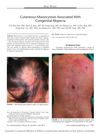
February 2012 in “The American Journal of Dermatopathology” A 3-year-old girl with skin mast cell buildup and congenital baldness improved with treatment, suggesting a rare link between these conditions.
CD28 is a promising target for treating alopecia areata with belatacept.
CD28 is a promising target for treating alopecia areata with belatacept.
March 2026 in “Acta Histochemica” 7 citations
,
June 2012 in “Journal of dairy science” Bovine milk fats applied to mouse skin can promote hair growth similar to known hair growth treatments.
January 2008 in “Memorial University Research Repository (Memorial University)” Pygopus 2 helps ovarian cancer cells grow by aiding ribosomal RNA production, independent of Wnt signaling.
22 citations
,
August 1999 in “Mechanisms of Development” Pmg-1 and Pmg-2 are new genes important for skin and mammary gland development.
 13 citations
,
May 2005 in “Seminars in Plastic Surgery”
13 citations
,
May 2005 in “Seminars in Plastic Surgery” Follicular Cell Implantation might become a new treatment for hair loss and could lead to advances in organ regeneration.
August 2021 in “The journal of investigative dermatology/Journal of investigative dermatology” TAGX-0003 protected hair follicles and reversed alopecia areata in a mouse model.
January 1980 in “Lluc: revista de cultura i d'idees” Agaricus bisporus β-Glucan particles could effectively treat cervical cancer and offer antimicrobial and antioxidant benefits.
January 2020 in “Stem Cells” September 2019 in “Journal of Investigative Dermatology” Innate lymphoid cells type 1 may contribute to alopecia areata.
 24 citations
,
September 2005 in “Journal of Cellular Biochemistry”
24 citations
,
September 2005 in “Journal of Cellular Biochemistry” Retinoids increase steroid sulfatase activity in leukemia cells through RARα/RXR and involves certain pathways like phosphoinositide 3-kinase and ERK-MAP kinase.