September 2025 in “Scientific periodicals of Ukraine” FUE with DHI effectively restores natural hair growth in difficult areas.
 April 2017 in “Journal of Investigative Dermatology”
 Targeted siRNA therapy may be a promising treatment for KID syndrome by reducing mutant gene expression and improving cell communication.
 November 2006 in “Hair transplant forum international”
 The document's content couldn't be processed.
 8 citations
,
July 2019 in “Cell Proliferation”
8 citations
,
July 2019 in “Cell Proliferation” Researchers found a way to turn skin cells into cells that can grow new hair.
60 citations
,
December 2003 in “Journal of Investigative Dermatology” K6hf is found in specific parts of hair follicles, nails, and tongue, and is linked to hair growth and structure.
January 2024 in “Universidad Peruana Cayetano Heredia Institutional Repository” Simple centrifugation with calcium gluconate boosts PDGF-BB release in PRP.
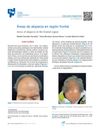 January 2025 in “Revista del Centro Dermatológico Pascua”
 The document presents a clinical case of a 71-year-old woman with fibrosing alopecia in a pattern distribution (FAPD), a scarring type of alopecia affecting the frontal region. It highlights the condition's distinction from androgenetic alopecia through its scarring nature and specific histological features, such as lymphocytic infiltration and follicular degeneration. FAPD is more prevalent in postmenopausal women and lacks definitive treatment guidelines. Current treatments, including oral minoxidil, spironolactone, and topical steroids, focus on halting progression rather than promoting hair regrowth in scarred areas. Early diagnosis and intervention are essential for improving outcomes.
 16 citations
,
December 2018 in “ACS Biomaterials Science & Engineering”
16 citations
,
December 2018 in “ACS Biomaterials Science & Engineering” The new patch made of cell matrix and a polymer improves wound healing and supports blood vessel growth.
November 2022 in “Journal of Investigative Dermatology” NCSTN gene mutation causes abnormal skin cell differentiation and more inflammation, contributing to Hidradenitis Suppurativa.
February 2026 in “Journal of Dermatological Treatment” CG2001 is safe and well-tolerated for treating hair loss, with fewer side effects than oral finasteride.
173 citations
,
July 2012 in “British Journal of Dermatology” Dabrafenib can cause skin growths and sometimes low-grade skin cancer.
 1 citations
,
October 2023 in “JEADV. Journal of the European Academy of Dermatology and Venereology/Journal of the European Academy of Dermatology and Venereology”
1 citations
,
October 2023 in “JEADV. Journal of the European Academy of Dermatology and Venereology/Journal of the European Academy of Dermatology and Venereology” A man developed skin lesions as a side effect of a gamma secretase inhibitor used for treating a tumor.
 10 citations
,
July 2015 in “Journal of Cosmetic Dermatology”
10 citations
,
July 2015 in “Journal of Cosmetic Dermatology” Higher DKK-1 levels found in hair loss patients; L-ascorbic acid 2-phosphate, L-threonate, and ginsenoside F2 may help promote hair growth.
 July 2008 in “Hair transplant forum international”
 The document cannot be understood or processed.
 3 citations
,
June 2004 in “Annales De Dermatologie Et De Venereologie”
3 citations
,
June 2004 in “Annales De Dermatologie Et De Venereologie” Four new cases of gynecomastia (male breast enlargement) linked to finasteride (Propecia) have been found.
January 2026 in “Figshare” January 2026 in “Figshare” September 2003 in “Faculty Opinions – Post-Publication Peer Review of the Biomedical Literature” GLABRA2 gene controls root-hair growth by regulating phospholipid signaling.
 August 2022 in “Journal of Cosmetic Dermatology”
 A new classification for depth control in hair restoration surgery was proposed, dividing it into three grades based on the depth required for successful graft extraction.
 January 2021 in “Dermatologic Therapy”
 Channels stay open for 24 hours, making laser treatment potentially effective for hair loss.
3 citations
,
September 2013 in “Journal of the American Academy of Dermatology” A new genetic mutation linked to Hutchinson-Gilford progeria syndrome was found in China.
 27 citations
,
May 2007 in “Archives of dermatological research”
27 citations
,
May 2007 in “Archives of dermatological research” Diphencyprone treatment increases CD8 lymphocytes in the scalp, which is associated with hair regrowth in alopecia areata patients.
 13 citations
,
February 2006 in “Analytical Biochemistry”
13 citations
,
February 2006 in “Analytical Biochemistry” New method accurately measures finasteride in tablets.
 July 2022 in “Journal of Investigative Dermatology”
 Dkk4 is necessary for the initial development and arrangement of hair follicles.
 1 citations
,
January 2023 in “Cutis”
1 citations
,
January 2023 in “Cutis” You might not need to stop cancer treatment if you get a rare skin reaction from EGFR inhibitors, as skin treatments can help manage it.
 94 citations
,
February 1994 in “The journal of investigative dermatology/Journal of investigative dermatology”
94 citations
,
February 1994 in “The journal of investigative dermatology/Journal of investigative dermatology” EGF makes hair follicles grow longer but stops hair production.
 September 2017 in “Journal of Investigative Dermatology Symposium Proceedings”
 Prostaglandin D2 increases testosterone production in skin cells through a process involving reactive oxygen species, which could be a new target for treating hair loss and other skin conditions driven by testosterone.
 November 2024 in “Journal of Investigative Dermatology”
 Reishi mushroom extract may help treat hair loss.
60 citations
,
April 2003 in “Biomaterials” Controlled release of growth factors in hydrogels improved hair growth in mice.
28 citations
,
February 2010 in “Experimental Dermatology” The frizzy mouse and hairless rat mutations are due to changes in the Prss8 gene.