Search
for
Sort by
Research
30 / 1000+ results
research Genetic alteration of cyclic adenosine 3',5'-monophosphate-dependent protein kinase subunit expression affects calcium currents and beta-endorphin release in AtT-20 clonal pituitary cells.
Changing protein kinase levels in pituitary cells affects calcium flow and beta-endorphin release.
research Heterogeneity in the genetic alterations and in the clinical presentation of acrodermatitis enteropathic: Case report and review of the literature
AE can have varied symptoms and genetic causes, but zinc therapy helps.
research Is knowledge about the genetic and epigenetic alterations in melanoma a basis for targeted therapy?
Targeting multiple pathways and understanding genetic mutations are crucial for effective melanoma therapy.

research Skin and hair abnormalities of Cantu syndrome: A congenital hypertrichosis due to a genetic alteration mimicking the pharmacological effect of minoxidil
Cantu syndrome, which causes excessive hair growth and skin issues, is due to a mutation in the ABCC9 gene, and understanding this could help develop new treatments for hair diseases.

research Types I and II Keratin Intermediate Filaments
Keratins are crucial for cell structure, growth, and disease risk.
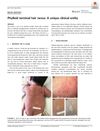
research Phylloid terminal hair nevus: A unique clinical entity
A baby had a unique skin condition with a pale patch and surrounding dark hairs, not linked to other health issues.

research Mutant laboratory mice with abnormalities in hair follicle morphogenesis, cycling, and/or structure: An update
The document concludes that mouse models are crucial for studying hair biology and that all mutant mice may have hair growth abnormalities that require detailed analysis to identify.
research Poly Cystic Ovarian Syndrome is a Disease of Ovary that Can Causes Cyst
PCOS causes hormonal imbalance, irregular periods, and can lead to obesity.
research Genetic Basis of Pigmentation and Its Disorders
Understanding genes can help diagnose and treat skin color disorders.
research Genetic, hormonal and metabolic aspects of PCOS: an update
The document concludes that insulin resistance is key in PCOS development and early treatment is crucial to prevent complications.
research [Genetic dissection of retinoic acid function in epidermis physiology].
Retinoic acid affects skin and hair health by working with specific receptors, and its absence can lead to hair loss and skin changes.

research Pediatric Features of Genetic Predisposition to Polycystic Ovary Syndrome
Genetic risk for PCOS can affect children's growth, metabolism, and development from early life into adulthood.
research Developmental Genetics of Color Pattern Establishment in Cats
Gene expression, especially Dkk4, is key to cat color patterns.
research Epigenetics of Colorectal Cancer
Colorectal cancer development involves both genetic changes and epigenetic alterations like DNA methylation and microRNA changes.

research WNT10A gene variants at the root of short anagen hair syndrome
WNT10A gene mutations cause short anagen hair syndrome.

research The Basic Science of Hair Biology
Hair disorders are caused by a complex mix of biology, genetics, hormones, and environmental factors, affecting hair growth and leading to conditions like alopecia.

research How Our Microbiome Influences the Pathogenesis of Alopecia Areata
Our microbiome may affect the development of the hair loss condition Alopecia Areata, but more research is needed to understand this relationship.

research Hypotrichosis with juvenile macular dystrophy
A rare genetic disease causes sparse hair and early blindness due to a gene mutation.
research The Carcinogenesis of the Human Scalp: An Immunometabolic-Centered View
Hair helps prevent scalp skin cancer by supporting immune protection.
research Primary scarring alopecias. A literature review
Early and accurate identification of primary scarring alopecias is crucial to prevent permanent hair loss.

research Pathogenesis of androgenetic alopecia
Androgenetic alopecia, or hair loss, is caused by a mix of genetics, hormones, and environment, where testosterone affects hair growth and causes hair to become smaller and grow for a shorter time.
research Premature graying of hair: Risk factors, co‐morbid conditions, pharmacotherapy and reversal—A systematic review and meta‐analysis
Premature graying of hair is linked to various health issues and can sometimes be reversed by treating underlying conditions.

research Enhanced ectodysplasin-A receptor (EDAR) signaling alters multiple fiber characteristics to produce the East Asian hair form
A genetic change in the EDAR gene causes the unique hair traits found in East Asians.
research Primary Generalized Glucocorticoid Resistance and Hypersensitivity
The conclusion is that genetic changes in the glucocorticoid receptor can lead to conditions affecting stress response, immunity, and metabolism, requiring personalized treatment.
research A new case of Ambras syndrome associated with a paracentric inversion (8) (q12; q22)
Ambras syndrome's genetic cause is unknown, as it isn't linked to androgen levels.
research Buschke-Ollendorff syndrome
Buschke-Ollendorff syndrome is a rare genetic disorder causing skin and bone changes, with some cases also showing ADHD or developmental delays.
research Large Intragenic KRT1 Deletion Underlying Atypical Autosomal Dominant Keratinopathic Ichthyosis
A rare genetic deletion in the KRT1 gene causes unique skin symptoms in a family.
research The naked truth: Sphynx and Devon Rex cat breed mutations in KRT71
Sphynx cats are hairless and Devon Rex cats have curly hair due to specific genetic mutations.
research The molecular pathogenesis of Trichilemmal carcinoma
Trichilemmal carcinoma shares genetic changes with other skin cancers, suggesting similar causes and potential treatments.