 January 2025 in “Clinical and Medical Engineering Live”
 Implementing safety strategies is crucial to prevent radiation-related health issues.
 December 2024 in “Brazilian Journal of Health Review”
 Early diagnosis of alopecia frontal fibrosante is crucial, but treatment remains controversial and varies.
 June 2024 in “British Journal of Dermatology”
 KRT14 gene variants cause dermatopathia pigmentosa reticularis, affecting nails, teeth, and hair.
 April 2024 in “Nigerian Postgraduate Medical Journal”
 Androgenetic alopecia is a common hair loss condition influenced by various factors and linked to psychosocial and cardiovascular issues.
Early-onset baldness is linked to genetics, lifestyle, and can indicate higher risk for heart and metabolic diseases, and affects mental health.
 February 2024 in “The Open dermatology journal”
 Alopecia Areata affects people of all ages worldwide, is likely caused by genetic and environmental factors, and can lead to stress and depression, highlighting the need for treatments that address both physical and mental health.
 February 2024 in “BIOspektrum”
 Genetic research may lead to better ways to predict and treat male-pattern hair loss.
 January 2024 in “Brazilian Journal of Hair Health”
 Testosterone therapy in transgender men can lead to hair loss, with the risk increasing over time and influenced by family history.
January 2024 in “Journal of Biosciences and Medicines” More research is needed to understand genetic causes and create better treatments for alopecia areata.
 December 2023 in “The Sri Lanka Journal of Dermatology”
 A 12-year-old girl's hair loss was linked to a rare genetic condition called ALX4-related frontonasal dysplasia.
 December 2023 in “EPRA international journal of multidisciplinary research”
 Alopecia areata causes sudden hair loss, has genetic links, and can be managed but not cured.
 October 2023 in “Dermatologie pro praxi”
 Alopecia areata causes hair loss and has various treatment options, but responses differ.
 July 2023 in “International journal of dermatology, venereology and leprosy sciences”
 New treatments are being explored to slow or reverse hereditary hair loss.
 June 2023 in “Dermatology and therapy”
 The Middle East and Africa need better data, treatment consensus, and support for Alopecia Areata.
May 2023 in “Pharmaceuticals” Three specific mutations in the LIPH gene can cause hair loss by damaging the protein's structure and function.
 January 2023 in “Revista Paulista de Pediatria”
 A Brazilian male with IFAP syndrome has a unique genetic variant causing his condition.
 January 2023 in “Springer eBooks”
 New understanding of hair loss could lead to better treatments.
Hair loss affects well-being but can be treated with medication or surgery.
 October 2022 in “Frontiers in Cell and Developmental Biology”
 Aging skin is affected by inflammation, reduced stem cell function, and slower wound healing.
 July 2022 in “Revista Científica de Estética e Cosmetologia”
 Many treatments for hair loss from androgenetic alopecia are giving people satisfying results.
Hairless mammals evolved quickly in both gene and non-gene areas related to skin and hair.
September 2021 in “CRC Press eBooks” Dissecting cellulitis of the scalp is a condition that causes inflammation and scarring on the scalp, mainly affecting African-American men, and can lead to permanent hair loss.
 August 2021 in “EMC - AKOS - Trattato di Medicina”
 Acquired alopecia is hair loss that can be reversible or irreversible, depending on whether the hair follicle is destroyed.
 May 2021 in “Our Dermatology Online”
 A woman with a rare scalp condition causing a thick scalp and hair loss didn't improve with steroid treatment.
 January 2021 in “Veterinary research forum”
 A Holstein calf in Iran with a severe genetic skin disorder was euthanized due to incurable symptoms.
 August 2020 in “Pakistan Journal of Zoology”
 A new mutation in the Hairless gene causes hair loss in two Pakistani families.
 June 2020 in “Medicina estética (Madrid)”
 Female pattern hair loss is common and should be treated early to prevent worsening, with Minoxidil being the main approved treatment.
May 2020 in “Scientific periodicals of Ukraine” Alopecia and acne in women are complex conditions needing coordinated care and personalized treatment.
Accurate diagnosis and tailored treatments are crucial for managing hair loss in humans and animals.
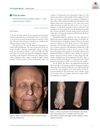 March 2019 in “Journal der Deutschen Dermatologischen Gesellschaft”
 Rothmund-Thomson syndrome type 2 can cause chronic, poorly healing wounds.