9 citations
,
August 2021 in “Journal of clinical medicine” Pili torti is a rare condition where hair is twisted and breaks easily, often linked to genetic disorders or other health issues.
2 citations
,
October 2018 in “Skin appendage disorders” A boy's hair that was frizzy and hard to comb returned to normal after 9 months, possibly due to genetic factors.
37 citations
,
June 2000 in “Experimental dermatology” The Lanceolate hair-J mutation in mice mimics human hair disorders like Netherton's syndrome.
8 citations
,
March 2023 in “British Journal of Dermatology” Next-generation sequencing greatly improves understanding and treatment of genetic hair disorders.
 18 citations
,
January 2013 in “Postepy Dermatologii I Alergologii”
18 citations
,
January 2013 in “Postepy Dermatologii I Alergologii” Puberty often causes skin issues like acne and excessive sweating, and treatments require patience as results may vary.
 15 citations
,
January 2010 in “Experimental Dermatology”
15 citations
,
January 2010 in “Experimental Dermatology” Hair loss in certain young mice is linked to a specific gene and can be caused by lack of iron.
 99 citations
,
June 2005 in “Journal of Cosmetic Dermatology”
99 citations
,
June 2005 in “Journal of Cosmetic Dermatology” Hair ages due to genetics and environmental factors, leading to graying and thinning, with treatments available for some conditions.
69 citations
,
May 1997 in “Veterinary Pathology” The angora mouse mutation causes long hair and hair defects due to a gene deletion.
43 citations
,
December 2006 in “The American journal of pathology” Edar signaling is crucial for controlling hair growth and regression.
 21 citations
,
November 2009 in “Dermatologic Clinics”
21 citations
,
November 2009 in “Dermatologic Clinics” The document suggests that certain protein deficiencies and scalp blistering in Epidermolysis Bullosa may cause hair loss.
 6 citations
,
March 1982 in “Clinical and Experimental Dermatology”
6 citations
,
March 1982 in “Clinical and Experimental Dermatology” The document says that hair loss in women is often due to androgenic alopecia, similar to male baldness, and that hirsutism is treated with hormonal and cosmetic methods.
 April 2017 in “IOSR journal of dental and medical sciences”
 Netherton Syndrome is a non-treatable genetic disorder in children causing skin, hair, and allergy issues.
132 citations
,
August 2008 in “Development” Dlx3 is essential for hair growth and regeneration.
71 citations
,
November 2005 in “The journal of investigative dermatology. Symposium proceedings/The Journal of investigative dermatology symposium proceedings” Edar signaling is crucial for proper hair follicle development and function.
 28 citations
,
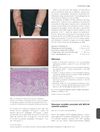
February 2010 in “British journal of dermatology/British journal of dermatology, Supplement”
28 citations
,
February 2010 in “British journal of dermatology/British journal of dermatology, Supplement” WNT10A mutations cause varied symptoms in patients with odonto-onycho-dermal dysplasia.
 2 citations
,
August 2017 in “British Journal of Dermatology”
2 citations
,
August 2017 in “British Journal of Dermatology” Hair loss in Cronkhite-Canada syndrome may be due to an autoimmune response.
 1 citations
,
February 2009 in “Journal of Investigative Dermatology”
1 citations
,
February 2009 in “Journal of Investigative Dermatology” VEGF helps squamous cell carcinoma grow in ways beyond just blood vessel formation.
 2 citations
,
January 2013 in “Elsevier eBooks”
2 citations
,
January 2013 in “Elsevier eBooks” The document explains the genetic causes and characteristics of inherited hair disorders.
 1 citations
,
August 2011 in “Dermatology Reports”
1 citations
,
August 2011 in “Dermatology Reports” Two siblings were found to have a genetic condition causing progressive hair loss and woolly hair, which may often be misdiagnosed.
January 2026 in “Clinical Case Reports” A 6-year-old girl had both monilethrix and trichorrhexis nodosa, causing brittle hair, with minimal improvement from treatment.
 2 citations
,
November 2022 in “Skin research and technology”
2 citations
,
November 2022 in “Skin research and technology” 5% topical minoxidil improves hair density and quality in monilethrix patients.
A new mutation in the TRPS1 gene caused Trichorhinophalangeal syndrome in a 17-year-old, highlighting the need for genetic testing.
39 citations
,
December 2012 in “The American Journal of Human Genetics” Mutations in the SNRPE gene cause hereditary hair loss.
13 citations
,
July 2012 in “International Journal of Trichology” TTD symptoms vary widely, requiring thorough evaluations.
January 2011 in “대한피부과학회지” A 7-year-old girl was diagnosed with trichothiodystrophy due to low sulfur levels in her hair.
57 citations
,
January 2020 in “International Journal of Molecular Sciences” PADs are crucial for healthy skin and hair, and their imbalance can cause skin and hair disorders.
8 citations
,
December 2013 in “The journal of investigative dermatology. Symposium proceedings/The Journal of investigative dermatology symposium proceedings” Mouse models help understand alopecia areata and find treatments.
 March 2025 in “The Open Dermatology Journal”
 Trichorrhexis nodosa is common hair breakage, often due to styling, and new treatments are being explored.
 October 2007 in “Journal of Investigative Dermatology”
 The meeting highlighted the genetic basis of female pattern hair loss and various skin health insights.
 2 citations
,
August 2022 in “The journal of investigative dermatology/Journal of investigative dermatology”
2 citations
,
August 2022 in “The journal of investigative dermatology/Journal of investigative dermatology” A specific mutation in the K25 gene causes a rare genetic disorder with curly hair at birth and later hair loss, along with dental issues.