January 2025 in “Clinical and Experimental Vaccine Research” A woman experienced total hair loss after an HPV vaccine, but treatment helped regrow her hair.
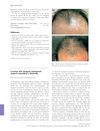
 September 2024 in “Ain Shams Medical Journal”
 Androgenic alopecia causes hair thinning, and treatments include minoxidil, finasteride, and light therapy.
 April 2024 in “Research Square”
 IBD patients treated with TNF antagonists may develop autoimmune alopecia areata, with severe cases less likely to improve.
January 2024 in “Indian Journal of Dermatology” Unilateral keratosis follicularis squamosa may be a new subtype, successfully treated with asiaticoside ointment.
 August 2022 in “Gene Reports”
 New hair loss treatments could be improved by using combined biological markers.
Eating healthy, exercising, and certain nutrients like myoinositol and omega-3s can help manage PCOS symptoms.
 May 2019 in “Australasian Journal of Dermatology”
 The conclusion is that managing hair loss conditions like FFA and melanoma requires individualized approaches, considering new findings and balancing treatment benefits with potential risks.
 July 2018 in “Elsevier eBooks”
 Acne keloidalis nuchae is a chronic skin condition more common in African men, causing itchy or painful bumps and can lead to permanent hair loss if not treated early.
January 2016 in “Çağdaş tıp dergisi” Topical 1% pimecrolimus effectively treated alopecia areata.
 March 2013 in “DOAJ (DOAJ: Directory of Open Access Journals)”
 Minoxidil and finasteride are effective long-term treatments for male hair loss.
 January 2012 in “Journal für Kardiologie (Krause & Pachernegg GmbH)”
 Androgens can cause acne, excess hair, and hair loss, treatable with dermatologist-guided therapies.
 January 2012 in “Human health handbooks”
 Traditional Indian remedies are used for hair health, but more scientific evidence is needed to prove their safety and effectiveness.

The patient with total hair loss did not regrow hair despite treatment, indicating a poor outlook for this type of hair loss.
April 2002 in “Annals of Internal Medicine” Isotretinoin may increase the risk of high triglycerides and metabolic syndrome, especially in those genetically prone.
37 citations
,
January 2003 in “Journal of the European Academy of Dermatology and Venereology” Turner's syndrome may be linked to autoimmune diseases like psoriasis and alopecia areata, needing comprehensive care.
 1 citations
,
January 2019 in “Springer eBooks”
1 citations
,
January 2019 in “Springer eBooks” Hidradenitis Suppurativa is a chronic skin condition best treated early with surgery for better outcomes and less recurrence.

Male androgenetic alopecia (MAA) is a common, hereditary hair loss condition in men, linked to heart disease, and can be treated with minoxidil, finasteride, or hair transplantation.
 128 citations
,
September 2011 in “British Journal of Dermatology”
128 citations
,
September 2011 in “British Journal of Dermatology” Obesity is linked to various skin problems and may increase the risk of skin cancer.
 13 citations
,
February 2007 in “British Journal of Dermatology”
13 citations
,
February 2007 in “British Journal of Dermatology” EF and PXE not closely related.
8 citations
,
February 2002 in “Journal of Medical Genetics” Skin changes can indicate a risk for breast cancer.
 16 citations
,
December 2001 in “Dermatologic Therapy”
16 citations
,
December 2001 in “Dermatologic Therapy” Alopecia areata has a complex genetic basis that was not fully understood as of 2001.
 11 citations
,
April 2024 in “Allergy Asthma and Clinical Immunology”
11 citations
,
April 2024 in “Allergy Asthma and Clinical Immunology” Allergies and atopic conditions may increase the risk of developing alopecia areata.
PCOS has a strong genetic basis, but more research is needed to fully understand it.
 195 citations
,
June 2005 in “American Journal of Human Genetics”
195 citations
,
June 2005 in “American Journal of Human Genetics” Genetic variation in the androgen receptor gene mainly causes early-onset hair loss, with maternal inheritance playing a key role.
 74 citations
,
January 2013 in “Journal of Investigative Dermatology”
74 citations
,
January 2013 in “Journal of Investigative Dermatology” Four genetic risk spots found for hair loss, with WNT signaling involved and a link to curly hair.
 29 citations
,
February 2018 in “Genetics research international”
29 citations
,
February 2018 in “Genetics research international” Certain genetic variations are linked to increased androgen levels in PCOS, but more research is needed to understand these connections fully.
 18 citations
,
July 2010 in “Expert Review of Endocrinology & Metabolism”
18 citations
,
July 2010 in “Expert Review of Endocrinology & Metabolism” The document concludes that PCOS has a strong genetic component, but more research is needed to fully understand the specific genes involved.
 15 citations
,
December 2017 in “Journal of Investigative Dermatology”
15 citations
,
December 2017 in “Journal of Investigative Dermatology” No strong genetic link to other skin conditions was found, but some genetic factors may make people more likely to get seborrheic dermatitis.
 1 citations
,
October 2013 in “Our Dermatology Online”
1 citations
,
October 2013 in “Our Dermatology Online” 5α reductase type 2 enzyme mutation and oxidative stress may increase androgenetic alopecia risk in Egyptians.
 2 citations
,
October 2025 in “Discover Immunity.”
2 citations
,
October 2025 in “Discover Immunity.” Alopecia Areata is an autoimmune disease causing hair loss, with no cure yet, but research may lead to new treatments.