 January 2025 in “Pakistan Journal of Health Sciences”
 The Cyp11a1 gene variation has a weak link to PCOS, but higher di-hydro-testosterone levels are found in PCOS patients.
 January 2025 in “bioRxiv (Cold Spring Harbor Laboratory)”
 Rhamnose may help hair growth and pigmentation, making it a potential treatment for hair loss.

Eclipta alba IIHR Sel EA 43 is best for large-scale cultivation due to high growth, yield, and wedelolactone content.
 October 2024 in “Open Repository of the University of Porto (University of Porto)”
 Pharmacists play a crucial role in improving treatment outcomes and staying updated on various health conditions.
 September 2024 in “Cosmoderma”
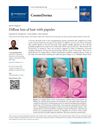
 The young man has complete hair loss and skin bumps, with no other health issues or family history.
 August 2024 in “OSMANGAZİ JOURNAL OF MEDICINE”
 The visfatin GT genotype may increase the risk of Alopecia Areata.
 March 2024 in “Research Square (Research Square)”
 The TT genotype of a specific SNP in sheep is linked to better wool quality.
Lichen planopilaris can occur with multiple autoimmune diseases.
 November 2023 in “Linköping University medical dissertations”
 Keratinocytes and adipose-derived stem cells can effectively heal difficult skin wounds.
 August 2023 in “Sabuncuoglu Serefeddin Health Sciences”
 CT60 polymorphism might increase the risk of Alopecia Areata.
 August 2023 in “Acta Scientific Paediatrics”
 A baby from an Indian family had a rare genetic disorder causing no scalp or body hair due to a specific gene deletion.
 April 2023 in “Medizinische Genetik”
 New research has found 14 genes linked to the risk of developing alopecia areata, improving understanding and treatment options.
 January 2023 in “Pakistan Armed Forces Medical Journal”
Reducing iron levels didn't improve heart health or metabolism in women with certain ovarian issues.
 November 2022 in “Gigascience”
 A specific genetic deletion in goats affects cashmere yield and thickness.
 July 2022 in “International journal of KIU”
 Genetics influence opioid addiction risk, diet affects COVID-19 severity, Aerva lanata may harm kidneys, some plants fight fungi and cancer, and nursing students need better contraceptive knowledge.
 June 2022 in “bioRxiv (Cold Spring Harbor Laboratory)”
 ILC1-like cells can cause alopecia areata by attacking hair follicles.
 April 2022 in “Research Square (Research Square)”
 Researchers created a stable rabbit cell line for hair research that doesn't age quickly or become cancerous.
A mange outbreak nearly wiped out vicuña and guanaco populations in San Guillermo National Park.
 January 2021 in “Journal of Entomology and Zoology Studies”
 The piglets fully recovered from psoroptic mange after treatment.
 January 2021 in “Middle East journal of applied sciences”
 Zinc is essential for plant growth and human health, but many soils lack enough zinc, affecting crops and potentially leading to health problems.
 August 2020 in “Egyptian Veterinary Medical Society of Parasitology Journal (EVMSPJ)”
 10.5% of sheep in Ismailia, Egypt, had Sarcoptes scabiei, causing skin issues.
 June 2020 in “The journal of investigative dermatology/Journal of investigative dermatology”
 Platelet-rich Plasma Gel may help treat en coup de sabre scleroderma, improving symptoms and skin quality with minimal side effects.
 April 2020 in “International journal of research in dermatology”
 An 8-year-old girl has a rare, irreversible hair loss condition caused by a genetic mutation.
 January 2019 in “Advances in Environmental Biology”
 Propionibacterium acnes contributes to acne and antibiotic resistance, needing new treatments.
Hormones, especially testosterone and DHT, are key for penis development and function, and testosterone therapy may help with erectile dysfunction in those with low levels.
 October 2017 in “The Indian Journal of Animal Sciences”
 The prolactin gene polymorphism doesn't affect cashmere quality in these goats.
SLC24A5 shows a clear selective sweep, but no link to UV radiation intensity.
 March 2017 in “InTech eBooks”
 Acne vulgaris is a common skin condition that can cause low self-esteem and depression, and early treatment is important to prevent scarring.
 May 2015 in “Journal of Dermatological Science”
 Researchers found a new area on chromosome 2 linked to a genetic hair loss condition.