9 citations
,
October 2025 in “MedComm” PROTACs offer new ways to treat hard-to-target diseases, with promising drugs for cancer in advanced trials.
4 citations
,
April 1986 in “Cancer Letters” GSH-T levels in hair follicles are similar in smokers and non-smokers and don't increase with certain treatments.
210 citations
,
May 2006 in “The FASEB journal” Oxidative stress causes hair to gray by damaging and killing pigment cells.
6 citations
,
June 2025 in “Nano Biomedicine and Engineering” Smart nano-PROTACs improve cancer treatment by targeting proteins more precisely and reducing side effects.
 18 citations
,
December 1996 in “Seminars in Cutaneous Medicine and Surgery”
18 citations
,
December 1996 in “Seminars in Cutaneous Medicine and Surgery” Chemotherapy and cytokine therapy can cause various skin reactions, including hair loss and hypersensitivity.
16 citations
,
March 1986 in “Biochemical Pharmacology” 1 citations
,
January 2010 in “Biophysical journal” Hair fluorescence intensity can measure radiation exposure effectively.
 10 citations
,
September 1997 in “Molecular carcinogenesis”
10 citations
,
September 1997 in “Molecular carcinogenesis” Mirex seems to promote a unique group of skin cells different from those affected by another tumor promoter, TPA.

Gene editing holds promise for skin treatments but needs careful safety and ethical consideration.
 January 2014 in “Genes and Cells”
 Genetically modified cells improved skin wound healing in rats.
January 2018 in “Refubium (Universitätsbibliothek der Freien Universität Berlin)” Chemotherapy causes temporary hair loss in women, while Tamoxifen does not significantly affect hair, and genetics show no link between female pattern hair loss and common baldness genes.
January 2013 in “대한피부과학회지” Gefitinib can cause rare scarring hair loss.
 4 citations
,
March 2012 in “Annals of oncology”
4 citations
,
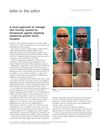
March 2012 in “Annals of oncology” New treatment with green tea polyphenols and nicotinamide improves skin problems from cancer therapy.
384 citations
,
January 2008 in “Journal of Internal Medicine” Mitochondrial dysfunction contributes to ageing by causing DNA mutations and reduced cell function.
45 citations
,
August 2009 in “American Journal Of Pathology” Noggin promotes skin tumors by activating certain cell signaling pathways.
57 citations
,
August 2006 in “Journal of the American Academy of Dermatology” Gefitinib can cause hair loss without scarring.

New cancer drugs can cause skin side effects like rashes, dry skin, hair changes, and nail problems.
September 2017 in “The journal of investigative dermatology/Journal of investigative dermatology” Higher SPF sunscreens provide more DNA protection, and the form of sunscreen doesn't affect protection level.
May 1961 in “Tumori Journal” Vitamin A treatment reduced abnormal cell growth and improved skin conditions in rats with tumors.
 June 2017 in “Reactions Weekly”
 Some breast cancer treatments caused long-term hair loss in women, similar to a condition called alopecia areata.
March 2026 in “The Journal of Steroid Biochemistry and Molecular Biology” Deleting vitamin D and calcium receptors in skin cells increases skin cancer risk by reducing DNA repair and stress response.
 150 citations
,
August 1992 in “Genes & Development”
150 citations
,
August 1992 in “Genes & Development” TNF alpha in skin cells causes weight loss, hair and fat issues, and skin inflammation in mice.
13 citations
,
September 2017 in “Journal of Dermatological Science” Hydrogen peroxide in hair dye can cause hair loss.
 April 2022 in “Anti-cancer agents in medicinal chemistry”
 Some existing medicines show promise as safe treatments to protect against the side effects of radiation therapy.
1 citations
,
June 2021 in “Preprints.org” Hair relaxers and straighteners can be toxic to skin cells.
 March 2011 in “European Urology Supplements”
 Blood tests for tumor cells could improve prostate cancer diagnosis and treatment; hair loss severity linked to a gene affecting prostate conditions.
April 2015 in “The FASEB Journal” Nitrogen mustard causes DNA damage and structural changes in mouse skin hair follicles, but some recovery occurs after 5 days.

Melatonin may protect hair follicle stem cells from damage caused by chemotherapy.
 2 citations
,
October 2016
2 citations
,
October 2016 Chemotherapy and radiotherapy can cause skin side effects like rashes, hair loss, and nail changes, which are usually managed with conservative treatments.
45 citations
,
October 2018 in “JCI Insight” Entospletinib effectively prevents eye and skin GVHD in mice.