12 citations
,
July 2019 in “Veterinary Dermatology” Nestin-expressing progenitor cells become outer root sheath keratinocytes.
 73 citations
,
June 2001 in “Endocrinology”
73 citations
,
June 2001 in “Endocrinology” Prolactin affects when mice shed and grow hair.
 38 citations
,
January 2002 in “Biological & Pharmaceutical Bulletin”
38 citations
,
January 2002 in “Biological & Pharmaceutical Bulletin” Lygodii Spora extract may help treat hair loss by blocking a hair loss-related enzyme and promoting hair growth.
 34 citations
,
April 2009 in “Skin Pharmacology and Physiology”
34 citations
,
April 2009 in “Skin Pharmacology and Physiology” Minoxidil affects cell growth in two ways: low doses increase growth, while high doses slow it down and can be toxic.
 22 citations
,
June 2007 in “Radiologia Medica”
22 citations
,
June 2007 in “Radiologia Medica” Testicular microlithiasis may increase the risk of testicular cancer and patients with it should be closely monitored.
 18 citations
,
January 2001 in “Annual Reports in Medicinal Chemistry”
18 citations
,
January 2001 in “Annual Reports in Medicinal Chemistry” Selective Androgen Receptor Modulators (SARMs) are drugs that can control the effects of androgens in different tissues, potentially having fewer side effects and promising for treating various conditions.
 14 citations
,
June 2001 in “Endocrinology”
14 citations
,
June 2001 in “Endocrinology” Prolactin affects when mice shed and grow hair.
 8 citations
,
January 2000
8 citations
,
January 2000 Terbinafine effectively stops fungal invasion of human keratin.
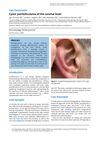 March 2026 in “Dermatology Online Journal”
 Cystic panfolliculoma is a rare, harmless tumor that can be confused with other skin tumors.
 July 2018 in “Elsevier eBooks”
 Scalp psoriasis can cause different types of hair loss, with some patients developing permanent hair loss, and treatment may be stopped due to skin reactions.
 51 citations
,
May 2021 in “Nature Communications”
51 citations
,
May 2021 in “Nature Communications” High proliferation and cell delamination drive early skin development, while later stages may not rely on cell division orientation.
 15 citations
,
April 2017 in “Cell Stem Cell”
15 citations
,
April 2017 in “Cell Stem Cell” Some brain cancer cells avoid immune system detection, and certain treatments could target this to slow their growth; also, certain fat cell precursors help regenerate hair and skin after injury.
89 citations
,
May 2005 in “Stem Cells” Mouse skin has special cells in the epidermis that decrease with age and are linked to keratinocyte stem cells.
September 2016 in “Journal of Dermatological Science” Hair follicles produce IL-7, which is essential for certain skin lymphoma cells to survive.
76 citations
,
January 1998 in “Mammalian Genome” 68 citations
,
December 1983 in “British Journal of Dermatology” Major histocompatibility antigens are found in specific skin cells and structures, but not in sweat glands.
6 citations
,
December 1990 in “PubMed” Keratinocytes in hair follicles differentiate similarly to skin cells, with specific patterns in different regions.
April 2023 in “Journal of Investigative Dermatology” Chronic graft-versus-host disease in the skin shows strong Th1 immune response and unique barrier issues.
 27 citations
,
January 2006 in “Colloids and Surfaces B: Biointerfaces”
27 citations
,
January 2006 in “Colloids and Surfaces B: Biointerfaces” Researchers found that bulge cells from human hair can grow quickly in culture and have properties of hair follicle stem cells, which could be useful for skin treatments.

Hair follicle stem cells are crucial for touch sensation and proper nerve structure in mice.
 23 citations
,
July 2007 in “The journal of investigative dermatology/Journal of investigative dermatology”
23 citations
,
July 2007 in “The journal of investigative dermatology/Journal of investigative dermatology” Hair follicle bulge cells don't help skin regrow after glucocorticoid damage; interfollicular epidermis cells do.
 December 2012 in “Journal of dermatological science”
 Langerhans cells and melanocytes migrate to the skin and hair follicles during early human development.
January 2022 in “Institutional Repositories DataBase (IRDB)” Pen-type microwells are best for forming hair follicle germ structures.
37 citations
,
October 2009 in “Veterinary Dermatology” Canine hair follicles contain stem-like cells with high growth potential.
32 citations
,
July 2003 in “Histochemistry and Cell Biology”  23 citations
,
March 2010 in “Medical hypotheses”
23 citations
,
March 2010 in “Medical hypotheses” Merkel cells may have roles in sensing magnetic fields, creating fingerprints, Reiki energy healing, passing on environmental information to offspring, and influencing hair shape.
April 2012 in “Cancer Research” EGFR deficiency in skin causes hair follicle issues and inflammation.
 June 2022 in “Research Square (Research Square)”
 Nestin-expressing cells turn into a specific type of skin cell in hair follicles during development and in adults.
 1 citations
,
May 2023 in “PubMed”
1 citations
,
May 2023 in “PubMed” A certain type of skin cell, marked by EGFR, produces a lot of IGF1 and helps hair follicles grow back faster.
3 citations
,
December 2003 in “Archives of Pathology & Laboratory Medicine” The nodule was a benign cutaneous lymphadenoma, not cancer, and was successfully removed.