43 citations
,
April 2010 in “Developmental Biology” Sebaceous glands can form new hair follicles when activated, but hair follicle bulges cannot.
26 citations
,
May 2001 in “British Journal of Dermatology” Pilomatrixomas likely originate from the hair matrix due to changes in hair keratin expression.
139 citations
,
August 2006 in “Molecular and Cellular Biology” Rac1 is vital for hair follicle health but not needed for skin maintenance.
147 citations
,
April 2004 in “PubMed” Sex steroid receptors are found in specific skin cells, affecting skin and hair functions.
 15 citations
,
February 2009 in “Cell Stem Cell”
15 citations
,
February 2009 in “Cell Stem Cell” The document concludes that certain chemicals can help maintain stem cell pluripotency and that understanding cell states is crucial for tissue regeneration.
7 citations
,
July 2016 in “Journal of Biomedical Materials Research Part A” cGEL hydrogel improves melanin production in skin cells, making it a promising option for skin treatments.
June 2021 in “Faculty Opinions – Post-Publication Peer Review of the Biomedical Literature” The skin basement membrane is specialized for different tissue interactions, important for hair growth and attachment.
72 citations
,
January 1983 in “The Anatomical Record” Epidermal growth factor delays skin and hair development in mice.
7 citations
,
January 1990 in “Archives of Dermatological Research” Syringomas likely start in the upper dermis and form distinct luminal structures.
January 2024 in “Doria (University of Helsinki)” Keratins help GLUT2 stay on the cell membrane in pancreatic β-cells.
July 2013 in “University of Southern California Digital Library” New stem cells in nails and sweat glands can regenerate skin and hair.
 23 citations
,
January 2021 in “Scientific Reports”
23 citations
,
January 2021 in “Scientific Reports” Adding human blood vessel cells to hair follicle germs may improve hair growth and quality.
65 citations
,
August 2013 in “Acta Biomaterialia” The new matrix improves skin regeneration and graft performance.
 2 citations
,
February 2023 in “Transgenic Research”
2 citations
,
February 2023 in “Transgenic Research” The E2 protein affects gene activity in hair follicles of mice.
 4 citations
,
May 2021 in “The American Journal of Surgical Pathology”
4 citations
,
May 2021 in “The American Journal of Surgical Pathology” Cutaneous Lymphadenoma is a unique skin tumor with specific protein markers and common gene mutations that may cause continuous cell growth.
 April 2018 in “Journal of Investigative Dermatology”
 The keratin network in mouse skin changes during cornification and affects the skin's protective barrier.
143 citations
,
May 2017 in “Nature cell biology” Wounded skin cells can revert to stem cells and help heal.
 256 citations
,
October 2013 in “Nature Communications”
256 citations
,
October 2013 in “Nature Communications” Bioengineered lacrimal glands can restore tear production and protect eyes.
25 citations
,
October 2002 in “The journal of investigative dermatology/Journal of investigative dermatology” Mouse profilaggrin helps in skin cell differentiation and may be involved in calcium signaling.
3 citations
,
April 2012 in “Cancer research” Mouse skin cancer progression involves a unique group of cells marked by ABCG2 and MTS24.
 45 citations
,
May 2003 in “Journal of Cell Science”
45 citations
,
May 2003 in “Journal of Cell Science” α3β1-integrin is crucial for maintaining normal hair follicle shape and function but not needed for the development of the surrounding skin.
58 citations
,
December 2000 in “Experimental Dermatology” Involucrin is a useful marker for keratinocyte differentiation in mice.
10 citations
,
June 2016 in “Cell Transplantation” Sebaceous glands can help harvest hair follicle stem cells to regenerate skin and hair.
 85 citations
,
December 2017 in “Developmental Biology”
85 citations
,
December 2017 in “Developmental Biology” Mammals might fail to regenerate not because they lack the right cells, but because of how cells respond to their surroundings, and changing this environment could enhance regeneration.
 1 citations
,
April 2018 in “Journal of Investigative Dermatology”
1 citations
,
April 2018 in “Journal of Investigative Dermatology” PRC1 is essential for proper skin development and stem cell formation by controlling gene activity.
 12 citations
,
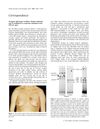
May 2001 in “British journal of dermatology/British journal of dermatology, Supplement”
12 citations
,
May 2001 in “British journal of dermatology/British journal of dermatology, Supplement” A rare benign skin tumor showed unusual features of sebaceous and sweat glands, important for correct diagnosis.
7 citations
,
November 1997 in “Reproduction Fertility and Development” Epidermal growth factor disrupts hair and gland formation in bandicoots.
13 citations
,
March 1997 in “Research in Veterinary Science/Research in veterinary science” Epithelial proliferation and hyperkeratosis are linked to gastric ulcers in pigs.
23 citations
,
June 2023 in “Cell Reports” Early hair follicle development involves distinct cell populations and Wnt signaling influences cell identity.
August 1993 in “Journal of Dermatological Science”