 January 2019 in “Advances in stem cells and their niches”
 Skin health and repair depend on the signals between skin stem cells and their surrounding cells.
 October 2018 in “InTech eBooks”
 The gene Foxn1 is important for hair growth, and understanding it may lead to new alopecia treatments.
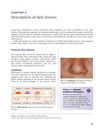
The document explains different types of skin lesions and their characteristics, causes, and related conditions.
 January 2016 in “Research Explorer (The University of Manchester)”
 Activating the Eda/Edar pathway improves wound healing by enhancing hair follicle growth.
 March 2015 in “Plastic and reconstructive surgery”
 Human skin has multiple layers and functions, with key roles in protection, temperature control, and appearance.
Wound healing is complex and requires more research to enhance treatment methods.

Type II spiral ganglion neurites avoid high concentrations of laminin and fibronectin.
 January 2009 in “Side effects of drugs annual”
 Some blood-thinning medications can increase the risk of bleeding, and certain factors like genetics and other health conditions affect their safety and effectiveness.
 January 2008 in “Springer eBooks”
 Thyroid hormone may be useful for treating various skin conditions and needs more research.
 February 2026 in “Editora Pasteur eBooks”
 A comprehensive, personalized approach is needed for treating female pattern hair loss and obesity, involving multiple medical disciplines and lifestyle changes.
 December 2025 in “Lviv clinical bulletin”
 PRP therapy may help with ovarian issues and fertility, but more research is needed.
 January 2025 in “Bright Sky Publications eBooks”
 Advancements in medical physics and laser technology are improving healthcare but access remains unequal globally.
 December 2016 in “British Journal of Dermatology”
 The meeting highlighted the importance of genetic testing and multidisciplinary approaches in pediatric dermatology.
 April 2021 in “Journal of Investigative Dermatology”
 Cyclooxygenase-2 overexpression in mice skin causes hair loss like human androgenetic alopecia.
 December 2017 in “Springer eBooks”
 Treat pediatric skin issues with accurate diagnosis, multidisciplinary team, and various treatment options.

Dermal stem cells help regenerate hair follicles and heal skin wounds.

Integrin alphavbeta6 is important for wound healing and hair growth, and blocking it may improve these processes.
 September 2023 in “medRxiv (Cold Spring Harbor Laboratory)”
 Long-COVID has diverse, long-term health impacts, especially in young people.
 November 2020 in “Elsevier eBooks”
 Antiandrogens and androgen inhibitors like spironolactone, finasteride, and dutasteride can treat hair loss and skin conditions, but they have risks and side effects, including potential harm to pregnant women and risks of cancer and heart issues. Herbal remedies also have antiandrogenic effects but lack safety validation.
 December 2024 in “Health Science Reports”
 Topical metformin shows promise for dental and skin treatments, including periodontitis, hair regrowth, wound healing, and acne.
 July 2023 in “Frontiers in Veterinary Science”
 Melatonin helps hair grow by activating the RORα receptor in goats.
7 citations
,
January 2023 in “Animals” Supplementary feeding improves cashmere yield, goat weight, and kid birth weight.
2 citations
,
July 2022 in “Frontiers in Veterinary Science” A female dog with mixed male and female traits was treated successfully with surgery.
 2 citations
,
July 2021 in “Journal of Dermatology and Dermatologic Surgery”
2 citations
,
July 2021 in “Journal of Dermatology and Dermatologic Surgery” Exposure to the hair loss drug finasteride during pregnancy can cause genital anomalies in male babies, but not in female babies. It's best to avoid this drug in women who could potentially become pregnant.
63 citations
,
December 2010 in “Journal of Endocrinology” Reduced neurosteroids and growth issues can harm fetal brain development, especially in males.
 45 citations
,
November 2021 in “Fertility and Sterility”
45 citations
,
November 2021 in “Fertility and Sterility” The conclusion is that women under 35 should start fertility checks after 12 months of trying to conceive, women over 35 after 6 months, and women over 40 should start immediately. The checks should include ovulation status, reproductive tract structure, and male partner's semen evaluation.
11 citations
,
May 2024 in “Reproductive Biology and Endocrinology” Fetal ovaries produce different hormones than adult ovaries, and endocrine-disrupting chemicals may affect this process.
10 citations
,
November 2018 in “The Italian Journal of Pediatrics/Italian journal of pediatrics” Early diagnosis of Trichorhinophalangeal syndrome type 1 is crucial for treatment and was achieved through clinical examination and family history.
 4 citations
,
May 2022 in “BMC Women's Health”
4 citations
,
May 2022 in “BMC Women's Health” High levels of anti-Müllerian hormone can indicate polycystic ovarian syndrome in women who can have babies.
 June 2018 in “Biomedical Journal of Scientific and Technical Research”
 Men with lower 2nd to 4th finger ratios tend to have larger sinus volumes.