 43 citations
,
November 2019 in “American Journal of Clinical Dermatology”
43 citations
,
November 2019 in “American Journal of Clinical Dermatology” FAGA diagnosis uses blood tests and trichoscopy, with treatments like topical minoxidil, oral anti-androgens, and hormone-modulating drugs.
 22 citations
,
January 2019 in “Endocrinology and metabolism”
22 citations
,
January 2019 in “Endocrinology and metabolism” An mFG score of 7 or higher indicates hirsutism in Filipino women, often linked to higher free testosterone levels.
5 citations
,
September 2022 in “Facial Plastic Surgery & Aesthetic Medicine” Facial feminization surgery helps make facial features more feminine, improving patient satisfaction and safety.
 1 citations
,
September 2016 in “Journal of Dermatological Science”
1 citations
,
September 2016 in “Journal of Dermatological Science” FGF18 treatment during hair's resting phase can protect against hair loss from radiation.
3 citations
,
February 2025 in “Journal of Investigative Dermatology” Lipocartilage is a new type of tissue that affects hair growth and cartilage regeneration.
 3 citations
,
October 2020 in “Journal of Transfusion Medicine”
3 citations
,
October 2020 in “Journal of Transfusion Medicine” Platelet-rich plasma therapy is seen as a promising tissue repair method but lacks standardized protocols.
May 2025 in “International Journal of Biological Macromolecules” A new microneedle treatment shows promise for better hair regrowth in androgenetic alopecia.

Cord blood platelets may have promising future medical uses but need more research.
January 2020 in “Journal of translational science” 1 citations
,
November 1975 in “PubMed” GRF is not safe for tubal occlusion.
58 citations
,
April 1993 in “Developmental Biology” bFGF delays hair growth in mice.
17 citations
,
April 2006 in “Brain Research” 5α-reduced neurosteroids may help regulate glial cell differentiation.
66 citations
,
June 2004 in “Development” FGF signaling is crucial for starting feather development in chicken embryos.
August 2025 in “Biomolecules” Fibroblast growth factors could be a better, safer treatment for hair loss than current options.
39 citations
,
July 1993 in “The journal of investigative dermatology/Journal of investigative dermatology” FGF and EGF are crucial for hair follicle development and growth.
 66 citations
,
April 1995 in “The journal of cell biology/The Journal of cell biology”
66 citations
,
April 1995 in “The journal of cell biology/The Journal of cell biology” A new protein was made to detect specific skin cell growth receptors and worked in normal skin but not in skin cancer cells.
 2 citations
,
January 2022 in “Experimental Dermatology”
2 citations
,
January 2022 in “Experimental Dermatology” GDNF signaling helps in hair growth and skin healing after a wound.
 1 citations
,
September 2021 in “CRC Press eBooks”
1 citations
,
September 2021 in “CRC Press eBooks” Frontal Fibrosing Alopecia is a hair loss condition mainly affecting postmenopausal women, with unclear causes and various clinical patterns.
6 citations
,
January 2014 in “Genetics and Molecular Research” The method successfully created stable transfection donor cells for goat hair follicle research.

The document recommends a multidisciplinary approach and experience sharing to advance facial feminization surgery as a medical field.
April 2023 in “bioRxiv (Cold Spring Harbor Laboratory)” Gap junctions help control feather pattern formation by enabling cell communication.
January 2012 in “Heilongjiang xumu shouyi” EGF and KGF affect wool fineness in Gansu alpine Merino sheep.
 10 citations
,
June 2020 in “Journal of Cosmetic Dermatology”
10 citations
,
June 2020 in “Journal of Cosmetic Dermatology” Frontal fibrosing alopecia may be linked to genital Lichen sclerosus through an autoimmune process.
 179 citations
,
December 2004 in “Journal of The American Academy of Dermatology”
179 citations
,
December 2004 in “Journal of The American Academy of Dermatology” Some postmenopausal women with frontal fibrosing alopecia stopped losing hair with finasteride treatment, hinting at a possible hormonal cause.
January 2020 in “프로그램북(구 초록집)” The treatment increased hair growth and thickness in patients with hair loss.
2 citations
,
June 2021 in “Sultan Qaboos University medical journal” Familial frontal fibrosing alopecia is rare, mostly affects women, and often occurs between sisters or mother-daughter pairs.
60 citations
,
April 2003 in “Biomaterials” Controlled release of growth factors in hydrogels improved hair growth in mice.
 May 2019 in “Anais brasileiros de dermatologia/Anais Brasileiros de Dermatologia”
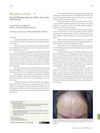
 Frontal fibrosing alopecia mostly affects postmenopausal women, with diagnosis often delayed by 3 years.
 13 citations
,
March 2020 in “Genes”
13 citations
,
March 2020 in “Genes” Disrupting the FGF5 gene in rabbits leads to longer hair by extending the hair growth phase.
7 citations
,
June 2017 in “Gene” Overexpression of FGF5s makes Chinese Merino sheep grow longer and heavier wool.