 January 2002 in “Proceedings of The Japanese Society of Animal Models for Human Diseases”
 Keratin2-6g is crucial for hair follicle development, with mutations causing cell degeneration and vacuolation.
 February 2024 in “Skin research and technology”
 The research suggests that immune cells and a specific type of cell death called ferroptosis are involved in Frontal fibrosis alopecia.
Fgf20 is crucial for hair follicle formation by influencing cell movement and growth.
 February 2024 in “Tissue & Cell”
 New tissue engineering strategies show promise for regenerating human hair follicles, which could improve hair loss treatments.
 April 2023 in “The journal of investigative dermatology/Journal of investigative dermatology”
 EGFR deficiency causes significant changes in skin cells and hair follicles.
Hirsutism is common in young females and may signal underlying hormonal issues.
 4 citations
,
January 2021 in “International Journal of Medical Sciences”
4 citations
,
January 2021 in “International Journal of Medical Sciences” miR-182 may help treat hallux valgus by targeting FGF9.
January 2013 in “Scholarworks (University of Massachusetts Amherst)” FERONIA regulates plant growth, pollen interactions, and sugar signaling.
 January 2017 in “Journal of clinical & experimental dermatology research”
 Scientists have found a way to create hair follicles from human stem cells, which could potentially be used to treat hair loss.
June 2025 in “Journal of Ultrasound in Medicine” High-frequency ultrasound effectively evaluates and diagnoses frontal fibrosing alopecia.
107 citations
,
June 1997 in “PubMed” EGFR is essential for normal hair development and follicle differentiation.

Hair follicle-derived sheets can effectively treat vitiligo by repigmenting skin.
 22 citations
,
December 2016 in “PloS one”
22 citations
,
December 2016 in “PloS one” A specific protein in chicken embryos links early skin layers to feather development.
 August 2023 in “Clinical, Cosmetic and Investigational Dermatology”
 The new hair transplant device reduces damage to hair follicles and makes surgery more comfortable for the surgeon.
September 2022 in “Journal of Theoretical Biology” Hair follicles can regenerate after radiation damage but not during a specific growth phase.
1 citations
,
January 2025 in “Reproductive Biology and Endocrinology” Cell-free fat extract may boost IVF success in older women with past failures.
 February 2026 in “SHILAP Revista de lepidopterología”
 Engineered exosomes with EGF and FGF improve hair growth in mice with hair loss.
 15 citations
,
September 2021 in “Archives of Plastic Surgery”
15 citations
,
September 2021 in “Archives of Plastic Surgery” The document concludes that facial feminization surgery improves psychological well-being and social acceptance for transgender individuals.
 7 citations
,
January 2009 in “Biological & pharmaceutical bulletin”
7 citations
,
January 2009 in “Biological & pharmaceutical bulletin” Ferrous Ferric Chloride may improve skin cell function and increase hair growth in mice.
January 2012 in “Heilongjiang xumu shouyi” EGF and KGF affect wool fineness in Gansu alpine Merino sheep.
 25 citations
,
April 2021 in “The EMBO Journal”
25 citations
,
April 2021 in “The EMBO Journal” Hair follicle stem cells help maintain skin health and could improve skin replacement therapies.
1 citations
,
October 2023 in “Heliyon” An infant with Hutchinson-Gilford Progeria Syndrome had successful surgery to fix breathing issues caused by a new genetic mutation.
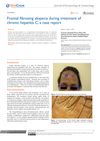 September 2017 in “Journal of Dermatology & Cosmetology”
 Hepatitis C treatment may cause frontal fibrosing alopecia.
The modified stem cells with VEGF165 in a special scaffold improved blood vessel growth and wound healing for skin repair.
3 citations
,
February 2025 in “Journal of the American Academy of Dermatology” Feminizing hormone therapy increases hair counts and improves hair-related quality of life, while masculinizing therapy may reduce large terminal hairs.
9 citations
,
November 2014 in “Indian Journal of Endocrinology and Metabolism” A 15-year-old girl with rare reproductive disorders received hormone therapy to develop secondary sexual traits, but infertility persisted.
19 citations
,
September 2019 in “British Journal of Dermatology” FOL-005 peptide can reduce human hair growth by lowering FGF7 levels.
30 citations
,
April 2009 in “Mycoses” Microsporum gypseum fungus breaks down keratin in hair by digesting it enzymatically, starting with less keratinized parts.
6 citations
,
July 2009 in “Journal of Cutaneous Pathology” Hair follicle stem cells are key for hair growth and skin repair.