
Search
for
Sort by
Research
690-720 / 1000+ results 
research Oral cyclosporin does not arrest progression of androgenetic alopecia
Cyclosporin doesn't stop hair loss.

research LITERATURE REVIEW
Atopic dermatitis may have genetic causes and can be treated with pharmacologic methods, glycerin creams, and controlling Staphylococcus aureus colonization.
research Traumatic panniculitis with localized hypertrichosis: Two new cases and considerations
Traumatic panniculitis can cause increased hair growth in affected areas.

research Iatrogenic epidermoid cyst in the parotid gland: A case report
A woman developed a cyst in her parotid gland after a botox injection, which was successfully removed with surgery.
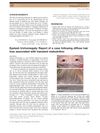
research Eyelash trichomegaly: Report of a case following diffuse hair loss associated with transient malnutrition
Malnutrition can cause unusual eyelash growth and hair loss.
research Fecal Microbiota and Hair Glucocorticoid Concentration Show Associations with Growth during Early Life in a Pig Model
Hair glucocorticoid levels and gut bacteria are linked to growth rates in piglets.

research Progenic hair regrowth treatment- The use of platelet-released growth factors for treating androgenetic alopecia (AGA) by activating hair follicle stem cells
Platelet-released growth factors can treat hair loss by activating hair follicle stem cells, blocking certain pathways, and controlling inflammation and fibrosis.
research Hydrogels Modulating the Microbiome: Therapies for Tissue Regeneration with Infection Control
Functionalized hydrogels can help heal tissues and fight infections by delivering beneficial bacteria and antimicrobials.
research Hyperandrogenism in post-menopausal women: a diagnosis challenge
A woman had high testosterone due to an ovarian issue, which was fixed with surgery.

research Helminth TGF-β mimic, TGM, increases leukocyte migration and activation while also enhancing cutaneous wound healing and tissue regeneration.
A parasite molecule can speed up skin healing and reduce scarring.
research Re: re: Gillies temporal incision: an alternative approach to biopsy of the superficial temporal artery
The Gillies temporal incision is a safer and more cosmetically appealing method for biopsy of the superficial temporal artery.

research Characterization of distinct microbiota associated with androgenetic alopecia patients treated and untreated with platelet‐rich plasma (PRP)
PRP treatment helps hair growth and rebalances scalp bacteria in androgenetic alopecia patients.

research Silk Fibroin‐Based Nanoparticles Blended Fluoridated Hydrogel with Photodynamic Antibacterial for Infected Wound Healing
The new hydrogel dressing effectively kills bacteria and helps wounds heal faster with hair regrowth.

research Hirsutism
The document likely offers guidance on treating a woman's excessive hair growth, considering her symptoms and obesity.
research Acquired trichomegaly with topiramate
A woman's eyelashes grew thicker and longer after taking topiramate, but returned to normal when she stopped the medication.

research Safety and Effectiveness of a Novel Hyaluronic Acid Gel for Lip Augmentation
The new hyaluronic acid gel is as safe and effective for lip enhancement as the existing product.
research A rare clinical image of hypertrichosis (Werewolf syndrome)
Hypertrichosis causes excessive hair growth and needs psychological support due to its impact on self-esteem.

research Hypertrichosis Induced by Minoxidil: A Case of Systemic Absorption from Scalp Occlusion
Improper use of minoxidil can cause excessive hair growth.

research Reversible hair loss in a patient with cicatricial alopecia: A case of regrowth associated with pioglitazone use
Pioglitazone use was linked to hair regrowth in a patient with permanent hair loss from cicatricial alopecia.
research Crusted plaques of the scalp after deep brain stimulation surgery
The patient's scalp plaques were caused by impetigo and successfully treated with antibiotics.
research CLINICAL CASE OF PSEUDOFOLLICULITIS: КЛИНИЧЕСКИЙ СЛУЧАЙ ПСЕВДОФОЛЛИКУЛИТА ВОЛОС БОРОДЫ
Pseudofolliculitis causes painful bumps and dark spots from shaving, especially in people with curly hair, and can be treated by changing shaving habits and using specific topical treatments.
research Localized Acquired Hypertrichosis After Long-Term Repeated Cupping Therapy: A Case Report
Long-term repeated cupping therapy can cause unexpected localized hair growth.
research Ichthyosis linearis circumflexa with bamboo hair: challenges in the diagnosis and management
A 15-year-old boy's skin and hair condition worsened due to improper treatment, leading to severe health issues.

research Therapeutic Effects of Growth Factor Cocktail Including Fibroblast Growth Factor 9 in Patients with Pattern Hair Loss
A growth factor cocktail with FGF9 and microneedling effectively increases hair density and diameter in hair loss patients.

research A dramatic case of diabetic gustatory hyperhidrosis successfully treated with topical glycopyrrolate
Topical glycopyrrolate lotion helped reduce excessive sweating from eating in a diabetic man.
research Persistent hair growth over a hemangioma in a patient with alopecia areata: A clue to pathogenesis?
research Platelet-rich plasma and fat grafting for the treatment of inferior alveolar nerve neuropathy: The first case report
Using platelet-rich plasma and fat grafting to treat nerve pain showed promising results with no side effects.
research FC 2-2 : Therapeutic Effects of Growth Factor Cocktail (CellcurinTM) containing FGF5s (fibroblast growth factor 5 short) and NMN (nicotinamide mononucleotide) applied on the scalp in the patients with androgenetic alopecia: a split study
The treatment increased hair growth and thickness in patients with hair loss.

research Human Fibroblast‐Derived Matrix Hydrogel Accelerates Regenerative Wound Remodeling Through the Interactions with Macrophages
A new hydrogel made from human cells improves wound healing by working with immune cells to promote repair.