September 2023 in “Journal of the American Academy of Dermatology” Guselkumab significantly improves psoriasis symptoms within 12 weeks.
26 citations
,
April 2011 in “British Journal of Dermatology” New mutations in the DSG4 gene cause a rare hair condition.
 108 citations
,
July 2002 in “Molecular and cellular biology”
108 citations
,
July 2002 in “Molecular and cellular biology” Overexpressing Dsg3 in mice skin causes excessive cell growth and abnormal skin development.
 October 2025 in “International Journal of Dermatology”
 GLP-1 receptor agonists may cause hair loss, but regrowth is rare.
 May 2021 in “Letters in Applied NanoBioScience”
 Pranlukast and mirabegron may work as new diabetes drugs.
7 citations
,
January 1971 in “Archives of Dermatological Research”  2 citations
,
February 2019 in “Journal of Investigative Dermatology”
2 citations
,
February 2019 in “Journal of Investigative Dermatology” Higher levels of the DP2 receptor may lead to hair loss.
 19 citations
,
April 2015 in “Stem Cells”
19 citations
,
April 2015 in “Stem Cells” Pro-IGF-II improves muscle repair in old mice.
 6 citations
,
July 2008 in “Clinical and experimental optometry”
6 citations
,
July 2008 in “Clinical and experimental optometry” Prostaglandin eye drops for glaucoma can rarely cause too much cheek hair growth.
September 2017 in “The journal of investigative dermatology/Journal of investigative dermatology” N-acetyl-GED may help prevent and partially reverse a process that leads to scarring hair loss.
53 citations
,
August 2010 in “Molecular Carcinogenesis” Slug is crucial for skin health, hair growth, and healing.
 43 citations
,
March 2009 in “Journal of Cellular and Molecular Medicine”
43 citations
,
March 2009 in “Journal of Cellular and Molecular Medicine” TGF-β2 plays a key role in human hair growth and development.
6 citations
,
December 2023 in “Journal of Molecular Cell Biology” Removing Gsdma1/2/3 genes reduces skin cell overgrowth by blocking a specific cell pathway.
 19 citations
,
November 1971 in “Clinica Chimica Acta”
19 citations
,
November 1971 in “Clinica Chimica Acta” The document concludes that measuring γ-glutamyl transpeptidase activity is more accurate with a higher substrate concentration and using diluted acetic acid to stop the reaction.
January 2025 in “Dermatology Research and Practice” Higher activity in lichen planopilaris is linked to certain immune and tissue genes.
 256 citations
,
October 2013 in “Nature Communications”
256 citations
,
October 2013 in “Nature Communications” Bioengineered lacrimal glands can restore tear production and protect eyes.
29 citations
,
June 2014 in “Experimental Cell Research” EGF–FGF2 helps mouse stem cells grow and become more like nerve cells.
1 citations
,
May 2025 in “Cell Reports Medicine” RSPO1 could help create new diabetes treatments by increasing pancreatic β cells.
1 citations
,
January 2013 Glucosylceramides are essential for healthy skin and proper wound healing.
December 2025 in “Materials Technology” The engineered scaffold shows promise for effective skin repair.
 7 citations
,
June 2011 in “Movement Disorders”
7 citations
,
June 2011 in “Movement Disorders” A specific gene mutation is linked to a hereditary form of dystonia that responds well to certain medications.
 68 citations
,
March 2008 in “Experimental dermatology”
68 citations
,
March 2008 in “Experimental dermatology” The new assay can track and measure melanosome transfer between skin cells, confirming filopodia's role in this process.
 3 citations
,
November 2022 in “Frontiers in molecular biosciences”
3 citations
,
November 2022 in “Frontiers in molecular biosciences” Plasmalogens activate a channel in cells that may stimulate hair growth.
 October 2023 in “International Journal of Science and Research (IJSR)”
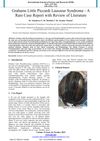
 Early diagnosis of GLPLS is crucial to prevent complications, but scarring alopecia is irreversible.
226 citations
,
August 2006 in “Molecular and Cellular Biology” EGF signaling affects gene expression in skin cells, influencing hair growth and potentially cancer.
 May 2025 in “The Journal of Rheumatology”
 Chronic granulomatous disease may be linked to developing systemic lupus erythematosus.
18 citations
,
October 2013 in “Stem Cell Research & Therapy” A specific combination of chemicals effectively expands genetically modified skin cells for potential use in skin therapy.
1 citations
,
June 2015 in “Journal of anatomy” A compound named ZCZ90 can increase muscle spindle firing, potentially helping treat muscle spasms and hypertension.
 1 citations
,
June 2021 in “The Indonesian Biomedical Journal”
1 citations
,
June 2021 in “The Indonesian Biomedical Journal” Glycated hemoglobin is not as effective as the oral glucose tolerance test for diagnosing blood sugar problems in women with PCOS in Southern Iraq.