 April 2023 in “Research Society and Development”
 Corticosteroids are safe and effective for treating Alopecia Areata.

More research is needed to confirm the potential of various treatments, including Helichrysum plicatum, vitamins, bromelain, personalized medications, hydrogels, and bacteriophage therapy.
 March 2023 in “Journal of clinical review & case reports”
 Frontal Fibrosing Alopecia mainly affects postmenopausal Mexican women, requiring early detection to prevent permanent hair loss.
 February 2023 in “International Journal of Medical Arts”
 Trichloroacetic acid is a safe and effective treatment for hair loss in alopecia areata patients.
 January 2023 in “Pakistan Armed Forces Medical Journal”
  January 2023 in “International Journal of Pharmaceutical and Clinical Research”
 Follicular targeting could improve hirsutism treatment by focusing directly on hair follicles.
 October 2022 in “Dermatology practical & conceptual”
 People with hidradenitis suppurativa are more likely to have bipolar disorder than those with psoriasis or without skin conditions.
 October 2022 in “Southeast Asian journal of health professionals”
 Hair greying is seen as a sign of aging; temporary fixes like hair dye are used, but a balanced diet and hair care can help manage it.
 June 2022 in “International journal of research and review”
 The article concludes that early diagnosis and lifestyle changes can prevent complications from high uric acid levels.
 February 2022 in “Cleveland Clinic Journal of Medicine”
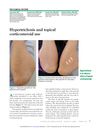
 Prolonged use of topical corticosteroids can cause excessive hair growth.
 May 2021 in “Letters in Applied NanoBioScience”
 Pranlukast and mirabegron may work as new diabetes drugs.
 March 2021 in “Indian Journal of Case Reports”
 A young woman with late-stage Vogt-Koyanagi-Harada disease was successfully treated at a hospital.
 June 2020 in “Annals of the Rheumatic Diseases”
 Patients need better information about the risks of long-term steroid use.
 November 2019 in “Harper's Textbook of Pediatric Dermatology”
 Understanding normal hair growth and loss in children is key to diagnosing and treating hair disorders.
 June 2019 in “Poster presentations”
 Most patients with rheumatoid arthritis continued methotrexate treatment over two years, but those who stopped and restarted experienced more side effects and less improvement.
 April 2019 in “National Journal of Research in Ayurved Science”
 Triphala is a safe, detoxifying Ayurvedic formula that boosts health and may have anti-cancer benefits.
 October 2018 in “InTech eBooks”
 The most effective treatments for hair loss are minoxidil, finasteride, PRP, and hair transplants, with steroids and immunosuppressants for autoimmune types.
 July 2018 in “Elsevier eBooks”
 Some drugs can cause reversible hair loss, but certain chemotherapy drugs may lead to permanent hair loss; drugs can also change hair color and texture.

 January 2018 in “Springer eBooks”
 Lasers are FDA-approved for permanent hair reduction, not removal, and more research is needed to improve treatments.
 January 2018 in “Springer eBooks”
 Different races and genders have unique skin and hair issues, requiring specialized care and more research for effective treatment.
 July 2017 in “Cardiologia Croatica”
 Metabolic syndrome's individual issues are real and need treatment to reduce diabetes and heart disease risks.
 January 2017 in “Springer eBooks”
 The document explains various skin conditions and their treatments.
 January 2017 in “Archives of clinical and biomedical research”
 Enhancing melanin's energy generation may help treat alopecia areata.
 January 2017 in “Chemistry & Industry”
 Eating fewer calories may slow aging and removing old cells can increase lifespan in mice.
 January 2016 in “Springer eBooks”
 Alopecia Areata is an unpredictable autoimmune hair loss condition with limited and variable treatment effectiveness.
 January 2016 in “Springer eBooks”
 Understanding drug interactions, side effects, and patient-specific factors is crucial for effective dermatological care.
 August 2015 in “Dermatología Argentina”
 Frontal fibrosing alopecia causes hairline recession and eyebrow loss in postmenopausal women.

Finasteride can reduce prostate cancer risk but may delay diagnosis and cause sexual side effects.
 January 2014 in “Journal of Investigative Dermatology”
 Proteins like aPKC and PDGF-AA, substances like adenosine and ATP, and adipose-derived stem cells all play important roles in hair growth and health, and could potentially be used to treat hair loss and skin conditions.