 20 citations
,
March 2023 in “Drug Delivery and Translational Research”
20 citations
,
March 2023 in “Drug Delivery and Translational Research” The new gel effectively treats MRSA-infected wounds for longer.
 July 2026 in “Journal of the American Academy of Dermatology”
 GLP-1 and GLP-1/GIP agonists may increase the risk of hair loss.
January 2024 in “Doria (University of Helsinki)” Keratins help GLUT2 stay on the cell membrane in pancreatic β-cells.
February 2019 in “International Journal of Dermatology and Clinical Research” Nε-(carboxymethyl) lysine delays hair growth by blocking a key protein.
9 citations
,
February 2012 in “Clinical Neurology and Neurosurgery” Dystonia may be part of PAS-4 and linked to immune issues.
32 citations
,
July 2003 in “Histochemistry and Cell Biology”  February 2016 in “Acta Medica Marisiensis”
 A woman with chronic hepatitis C had a rare skin condition linked to her illness.
 May 2014 in “Clinical and Experimental Dermatology”
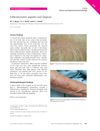
 A 70-year-old woman with a rare skin condition improved after treatment with topical steroids and acitretin.
9 citations
,
March 2022 in “Journal of Chemical Information and Modeling” New inhibitors may reduce gut toxicity from cancer drugs.
 January 2024 in “International Journal of Trichology”
 Combining microneedling with glycosaminoglycan lotion may improve hair growth in mild androgenetic alopecia.
12 citations
,
May 2005 in “Journal of the American Geriatrics Society” Stopping valproate and using lactulose can quickly treat valproate-induced hyperammonemia.
8 citations
,
June 1981 in “Clinica Chimica Acta” 9 citations
,
May 2021 in “Frontiers in aging neuroscience” Taking triterpenoids from Ganoderma lucidum over a long time can help slow down brain aging and improve overall health in mice.
April 2016 in “The journal of investigative dermatology/Journal of investigative dermatology” Laminin-511 is involved in psoriasis development and can be regulated by cannabinoid receptor type 1.
 83 citations
,
July 2008 in “Current Opinion in Chemical Biology”
83 citations
,
July 2008 in “Current Opinion in Chemical Biology” The document concludes that understanding sulfation biology is crucial for creating treatments due to its importance in biological functions and disease.
1 citations
,
August 2025 GLP-1 receptor agonists can help skin conditions but may cause hair loss and other skin issues.
23 citations
,
January 2014 in “Evidence-based Complementary and Alternative Medicine” Mushroom beta-glucans from Ganoderma lucidum can reduce tumor size and metastasis in cancer.
 April 2023 in “Journal of Investigative Dermatology”
 PX-12 may help treat psoriasis by blocking inflammation and cell death.
 2 citations
,
August 2020 in “Journal of Cosmetic Dermatology”
2 citations
,
August 2020 in “Journal of Cosmetic Dermatology” Higher granulysin levels in the blood are linked to more severe hair loss in alopecia areata patients, and these levels decrease after effective treatment.
4 citations
,
April 1986 in “Cancer Letters” GSH-T levels in hair follicles are similar in smokers and non-smokers and don't increase with certain treatments.
 January 2017 in “Brazilian Journal of Pharmaceutical Sciences”
 Arteannuin might work against cancer and Alzheimer's by targeting neprilysin.
 2 citations
,
May 2022 in “Research Square (Research Square)”
2 citations
,
May 2022 in “Research Square (Research Square)” KGF-1 135 is a stable and effective alternative for treating oral mucositis.
August 2026 in “Pharmacological Research - Modern Chinese Medicine” Agrimonia pilosa extract and agrimonolide reduce inflammation and speed up wound healing.
22 citations
,
February 2024 in “Heliyon” Exploring fermented foods from various regions can lead to discovering new fibrinolytic enzymes.
 11 citations
,
August 2016 in “Journal of dermatological treatment”
11 citations
,
August 2016 in “Journal of dermatological treatment” Tip cryotherapy effectively treats idiopathic guttate hypomelanosis with minimal side effects.
5 citations
,
November 2024 in “Biomedicine & Pharmacotherapy” The chitosan-peptide system helps cartilage regeneration using fat-derived cells.
July 2025 in “Journal of Investigative Dermatology” Upadacitinib effectively treats pyoderma gangrenosum.
1 citations
,
January 2025 in “ARC Journal of Dermatology” January 2025 in “Archives of Dermatological Research” 26 citations
,
September 2013 in “Journal of Dermatological Science” Serum granulysin levels can indicate the activity and prognosis of alopecia areata.