Lychnophora salicifolia extract in liposomes may protect skin from UV damage and inflammation.
10 citations
,
December 2023 in “International Journal of Nanomedicine” Cell membrane-coated nanoparticles could improve gene therapy by enhancing delivery and targeting of nucleic acids.
 June 2024 in “International journal of biological macromolecules”
 The hydrogel effectively stops bleeding and heals diabetic wounds quickly.
January 2018 in “Refubium (Universitätsbibliothek der Freien Universität Berlin)” New nanocarriers were developed for safer, targeted drug delivery and diagnostics, showing promise for future medical use.
258 citations
,
July 2005 in “Journal of lipid research” DGAT1 enzyme helps make diacylglycerols, waxes, and retinyl esters.
 1 citations
,
August 2024 in “Pharmaceuticals”
1 citations
,
August 2024 in “Pharmaceuticals” Goat placenta extract in a special delivery system improved hair growth and thickness in chemotherapy patients.
1 citations
,
April 2016 in “Journal of lipid research” Lipin-1 is important for skin cell differentiation and skin barrier function.
Liposomes with minoxidil and PEP penetrate skin slowly but reach deeper layers than foam.
 February 2024 in “International Journal For Multidisciplinary Research”
 Nanostructured lipid carriers are effective for treating hyperpigmentation in women aged 30-40.
559 citations
,
October 2020 in “Frontiers in Molecular Biosciences” Solid lipid nanoparticles are promising for safe and effective drug delivery but need more research for clinical use.
4 citations
,
July 2023 in “Analytical and Bioanalytical Chemistry” 3 citations
,
September 2018 in “Current Drug Delivery” The combination of propylene glycol and Tween® 80 improves finasteride gel effectiveness.
 36 citations
,
August 2011 in “Journal of dermatological science”
36 citations
,
August 2011 in “Journal of dermatological science” Human hair has a protective lipid layer that can be damaged by moisture and treatments, affecting hair growth and health.
 May 2021 in “Our Dermatology Online”
 A woman with a rare scalp condition causing a thick scalp and hair loss didn't improve with steroid treatment.
35 citations
,
October 2005 in “European journal of pharmaceutics and biopharmaceutics” Polymers increased skin permeation and stability of steroid hormones in liposomal formulations.
216 citations
,
May 2003 in “Journal of Investigative Dermatology” Glycerol is essential for skin hydration in mice without sebaceous glands.
21 citations
,
July 2015 in “International Journal of Nanomedicine” Increased liposome fluidity boosts skin penetration of sodium fluorescein.
65 citations
,
April 2007 in “Chemistry and Physics of Lipids” Steroid hormones change the size, charge, and stability of DPPC liposomes.
 May 2014 in “Clinical and Experimental Dermatology”
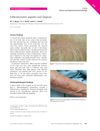
 A 70-year-old woman with a rare skin condition improved after treatment with topical steroids and acitretin.
 October 2025 in “Proceedings of the National Academy of Sciences”
 Phospholipids help plant proteins move by regulating receptor interactions.
 2 citations
,
January 2024 in “Pakistan Journal of Life and Social Sciences (PJLSS)”
2 citations
,
January 2024 in “Pakistan Journal of Life and Social Sciences (PJLSS)” Emulgels are effective for delivering skin medications due to their unique gel-emulsion mix.
2 citations
,
September 2023 in “Foods” Microcapsules and effervescent tablets make insect lipids easier to consume.
 10 citations
,
January 2024 in “Polymer Chemistry”
10 citations
,
January 2024 in “Polymer Chemistry” Lipid–polymer hybrid nanoparticles can improve genome editing delivery and outcomes.
October 2024 in “International Journal of Biological Macromolecules” Ginkgo biloba leaf polysaccharides have many health benefits and potential for commercial use.
Glycogen helps E. coli cells divide unevenly and organize their contents.
June 2003 in “Faculty Opinions – Post-Publication Peer Review of the Biomedical Literature” GLABRA2 represses root hair formation by inhibiting a specific gene.
 September 2025 in “Advanced Pharmaceutical Bulletin”
 Genosomes are promising for safe and effective gene delivery in therapy.
253 citations
,
April 2009 in “Journal of Biological Chemistry” p2y5, now called LPA6, is a receptor important for human hair growth.
 February 2024 in “Heliyon”
 People with androgenetic alopecia have different lipid levels in their blood, which vary between men and women, and may be linked to a higher risk of metabolic syndrome.
September 2023 in “International journal of molecular sciences” Targeting lipid metabolism can help treat advanced, resistant cancers.