21 citations
,
December 2015 in “Development Growth & Differentiation” DHT is crucial for urethral formation, and its disruption can affect masculinization and lead to hypospadias.
226 citations
,
August 2006 in “Molecular and Cellular Biology” EGF signaling affects gene expression in skin cells, influencing hair growth and potentially cancer.
 47 citations
,
December 2019 in “Frontiers in immunology”
47 citations
,
December 2019 in “Frontiers in immunology” A new mutation in the STING protein causes a range of symptoms and its severity may be affected by other genetic variations; treatment with a specific inhibitor showed improvement in one patient.
26 citations
,
September 1999 in “Canadian Journal of Botany” The RHD4 gene is crucial for consistent root hair growth in Arabidopsis thaliana.
March 2026 in “World Rabbit Science” DKK4 can be used to improve wool quality in Zhexi Angora rabbits.
January 1990 in “UCL Discovery (University College London)” The guinea pig α-lactalbumin gene was successfully expressed in the mammary glands of transgenic mice.
3 citations
,
December 2020 in “Skin Appendage Disorders” Genetic testing confirmed a rare disorder causing hair loss and vision problems in a Saudi family, stressing its importance for diagnosis and counseling.
13 citations
,
July 2020 in “Stem Cell Research & Therapy” Young donor, early passage stem cells have the highest stemness.
49 citations
,
January 2006 in “Developmental Dynamics” Noggin gene inactivation causes skeletal defects in mice, varying by genetic background.
EGF affects hair and skin development.
35 citations
,
April 1998 in “PubMed” Activated erbB-2 in mice skin causes severe skin and hair abnormalities.
 25 citations
,
May 1994 in “Journal of Investigative Dermatology”
25 citations
,
May 1994 in “Journal of Investigative Dermatology” Researchers found a new gene, hacl-1, that is active in mouse hair follicles during hair growth and may be important for hair biology.
 28 citations
,
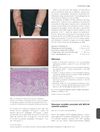
February 2010 in “British journal of dermatology/British journal of dermatology, Supplement”
28 citations
,
February 2010 in “British journal of dermatology/British journal of dermatology, Supplement” WNT10A mutations cause varied symptoms in patients with odonto-onycho-dermal dysplasia.
28 citations
,
August 2019 in “BMC Genetics” miR-148a and miR-10a affect hair growth in Hu sheep.
2 citations
,
January 2025 in “Development” BMP5 is essential for ear cartilage cell growth in rodents.
1 citations
,
November 2024 in “Genes” miR-144 affects hair growth by interacting with Lhx2.
179 citations
,
June 2000 in “The American journal of pathology” The absence of functional sebaceous glands causes hair follicle destruction and scarring alopecia.
 September 2021 in “International Journal of Biomedicine”
 Certain gene variations are linked to a higher risk of severe acne, suggesting a genetic influence on the condition.
 48 citations
,
January 2012 in “The journal of investigative dermatology/Journal of investigative dermatology”
48 citations
,
January 2012 in “The journal of investigative dermatology/Journal of investigative dermatology” Chemokine signaling is important for hair development.
23 citations
,
December 2008 in “Pediatric neurology” The document adds two cases of Gomez-Lopez-Hernandez syndrome and suggests including trigeminal anesthesia and scalp alopecia as key diagnostic criteria.
39 citations
,
October 2012 in “Familial cancer” New therapies for Birt–Hogg–Dubé syndrome are being developed based on understanding the FLCN gene's role.
12 citations
,
June 2016 in “Clinical and experimental dermatology” A new genetic mutation in the TRPV3 gene causes Olmsted-like syndrome in a Mongolian family.
10 citations
,
December 2015 in “Experimental dermatology” EGFR helps mouse hair follicles stop growing by reducing certain growth regulators.
132 citations
,
August 2008 in “Development” Dlx3 is essential for hair growth and regeneration.
 2 citations
,
January 2019 in “Annals of Dermatology”
2 citations
,
January 2019 in “Annals of Dermatology” Melandrium firmum extract helps mice grow hair by blocking a hair loss enzyme and changing hair growth genes.
February 2019 in “Chin J Injury Repair and Wound Healing(Electronic Edition)” Porcine acellular dermal matrix helps hair growth by boosting specific proteins and signals.
 April 2026 in “Tissue Engineering and Regenerative Medicine”
 The GPRC6A-Duox1 axis helps control hair growth and loss by affecting hydrogen peroxide production.
A specific gene change in APCDD1 increases the risk of hair loss.
 34 citations
,
April 2018 in “EMBO journal”
34 citations
,
April 2018 in “EMBO journal” The protein SLC1A3 is important for activating skin stem cells and is necessary for normal hair and skin growth in mice.
September 2024 in “Annals of Dermatology” A new diagnostic model can help better diagnose and understand Alopecia Areata.