1 citations
,
November 2024 in “EMBO Reports” Deleting Gpr54 speeds up hair growth and regeneration.
 4 citations
,
February 2012 in “Chinese Science Bulletin”
4 citations
,
February 2012 in “Chinese Science Bulletin” The MtAnn3 gene affects root hair growth and is influenced by cytokinin.
 2 citations
,
July 2023 in “International Journal of Molecular Sciences”
2 citations
,
July 2023 in “International Journal of Molecular Sciences” BFNB could be a promising treatment for hair growth.
 23 citations
,
January 2024 in “Nature Immunology”
23 citations
,
January 2024 in “Nature Immunology” γδ T cells adapt uniquely to different tissues in mice.
 23 citations
,
December 2013 in “British Journal of Dermatology”
23 citations
,
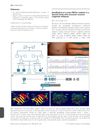
December 2013 in “British Journal of Dermatology” A new gene mutation linked to a skin condition was found in a Spanish family.
46 citations
,
June 2013 in “Journal of structural biology” High glycine–tyrosine keratin-associated proteins help make hair strong and maintain its shape.
 1 citations
,
October 2023 in “JEADV. Journal of the European Academy of Dermatology and Venereology/Journal of the European Academy of Dermatology and Venereology”
1 citations
,
October 2023 in “JEADV. Journal of the European Academy of Dermatology and Venereology/Journal of the European Academy of Dermatology and Venereology” A man developed skin lesions as a side effect of a gamma secretase inhibitor used for treating a tumor.
2 citations
,
January 2010 9 citations
,
February 2018 in “Journal of dermatological treatment” Methotrexate improved skin condition in 64% of patients with generalized granuloma annulare.
5 citations
,
March 1993 in “The Journal of Cell Biology” A soluble factor in developing mouse whisker pads boosts nerve growth factor mRNA production.
 15 citations
,
December 2015 in “PLoS ONE”
15 citations
,
December 2015 in “PLoS ONE” Fibroblasts can be mistaken for neural cells, so functional validation is needed.
1 citations
,
June 2015 in “Journal of anatomy” A compound named ZCZ90 can increase muscle spindle firing, potentially helping treat muscle spasms and hypertension.
 August 2024 in “Life Science Alliance”
 Helminth protein helps wounds heal better by reducing scarring and promoting tissue growth.
 April 2023 in “Journal of Investigative Dermatology”
 The research updated the skin cell profile, finding new skin cell markers and showing fibroblasts' key role in skin health.
 16 citations
,
February 2018 in “BMC Genomics”
16 citations
,
February 2018 in “BMC Genomics” Certain genetic markers linked to reproductive potential were identified by their impact on a protein's ability to bind to genes.
 March 2026 in “Calcified Tissue International”
 The EDA pathway plays a key role in bone development by interacting with other signaling pathways.
 11 citations
,
August 2019 in “Journal of Molecular Histology”
11 citations
,
August 2019 in “Journal of Molecular Histology” NFIC helps rat dental cells grow and turn into bone-like cells.
 May 2026 in “Discover Oncology”
 Targeting LGR4 may help treat cancer by reducing cancer stem cell traits and drug resistance.
July 2025 in “Frontiers in Pharmacology” G-1 promotes hair growth in female mice by activating specific signaling pathways.
April 2023 in “Journal of Investigative Dermatology” RNase L suppresses regeneration in mammals.
January 2016 in “Memorial University Research Repository (Memorial University)” Hereditary hyperplastic gingivitis in silver foxes may be linked to errors in the MAPK signaling pathway, influenced by androgens.
21 citations
,
June 2022 in “Pharmaceutics” Goat placenta in microneedle patches is effective and safe for skin regeneration.
5 citations
,
December 2020 in “Gene” ANXA1 influences hair growth in mice through the EGF signaling pathway.
 9 citations
,
November 2019 in “Cell calcium”
9 citations
,
November 2019 in “Cell calcium” The STIM1 R304W mutation in mice leads to bone changes and teeth hair growth.
 April 2015 in “Andrology”
 HNG may help prevent the negative effects of chemotherapy on sperm production and white blood cell counts.
Meis2 is essential for touch sensation and nerve function in mice.
26 citations
,
April 2011 in “British Journal of Dermatology” New mutations in the DSG4 gene cause a rare hair condition.
October 2007 in “European Neuropsychopharmacology”  28 citations
,
November 2019 in “Gene”
28 citations
,
November 2019 in “Gene” The ITGB6 gene is important for tissue repair and hair growth, and mutations can lead to enamel defects and other health issues.