19 citations
,
November 2017 in “General and comparative endocrinology” BMP2 and BMPR-IA may stop hair growth while Noggin may encourage it in yak skin.
June 2020 in “Research Square (Research Square)” The study found key long non-coding RNAs involved in yak hair growth cycles.
 6 citations
,
November 2019 in “The application of clinical genetics”
6 citations
,
November 2019 in “The application of clinical genetics” The study found that a specific genetic variation in the TNFα gene is significantly linked to Alopecia Areata in the Jordanian Arab population.
10 citations
,
September 2016 in “Animal genetics” Researchers identified key genes and proteins linked to wool growth in sheep.
130 citations
,
January 2000 in “Nature biotechnology”  30 citations
,
June 2021 in “British Journal of Dermatology”
30 citations
,
June 2021 in “British Journal of Dermatology” Mutations in the WNT10A gene can cause skin, hair, teeth, and other disorders, and may also affect other areas like kidney and cancer, with potential for targeted treatments.
January 2026 in “Biomolecules” TSC22D genes are key in metabolic diseases and cancer, offering potential as treatment targets.
November 2012 in “Experimental and Clinical Endocrinology & Diabetes” A new genetic mutation causes severe Leydig cell hypoplasia, affecting sexual development.
 10 citations
,
May 2012 in “PloS one”
10 citations
,
May 2012 in “PloS one” Low ERCC3 gene activity is linked to non-pigmented hair growth.
April 2019 in “Journal of Investigative Dermatology” Researchers created a new mouse model for studying scleroderma.
 134 citations
,
February 2005 in “Neuropsychopharmacology”
134 citations
,
February 2005 in “Neuropsychopharmacology” GABRA2 gene variations impact alcohol response, and hair loss medication finasteride reduces some effects.
 12 citations
,
December 2020 in “Archives animal breeding/Archiv für Tierzucht”
12 citations
,
December 2020 in “Archives animal breeding/Archiv für Tierzucht” EDA and EDAR are important for hair follicle development in cashmere goats and affect other related genes.
15 citations
,
January 1991 in “Mammalian Genome”  7 citations
,
January 2015 in “Dermatology”
7 citations
,
January 2015 in “Dermatology” Two gene variations, rs6493497 and rs7176005, may be linked to female hair loss in Chinese people.
 6 citations
,
November 2022 in “Forensic Science Medicine and Pathology”
6 citations
,
November 2022 in “Forensic Science Medicine and Pathology” Genetic markers can help predict ear shapes for forensic use.
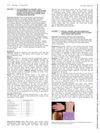
A TNFAIP3 gene mutation can cause unusual and varied symptoms of lupus and Sjogren's syndrome.
 108 citations
,
July 2004 in “American Journal of Pathology”
108 citations
,
July 2004 in “American Journal of Pathology” Stress increases a factor in mice that leads to hair loss, and blocking this factor may prevent it.
 14 citations
,
March 2016 in “Mechanisms of Development”
14 citations
,
March 2016 in “Mechanisms of Development” Basonuclin 2 is vital for the development of facial bones, hair follicles, and male germ cells in adult mice, and its absence can lead to dwarfism and abnormal follicles.
14 citations
,
May 2017 in “Journal of Investigative Dermatology” A rare gene mutation causes skin fragility and itching without affecting hair or nails.
 38 citations
,
April 2017 in “PLOS Genetics”
38 citations
,
April 2017 in “PLOS Genetics” GRHL3 is important for controlling gene activity in skin cells during different stages of their development.

Different wool coat types in goats are linked to specific gene expressions, which could improve cashmere quality.
December 2004 in “PLoS ONE” The Foxn1(-/-) phenotype disrupts hair growth and affects skin stem cells.
Researchers found genes in sheep that may affect hair growth and wool quality.
112 citations
,
August 2012 in “The American Journal of Human Genetics” Mutations in the RBPJ gene cause Adams-Oliver Syndrome.
 October 2023 in “Cell & bioscience”
 A special gene region controls the re-emergence of a primitive wool type in Merino sheep, improving their wool yield and adaptability.
January 2025 in “Journal of College of Physicians And Surgeons Pakistan” Minimally invasive glaucoma surgery can effectively manage glaucoma in GAPO syndrome when other treatments fail.
9 citations
,
January 1975 in “PubMed” Nude mice are hairless due to a shared defect affecting both skin and thymus, not just thymic issues.
226 citations
,
August 2006 in “Molecular and Cellular Biology” EGF signaling affects gene expression in skin cells, influencing hair growth and potentially cancer.
29 citations
,
October 2010 in “Journal of Investigative Dermatology” Activating Kras in mouse skin causes excess skin and hair loss.
June 2026 in “Health Science Reports” STEAP3 protein might help treat hair loss, but more testing is needed.