34 citations
,
November 1998 in “Journal of Investigative Dermatology” A common mutation in the hHb6 gene is linked to monilethrix, but other factors may also play a role.
28 citations
,
July 1980 in “British Journal of Dermatology” The hair disorder was caused by abnormal protein formation, making hair easily damaged.
 1 citations
,
August 2012 in “Journal der Deutschen Dermatologischen Gesellschaft”
1 citations
,
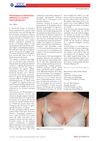
August 2012 in “Journal der Deutschen Dermatologischen Gesellschaft” A woman's hyperandrogenism was caused by a genetic mutation leading to non-classic adrenogenital syndrome.
11 citations
,
September 2021 in “American Journal of Medical Genetics Part A” Four new cases of Bachmann-Bupp syndrome suggest potential for targeted treatment.
 1 citations
,
July 2016 in “Livestock science”
1 citations
,
July 2016 in “Livestock science” Nerve growth factor helps cashmere goat hair cells grow and is more active during the hair growth phase.
 53 citations
,
August 2019 in “American journal of human genetics”
53 citations
,
August 2019 in “American journal of human genetics” FOXN1 gene variants cause low T cells and immune issues from birth.
153 citations
,
April 1998 in “Current Biology” The risk of skin tumors becoming malignant depends on the specific skin cell type affected.
 2 citations
,
July 2019 in “PLOS ONE”
2 citations
,
July 2019 in “PLOS ONE” Certain genetic variations are linked to higher liver enzyme levels in patients treated for chronic hepatitis C with specific drugs.
 December 2021 in “Research Square (Research Square)”
 S100A4 and NMIIA promote tumor growth in glioblastoma by enhancing blood vessel functions.
10 citations
,
November 2008 in “Veterinary Dermatology” The mouse hairy ears mutation causes longer ear hair due to changes in gene expression.
 76 citations
,
May 2011 in “Cell death and differentiation”
76 citations
,
May 2011 in “Cell death and differentiation” A20 protein is crucial for normal skin and hair development.
 19 citations
,
July 2012 in “Biotechnic & Histochemistry”
19 citations
,
July 2012 in “Biotechnic & Histochemistry” Less AgNOR protein production is linked to hair loss.
47 citations
,
July 1998 in “Journal of Investigative Dermatology” A new mutation, Glu402Lys, in hair keratin is linked to variable symptoms of monilethrix.
 June 2023 in “British Journal of Dermatology”
 The protein called small nuclear ribonucleoprotein polypeptide E is identified as a cause of a type of hair loss without other symptoms.
March 2026 in “Journal of Investigative Dermatology” 7 citations
,
April 2000 in “Mammalian Genome” A new mutation in mice causes crooked whiskers and messy hair.
 April 2024 in “BMB Reports”
 Lack of Cisd2 disrupts calcium balance in cells, leading to poorly functioning neutrophils.
30 citations
,
June 1993 in “The Journal of Cell Biology” The oncoprotein causes abnormal hair growth without increasing skin cancer risk.
28 citations
,
June 1995 in “The Journal of Dermatology” The flaky skin mouse mutation is a natural model for studying human psoriasis.
Loss of Dnmt3a and Dnmt3b leads to more aggressive skin tumors, but blocking PPAR-γ can reduce this effect.
31 citations
,
February 2007 in “Molecular Carcinogenesis” Overexpressing ATF3 in mice's epithelial cells may lead to oral cancer.
5 citations
,
January 2022 in “Health Science Reports” Gremlin proteins help regulate hair growth by balancing signals in hair follicles.
1 citations
,
March 1991 in “PubMed” Naevoid bundle hair is an unusual hair growth pattern where multiple hairs fuse together.
April 2025 in “Molecular Biology Reports” DNMT1 may help treat hypospadias by improving cell function and preventing unwanted cell changes.
 12 citations
,
March 2011 in “Journal of pathology”
12 citations
,
March 2011 in “Journal of pathology” Oncogenic K-ras causes rapid cancerous changes in the mouth's lining.
 41 citations
,
October 2008 in “The American journal of pathology”
41 citations
,
October 2008 in “The American journal of pathology” Blocking a specific protein signal can make hair grow on mouse nipples.
 April 2018 in “Journal of Investigative Dermatology”
 Resveratrol activates the Nrf2 pathway in human skin, significantly increasing the production and distribution of the antioxidant glutathione.
 27 citations
,
December 2013 in “Endocrinology”
27 citations
,
December 2013 in “Endocrinology” Researchers created a mouse model for Cushing's syndrome to study glucocorticoid excess and potential treatments.
 30 citations
,
July 2019 in “Endocrinology”
30 citations
,
July 2019 in “Endocrinology” Certain HSD3B1 gene types are linked to worse prostate cancer outcomes and affect treatment response and other health conditions.
87 citations
,
July 2009 in “Journal of Cell Science” Deleting the CDSN gene causes severe skin and hair problems, leading to death.