October 2024 in “Dermatologica Sinica” Recognizing unusual symptoms in Crohn's disease is crucial for proper treatment.
130 citations
,
January 2000 in “Nature biotechnology” 35 citations
,
April 1998 in “PubMed” Activated erbB-2 in mice skin causes severe skin and hair abnormalities.
 May 2017 in “Journal of The American Academy of Dermatology”
 PLAU and SerpinB2 affect cell death differently in various forms of leprosy and could be targets for new treatments.
October 2009 in “Faculty Opinions – Post-Publication Peer Review of the Biomedical Literature” Researchers developed a method to label and study human hair follicle stem cells using a fluorescent protein.
 286 citations
,
April 2009 in “The journal of neuroscience/The Journal of neuroscience”
286 citations
,
April 2009 in “The journal of neuroscience/The Journal of neuroscience” TRPA1 is crucial for mechanical sensitivity in skin sensory neurons.
 12 citations
,
February 1998 in “Gene”
12 citations
,
February 1998 in “Gene” The B2 genes are crucial for hair growth in rats.
 102 citations
,
July 2007 in “Genes & Development”
102 citations
,
July 2007 in “Genes & Development” A mother's PPARγ is crucial for preventing harmful milk that can cause inflammation and growth problems in babies.
13 citations
,
August 2017 in “Journal of Cellular Physiology” PD‐L1 and PD‐L2 may not effectively control immune activation in alopecia areata.
103 citations
,
April 2005 in “Experimental dermatology” Prostaglandin F2alpha and related compounds can increase hair growth and darken hair in mice.
19 citations
,
May 2001 in “Endocrinology” Mrp3 may aid in wound healing and hair growth.
 12 citations
,
September 2021 in “PLoS ONE”
12 citations
,
September 2021 in “PLoS ONE” WNT10A and EBF1 interaction affects hair growth in male-pattern baldness.
The study identified a key protein involved in producing underarm odor and found ways to inhibit it.
85 citations
,
June 2017 in “Journal of Investigative Dermatology” Blimp1 is crucial for hair follicle growth and skin health.
 January 2025 in “Ciência Rural”
 Improper use of benzyl benzoate on a dog can cause severe skin reactions.
 7 citations
,
December 2016 in “Journal of The Taiwan Institute of Chemical Engineers”
7 citations
,
December 2016 in “Journal of The Taiwan Institute of Chemical Engineers” Pig blood plasma can be used to promote human hair growth and is a good alternative to the commonly used serum additive.
 January 2016 in “Faculty Opinions – Post-Publication Peer Review of the Biomedical Literature”
 A substance called prostaglandin D2 is found more in bald scalps and it stops hair from growing. Blocking its receptor could potentially treat hair loss.
November 2025 in “Journal of Investigative Dermatology” IMG-007 helps regrow hair and reduce scalp inflammation in severe alopecia areata.
48 citations
,
March 2010 in “PloS one” C/EBPalpha and C/EBPbeta are crucial for normal skin and oil gland cell development in adult mice.
12 citations
,
April 2023 in “Molecular Pharmaceutics” A new patch can deliver stable antibodies over time for potential HIV treatment.
 June 2023 in “GSC Advanced Research and Reviews”
 Hutchinson-Gilford Progeria Syndrome causes rapid aging from a genetic mutation, with no cure but ongoing research into potential treatments.
 68 citations
,
July 2011 in “Journal of Biochemistry/The journal of biochemistry”
68 citations
,
July 2011 in “Journal of Biochemistry/The journal of biochemistry” New LPA receptors (LPA4, LPA5, LPA6) have diverse roles in the body.
 March 2026 in “bioRxiv (Cold Spring Harbor Laboratory)”
 The Enriched-GF method efficiently produces high-yield growth factors for tissue repair.
 8 citations
,
January 2007 in “International journal of experimental pathology”
8 citations
,
January 2007 in “International journal of experimental pathology” Hairless HRS/J mice resist Bacillus anthracis skin infections due to high numbers of immune cells, not because they lack hair follicles.
 94 citations
,
April 2002 in “The Journal of clinical endocrinology and metabolism/Journal of clinical endocrinology & metabolism”
94 citations
,
April 2002 in “The Journal of clinical endocrinology and metabolism/Journal of clinical endocrinology & metabolism” A new gene mutation causes female pseudohermaphroditism due to glucocorticoid resistance.
 10 citations
,
November 2015 in “Experimental Dermatology”
10 citations
,
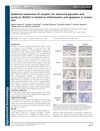
November 2015 in “Experimental Dermatology” Skin RAGE levels are linked to inflammation and cell death.
 31 citations
,
May 2021 in “Journal of endocrinological investigation”
31 citations
,
May 2021 in “Journal of endocrinological investigation” APS-1 in Italy shows diverse AIRE mutations and various autoimmune issues.
April 2023 in “Journal of Investigative Dermatology” TGFβ-2 may cause hair loss in androgenetic alopecia.
July 2022 in “British Journal of Dermatology”  60 citations
,
August 2008 in “Human molecular genetics online/Human molecular genetics”
60 citations
,
August 2008 in “Human molecular genetics online/Human molecular genetics” A position effect on the TRPS1 gene causes excessive hair growth in humans and mice.