 January 2012 in “Elsevier eBooks”
 Hair transplantation is highly effective with careful technique and attention to patient needs.
 9 citations
,
April 2000 in “Plastic and Reconstructive Surgery”
9 citations
,
April 2000 in “Plastic and Reconstructive Surgery” The document concludes that appearance can be significantly improved after one hair restoration correction procedure, but often multiple operations are needed for the best results.
3 citations
,
January 2010 Refined open donor harvesting techniques can reduce hair follicle damage in hair restoration surgery.
 13 citations
,
January 2013 in “Dermatologic Surgery”
13 citations
,
January 2013 in “Dermatologic Surgery” Experienced hair transplant surgeons suggest a limited number of hair follicles can be used for transplants, and recommend conservative methods to avoid scarring and depletion.
 13 citations
,
September 2002 in “Dermatologic Surgery”
13 citations
,
September 2002 in “Dermatologic Surgery” Effective repair of bad hair transplants requires skilled techniques and careful use of donor hair, with strategies like reimplantation and camouflage, and new methods to minimize scarring.
 June 2004 in “Dermatologic Surgery”
 The commentary suggests that using a single-scar technique for hair transplants can give good cosmetic results, but some surgeons hesitate to use it despite ways to address their concerns.
 3 citations
,
November 2017 in “The American Journal of Cosmetic Surgery”
3 citations
,
November 2017 in “The American Journal of Cosmetic Surgery” The new Cosmetic Surgery Scar Assessment Scale (CSSAS) was found to be simple and effective in evaluating scars from hair restoration surgeries.
 3 citations
,
May 2006 in “Dermatologic Surgery”
3 citations
,
May 2006 in “Dermatologic Surgery” Most men's multi-hair follicles naturally stand perpendicular to a line from the top of their head, which is important for natural-looking hair transplants.
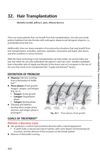 January 2018 in “Georg Thieme Verlag eBooks”
 Hair transplantation is a surgical procedure to move hair to bald areas, requires good donor hair, and results show in about a year.
 8 citations
,
November 2010 in “Facial Plastic Surgery”
8 citations
,
November 2010 in “Facial Plastic Surgery” Fat transfer can be effective for soft tissue trauma if the patient is chosen carefully and the procedure is done correctly.
 January 2009 in “Indian Journal of Plastic Surgery”
 Surgical methods for hair loss due to scarring should be chosen based on the size, location, and shape of the area, with most patients seeing good results.
 November 2023 in “Facial Plastic Surgery”
 Follicular Unit Excision (FUE) is a popular, less invasive hair restoration method with high patient satisfaction when done correctly, despite some complications from untrained practitioners.
Understanding hair follicle structure and techniques improves hair restoration outcomes.
 4 citations
,
January 2020 in “Journal of Cutaneous and Aesthetic Surgery”
4 citations
,
January 2020 in “Journal of Cutaneous and Aesthetic Surgery” Keloid scars can form after hair transplant surgery and should be prevented and treated early.
 July 2013 in “Hair transplant forum international”
 Dr. James Harris successfully incorporated Follicular Unit Extraction into his hair restoration practice, offering more surgical options and achieving natural results with the help of a team approach.
3 citations
,
December 2013 in “Annals of plastic surgery” The new hair transplant method improves results and reduces surgery time.
 9 citations
,
December 1984 in “The Journal of Dermatologic Surgery and Oncology”
9 citations
,
December 1984 in “The Journal of Dermatologic Surgery and Oncology” Layered suture closure for hair transplant donor sites results in smaller scars and easier future harvesting but takes more time and may temporarily increase hair shedding.
 July 2018 in “Hair transplant forum international”
 To prevent thinning in the donor area, harvest less than 50% of the original hair density in repeat hair transplants.
 6 citations
,
March 1996 in “The American Journal of Cosmetic Surgery”
6 citations
,
March 1996 in “The American Journal of Cosmetic Surgery” A new hair transplant method creates one appealing scar, uses donor hair better, and speeds up surgery.
 10 citations
,
December 1999 in “Journal of The American Academy of Dermatology”
10 citations
,
December 1999 in “Journal of The American Academy of Dermatology” The technique of using a skin and hair graft from behind the ear successfully reconstructed a large eyebrow defect with good cosmetic results.
 1 citations
,
January 2017 in “Journal of Aesthetic & Reconstructive Surgery”
1 citations
,
January 2017 in “Journal of Aesthetic & Reconstructive Surgery” Combining FUT and FUE hair transplant methods in one session provides more grafts and higher patient satisfaction.
 41 citations
,
August 2013 in “Facial Plastic Surgery Clinics of North America”
41 citations
,
August 2013 in “Facial Plastic Surgery Clinics of North America” FUE provides minimal scarring and quick recovery in hair transplantation, and surgeons not using it may lag in technology.
 6 citations
,
March 2017 in “Plastic and reconstructive surgery. Global open”
6 citations
,
March 2017 in “Plastic and reconstructive surgery. Global open” Both pretrimmed and direct nonshaven methods are effective for hair transplants; pretrimmed takes longer but yields denser, longer hair.
 6 citations
,
May 2004 in “Facial Plastic Surgery Clinics of North America”
6 citations
,
May 2004 in “Facial Plastic Surgery Clinics of North America” By 2004, Follicular Unit Transplantation (FUT) was the most effective method for surgical hair restoration, while the newer Follicular Unit Extraction (FUE) had more disadvantages and was less recommended.
 27 citations
,
November 2008 in “Facial Plastic Surgery”
27 citations
,
November 2008 in “Facial Plastic Surgery” Follicular Unit Extraction is a less invasive hair transplant method with potential for natural results but has challenges like longer surgery time and higher cost.
 17 citations
,
May 2015 in “Aesthetic Plastic Surgery”
17 citations
,
May 2015 in “Aesthetic Plastic Surgery” FUE hair transplantation using a micromotor is effective and gives natural results with few complications.
 16 citations
,
October 2008 in “Dermatologic Surgery”
16 citations
,
October 2008 in “Dermatologic Surgery” The new powered hair transplant method is faster and damages fewer hairs than the manual method.
 December 2008 in “Dermatologic Surgery”
 The new powered hair transplant method is faster and damages fewer grafts than the manual technique.
 15 citations
,
January 2013 in “Journal of Cutaneous and Aesthetic Surgery”
15 citations
,
January 2013 in “Journal of Cutaneous and Aesthetic Surgery” The modified Direct Hair Transplantation method is effective for treating baldness with better graft survival and less damage than standard techniques.
 6 citations
,
October 2021 in “Indian Journal of Plastic Surgery”
6 citations
,
October 2021 in “Indian Journal of Plastic Surgery” Eyebrow restoration using FUE is effective with careful planning and technique.