49 citations
,
July 2007 in “Ophthalmic Plastic and Reconstructive Surgery” Surgical excision is an effective treatment for persistent nodules from poly-L-lactic acid injections.
23 citations
,
February 2003 in “British Journal of Dermatology” A rare type of skin lymphoma was identified, affecting hair follicles and sweat glands.
20 citations
,
April 2017 in “Journal of the American Academy of Dermatology” Antimalarial drugs, especially chloroquine, can effectively treat granuloma annulare.
 8 citations
,
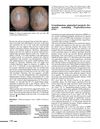
July 2018 in “European Journal of Dermatology”
8 citations
,
July 2018 in “European Journal of Dermatology” A medication may help with hair growth in psoriasis, and a skin condition might be linked to a specific bacteria.
 5 citations
,
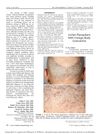
April 2014 in “The American Journal of Dermatopathology”
5 citations
,
April 2014 in “The American Journal of Dermatopathology” Foreign-body granuloma may be a marker for late-stage Lichen Planopilaris and should be considered in diagnosis.
5 citations
,
March 2013 in “Journal of Cutaneous Pathology” Granulomatous alopecia may be a distinct subtype of alopecia areata.
 4 citations
,
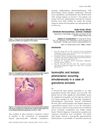
January 2009 in “Indian Journal of Dermatology, Venereology and Leprology”
4 citations
,
January 2009 in “Indian Journal of Dermatology, Venereology and Leprology” A patient with granuloma annulare experienced both isotopic and isomorphic responses, with skin lesions responding to steroids but relapsing after stopping treatment.
3 citations
,
January 2023 in “SAGE Open Medical Case Reports” Hydroxychloroquine may help hair regrowth in alopecia universalis.
 3 citations
,
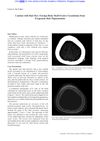
May 2020 in “Annals of the Academy of Medicine Singapore”
3 citations
,
May 2020 in “Annals of the Academy of Medicine Singapore” Hair dye can cause serious scalp issues, including skull erosion.
2 citations
,
May 2020 in “JAAD case reports” Ruxolitinib can cause a delayed skin reaction on the nose.
1 citations
,
March 2023 in “Medicine” Satoyoshi syndrome can cause eye problems like uveitis and retinal vein issues.
 November 2025 in “SKIN The Journal of Cutaneous Medicine”
 Granuloma faciale can occur on the scalp, especially in people with advanced hair loss, and may improve with treatment.
 January 2025 in “Indian Journal of Paediatric Dermatology”
 Biopsy is crucial to correctly diagnose granuloma annulare, which can mimic other conditions like alopecia mucinosa.
 May 2023 in “Journal of medical case reports”
 A young girl with skin and scalp conditions showed some improvement with treatment.
April 2022 in “JAAD case reports” Alitretinoin helped clear up a skin condition called generalized granuloma annulare in an elderly man.
 January 2011 in “Journal of The American Academy of Dermatology”
 Treating generalized granuloma annulare is difficult, with PUVA being the most effective option, but relapses are common.
June 2025 in “American Journal of Dermatopathology” Granulomatous Alopecia Areata is rare and may be caused by hair antigens or follicle destruction.
 September 2022 in “Anais Brasileiros de Dermatologia”
 Dermoscopy helped diagnose a rare skin disease which slightly improved with treatment.
January 2022 in “JAAD case reports” Granulomatous alopecia areata is a rare but real form of hair loss.
October 2015 in “The American Journal of Gastroenterology” Allopurinol may cause rare granulomatous microscopic colitis.
 July 2024 in “Romanian Journal of Veterinary Sciences”
 Cyclosporine improved skin condition in dogs with sebaceous adenitis.
 November 2023 in “The Bovine practitioner”
 A bull got very sick and had to be put down after eating hairy vetch for months.
 June 2023 in “British journal of dermatology/British journal of dermatology, Supplement”
 A woman with rheumatoid arthritis had a unique type of scarring hair loss not caused by infection, requiring early treatment to avoid permanent hair loss.
 June 2023 in “British journal of dermatology/British journal of dermatology, Supplement”
 A woman's rare hair loss condition improved on its own, suggesting this type might recover like common cases.
December 2009 in “Journal of Veterinary Clinics” The dog's back mass was a keratoacanthoma with inflammation, successfully removed without recurrence.
 54 citations
,
November 2017 in “Scientific Reports”
54 citations
,
November 2017 in “Scientific Reports” The study found that certain microRNAs are higher in the cells and lower in the fluid of women with a specific type of polycystic ovary syndrome, and one microRNA could potentially help diagnose the condition.
 34 citations
,
February 2016 in “Fertility and Sterility”
34 citations
,
February 2016 in “Fertility and Sterility” More PDCD4 is linked to obesity, insulin problems, and cell death in ovaries for those with polycystic ovary syndrome.
 24 citations
,
March 2017 in “Archives of Gynecology and Obstetrics”
24 citations
,
March 2017 in “Archives of Gynecology and Obstetrics” The study found that women with hyperandrogenic PCOS have higher levels of AKT1 and AKT2 proteins in their cells, which may lead to cell dysfunction.
 14 citations
,
January 2020 in “Frontiers in Endocrinology”
14 citations
,
January 2020 in “Frontiers in Endocrinology” OCT4 helps granulosa cell growth in early-stage follicles, and FSH increases OCT4 through specific pathways.
 3 citations
,
June 2025 in “Drug Design Development and Therapy”
3 citations
,
June 2025 in “Drug Design Development and Therapy” Targeting glycolysis may help treat PCOS by improving insulin sensitivity and ovarian function.