 May 2025 in “The Journal of Rheumatology”
 Proactive physical therapy improved mobility, reduced fatigue, and pain in lupus patients.
 May 2025 in “The Journal of Rheumatology”
 Anti-CD19 therapy may help treat SLE and NMOSD.
 May 2025 in “The Journal of Rheumatology”
 Early recognition and management of gastrointestinal tuberculosis in lupus patients are crucial to prevent complications.
 May 2025 in “The Journal of Rheumatology”
 Catatonia can be a rare sign of lupus, needing careful diagnosis and treatment.
 May 2025 in “The Journal of Rheumatology”
 Purpura fulminans can signal underlying autoimmune disorders, not just infections.
May 2025 in “The Journal of Rheumatology” Bullous lupus can cause severe esophageal issues but responds well to corticosteroids and azathioprine.
 May 2025 in “The Journal of Rheumatology”
 Atypical symptoms in lupus can indicate different kidney issues.
 May 2025 in “The Journal of Rheumatology”
 Middle-aged women with dilated cardiomyopathy should be screened for antiphospholipid syndrome.
 May 2025 in “The Journal of Rheumatology”
 Early recognition and a team approach are crucial for managing diffuse alveolar hemorrhage in antiphospholipid syndrome.
 May 2025 in “The Journal of Rheumatology”
 Antiphospholipid syndrome can severely damage adrenal glands, requiring early diagnosis and treatment.
 May 2025 in “The Journal of Rheumatology”
 SLE can cause unusual gastrointestinal symptoms, and immunosuppressive therapy can be effective.
 December 2024 in “Cureus”
 Tirzepatide improved symptoms and hair regrowth in a man with folliculitis decalvans.
 July 2024 in “Biological and Clinical Sciences Research Journal”
 Hormonal therapy for transgender individuals carries health risks but is a personal choice.
 November 2023 in “Dermatology Research and Reports”
 A stable ivermectin cream may effectively treat rosacea without long-term antibiotics.
 January 2023 in “Bio web of conferences/BIO web of conferences”
 The document concludes that specific dermoscopic features can help diagnose different facial red skin conditions.
 December 2022 in “Exploratory animal and medical research”
 The study concluded that Acral lick dermatitis is most common in young male Labrador retrievers, often caused by psychological factors, and leads to skin inflammation and stress-related blood changes.
 September 2022 in “Skin appendage disorders”
 Seborrheic dermatitis may contribute to the development of central centrifugal cicatricial alopecia.
 June 2020 in “Journal of Investigative Dermatology”
 Red clover extract-based scalp treatments significantly improved hair volume and reduced hair loss and damage.

The document is a detailed guide on skin conditions and treatments for dermatologists.
 July 2018 in “Elsevier eBooks”
 Acne keloidalis nuchae is a chronic skin condition more common in African men, causing itchy or painful bumps and can lead to permanent hair loss if not treated early.
 January 2017 in “Clinical approaches and procedures in cosmetic dermatology”
 Retinoids are effective for skin conditions like severe acne and psoriasis but must be used with caution due to potential side effects and risks during pregnancy.
 July 2015 in “Actas Dermo-Sifiliográficas”
 A young woman with a rare fungal infection showed significant improvement after treatment with antifungal medication.
 September 2014 in “Journal der Deutschen Dermatologischen Gesellschaft”
 Diabetes can cause a variety of skin disorders, some of which may signal more serious health issues.
 April 2012 in “Informa Healthcare eBooks”
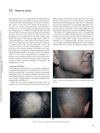
 Alopecia areata is a common autoimmune condition causing varying hair loss, diagnosed by specific patterns of inflammation around hair follicles, with several treatment options available.
 July 2003 in “Journal of Cutaneous Medicine and Surgery”
 Blood pressure drugs can cause skin lupus, early treatment is key for baby herpes and diabetic foot ulcers, a certain vaccine works against genital herpes and HPV in women, more frequent light therapy helps psoriasis, smoking and drinking can worsen psoriasis, a cream clears up a type of skin cancer, and low iron levels don't cause chronic hair loss.
 July 2003 in “Journal of Cutaneous Medicine and Surgery”
 Various skin conditions can be treated effectively with different methods, such as discontinuing certain drugs, using specific vaccines, applying creams, and changing lifestyle habits like smoking and drinking.
 July 2003 in “Journal of Cutaneous Medicine and Surgery”
 Stopping certain drugs can improve skin conditions, arsenicosis affects over half of a Bangladeshi village, males are more vulnerable, and certain treatments are effective for warts, acne, and psoriasis. Smoking and drinking are linked to psoriasis in men, a cream helps with a type of skin cancer, and low iron levels don't directly cause chronic hair loss in women.
 July 2003 in “Journal of Cutaneous Medicine and Surgery”
 High blood pressure drugs often cause skin lupus, stopping the drug usually helps. A vaccine helps prevent genital herpes and HPV-16. More frequent light therapy clears psoriasis faster. No link was found between low iron and chronic hair loss.
 July 2008 in “British Journal of Dermatology”
 Cyclosporin doesn't stop hair loss.
 May 2002 in “British Journal of Dermatology”
 Hair loss caused by longer latent hair cycle and sudden miniaturization, not gradual follicle size reduction.