
Essential oils can improve health but must be used safely under professional guidance.
 1 citations
,
February 2012 in “The American Journal of Cosmetic Surgery”
1 citations
,
February 2012 in “The American Journal of Cosmetic Surgery” UBM helps hair regrowth in men and women with hair loss.
 1 citations
,
November 2009 in “Hair transplant forum international”
1 citations
,
November 2009 in “Hair transplant forum international” Dr. Shoji Okuda's early hair transplantation techniques were rediscovered after being overlooked due to World War II.
 1 citations
,
March 1989 in “The BMJ”
1 citations
,
March 1989 in “The BMJ” A woman's hair grew back while she was taking sulphasalazine for arthritis.
November 2025 in “Skin Health and Disease” Autosomal recessive woolly hair is rare and involves tightly coiled hair without other health issues.
November 2023 in “Veterinary Science and Medicine Journal” A mixed breed dog's skin condition improved with combined therapy and supportive care.
June 2023 in “Zenodo (CERN European Organization for Nuclear Research)” DTC hair regrowth solutions are improving hair health and confidence with innovative, personalized approaches.
 November 2021 in “Journal of pharmaceutical research international”
 Herbal depilatories are safer and cause fewer side effects than chemical ones for hair removal.
June 2021 in “The Journal of Family Practice” A 69-year-old woman has a fast-growing hand lesion that didn't improve with salicylic acid.
January 2021 in “Hair therapy & transplantation” Telogen effluvium causes temporary hair loss, but new hair still grows.
Skin cells can naturally limit the growth of cancerous changes by balancing cell renewal and differentiation.
January 2020 in “Hair therapy & transplantation” Telogen effluvium is a common hair loss where hair sheds due to stress but new hair still grows.
September 2016 in “Journal of dermatological science” HAP stem cells can repair nerves and spinal cords by becoming Schwann cells.
 November 2015 in “Hair transplant forum international”
 Early attempts at using cloned cells for hair transplants failed, but 3D cell growth showed some promise.
 January 2014 in “Hair transplant forum international”
 Hair follicle cloning is possible but faces many challenges before it can replace traditional hair transplants.
 March 2013 in “CRC Press eBooks”
 Follicular unit transplantation, a hair restoration technique using small hair grafts, was pioneered by Bob Limmer in the late 1980s and is still widely used today with minor improvements.
 February 2013 in “Jurnal Biomedik : JBM”
 The sebaceous gland plays a significant role in hair loss and thinning, and using growth stimulators, DHT inhibitors, anti-inflammatory drugs, anti-androgens, and super oxide dismuse substances can help manage it.
A hair growth ointment improved hair length in a family with a genetic hair growth condition.
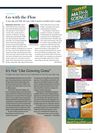 May 2012 in “Scientific American”
 Blocking a compound called prostaglandin D₂ might help treat hair loss.
 January 2010 in “Springer eBooks”
 Pubic hair transplantation can help women with little to no pubic hair, using scalp hair for a natural look and requires careful aftercare.
 August 2009 in “Journal of Oral and Maxillofacial Surgery”
 Hair transplantation and micrografting are effective for cosmetic facial enhancement, requiring careful technique and postoperative care for successful outcomes.
 August 2009 in “Journal of Oral and Maxillofacial Surgery”
 Hair transplantation and micrografting are effective for facial enhancement with nearly 100% graft survival when done carefully.
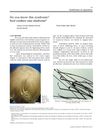
The document concludes that Loose Anagen Hair Syndrome is a benign condition where hair is thin and easily pulled out, often improving with age.
December 2005 in “The Sri Lanka Journal of Dermatology” Many young Sri Lankan women entering university have excessive hair growth.
 November 2005 in “Nature Reviews Molecular Cell Biology”
 The protein hairless is important for hair regrowth because it stops the protein wise from blocking the hair cycle.
September 2003 in “International Society of Hair Restoration Surgery” Transplanted hair keeps growing like it did in the donor area.
January 2003 in “Journal of the Fourth Military Medical University” Hair follicles can regenerate if cut at certain points, with stem cells in the upper part.
 January 1997 in “Elsevier eBooks”
 Hair and nails are skin parts that develop early and serve protective and functional roles.
 December 2015 in “Dermatologic Surgery”
 Double trichophytic closure effectively repairs thin scalp scars, reducing financial burden.
June 2024 in “Warta Pengabdian Andalas” Education on hair serum improved understanding and interest among young people.