 29 citations
,
January 2010 in “Methods in Enzymology”
29 citations
,
January 2010 in “Methods in Enzymology” The document concludes that careful design of genetic fate mapping experiments is crucial for accurate cell lineage tracing in mice.
The research developed new fortilin protein constructs for potential heart disease treatments.
 August 2016 in “Journal of Investigative Dermatology”
 Researchers found a new genetic mutation linked to a hair condition in a Japanese boy.
March 2026 in “Journal of genetics and genomics/Journal of Genetics and Genomics”  1 citations
,
August 2023 in “Nature communications”
1 citations
,
August 2023 in “Nature communications” Hdac1 and Hdac2 help maintain and protect the cells that control hair growth.
 January 2026 in “Frontiers in Molecular Biosciences”
 A new method helps diagnose alopecia areata using specific gene markers and could guide targeted treatments.
 17 citations
,
May 2011 in “Gene Therapy”
17 citations
,
May 2011 in “Gene Therapy” Using polyethylenimine-DNA to deliver the hTERT gene can stimulate hair growth and may be useful in treating hair loss, but there could be potential cancer risks.
78 citations
,
October 2007 in “Journal of Investigative Dermatology” Delta1 is crucial for controlling skin cell growth and preventing tumors in mice.
 March 2024 in “International Journal of Pharmaceutics”
 Ginsenoside Rg3 combined with minoxidil was more effective in treating hair loss in mice.
 5 citations
,
February 2017 in “Biomolecules & Therapeutics”
5 citations
,
February 2017 in “Biomolecules & Therapeutics” 4-O-Methylhonokiol helps protect skin cells from growth-stopping effects of a protein by regulating growth-related pathways.
December 2023 in “International Journal of Dermatology” August 2024 in “Journal of Drug Delivery Science and Technology” The new minoxidil formulation could better promote hair growth for treating androgenic alopecia.
 12 citations
,
August 2020 in “Frontiers in Genetics”
12 citations
,
August 2020 in “Frontiers in Genetics” H19 boosts hair growth potential by activating Wnt signaling, possibly helping treat hair loss.
 June 2023 in “Journal of biological chemistry/The Journal of biological chemistry”
 Sdr16c5 and Sdr16c6 genes regulate a key point in lipid production that affects eye and skin gland function.
 11 citations
,
April 2017 in “Journal of The European Academy of Dermatology and Venereology”
11 citations
,
April 2017 in “Journal of The European Academy of Dermatology and Venereology” Found different long non-coding RNAs in balding Chinese men, which may help create new treatments.
6 citations
,
March 2023 in “Frontiers in Cellular and Infection Microbiology” Golvatinib shows promise as a treatment for Omicron in elderly patients.

Higher levels of heat shock protein 27 and lower levels of miR-1 can increase AR levels, leading to hair loss in men.
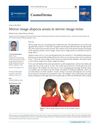
Mirror-image twins can have alopecia areata on opposite sides of their heads.
May 2023 in “The Journal of Immunology” BST2 is a key marker for hair loss disease alopecia areata.
 August 2023 in “Journal of Cosmetic Dermatology”
 Exosomes from hair papilla cells and the Chinese medicine Liao Tuo Fang can potentially promote hair growth and could be used to develop hair growth drugs.
 5 citations
,
April 2018 in “Journal of Dermatological Science”
5 citations
,
April 2018 in “Journal of Dermatological Science” Adjusting estradiol-ANGPT2 levels can promote hair growth in female pattern hair loss.
41 citations
,
February 2021 in “Translational research” Non-coding RNAs could help detect and treat radiation damage.
 72 citations
,
November 2012 in “PloS one”
72 citations
,
November 2012 in “PloS one” The protein folliculin, involved in a rare disease, works with another protein to control how cells stick together and their organization, and changes in this interaction can lead to disease symptoms.
 January 2025 in “Dermatology Practical & Conceptual”
 A new genetic model may improve treatment and diagnosis for certain inherited skin diseases.
January 2011 in “China Animal Husbandry & Veterinary Medicine” Constant-release melatonin reduces SOX21 gene expression in goats during the hair follicle resting phase.
32 citations
,
July 2017 in “Molecular diagnosis & therapy” MicroRNA-21 could help diagnose and treat skin fibrosis.
 1 citations
,
July 2022 in “The journal of investigative dermatology/Journal of investigative dermatology”
1 citations
,
July 2022 in “The journal of investigative dermatology/Journal of investigative dermatology” Tofacitinib helps improve skin conditions in people with Down syndrome, especially alopecia areata.
September 2024 in “Journal of Ethnopharmacology” Terminalia bellirica extracts effectively promote hair regrowth and treat androgenetic alopecia.
46 citations
,
October 2022 in “Biomaterials”