 3 citations
,
April 2021 in “Revista da Sociedade Portuguesa de Dermatologia e Venereologia”
3 citations
,
April 2021 in “Revista da Sociedade Portuguesa de Dermatologia e Venereologia” Some people who got COVID-19 experienced temporary hair loss starting around 10 weeks after infection, with many seeing improvement within about 25 days.
 2 citations
,
April 2021 in “bioRxiv (Cold Spring Harbor Laboratory)”
2 citations
,
April 2021 in “bioRxiv (Cold Spring Harbor Laboratory)” The conclusion is that analyzing RNA from skin oils is a promising way to understand skin diseases.
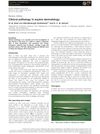 1 citations
,
June 2016 in “Equine Veterinary Education”
1 citations
,
June 2016 in “Equine Veterinary Education” The document concludes that using the right diagnostic methods and careful sample handling is crucial for accurately diagnosing horse skin diseases.
 1 citations
,
January 2013
1 citations
,
January 2013 About 20% of red foxes and jackals in western Iran have at least one type of ectoparasite, with fleas being the most common.
 March 2025 in “Biomedical & Pharmacology Journal”
 Valproic acid is effective but often causes side effects like weight gain and hair loss, so personalized treatment is needed.
 December 2024 in “Journal of Student Research”
 Using hibiscus extract shampoo every 2 days is more effective for preventing hair loss.
 April 2023 in “Journal of Investigative Dermatology”
 The study suggests fibrosing alopecia in a pattern distribution has distinct features and may vary by race.
 February 2022 in “Journal of clinical research and reports”
 Plasma therapy is becoming more popular for treating viral infections, skin conditions, and orthopedic issues, and is expected to grow in the healthcare market.
 September 2021 in “RECISATEC - REVISTA CIENTÍFICA SAÚDE E TECNOLOGIA - ISSN 2763-8405”
 Platelet-rich plasma helps treat post-COVID-19 hair loss and boosts self-esteem.
 January 2019 in “Springer eBooks”
 Micrografts are useful for healing wounds, regenerating bone and periodontal tissues, and improving hair transplantation outcomes.
 April 2017 in “Journal of Investigative Dermatology”
 Researchers improved a method to study individual cells in newborn mouse skin and found a way to assess the severity of a skin condition in humans.
 19 citations
,
August 2011 in “Archives of Dermatology”
19 citations
,
August 2011 in “Archives of Dermatology” CCCA is a common scarring hair loss in African descent women, possibly linked to genetics, hair care practices, and health issues like diabetes.
8 citations
,
January 2025 in “Journal of Investigative Dermatology” Fetal skin has diverse fibroblast types that change as it develops.
8 citations
,
July 2004 in “Journal of morphology” Marsupial hair structure and keratin distribution are similar to placental mammals.
4 citations
,
January 2022 in “OAlib” Antioxidants might help with Long Covid by addressing oxidative stress and nutrient imbalances.
 2 citations
,
January 2012 in “Hair therapy & transplantation”
2 citations
,
January 2012 in “Hair therapy & transplantation” Low serum ferritin levels are not closely linked to telogen effluvium in women.
Apeiba tibourbou seed oil has analgesic and anti-inflammatory effects, making it potentially useful for food and medicine.
 128 citations
,
September 2011 in “British Journal of Dermatology”
128 citations
,
September 2011 in “British Journal of Dermatology” Obesity is linked to various skin problems and may increase the risk of skin cancer.
June 2026 in “Journal of Inflammation Research” New treatments are improving alopecia areata care, but long-term safety needs more study.
June 2026 in “DOAJ (DOAJ: Directory of Open Access Journals)” New therapies for alopecia areata show promise but need more research and collaboration.
 February 2026 in “Reports — Medical Cases Images and Videos”
 Upadacitinib may help regrow hair in children with alopecia areata and is generally safe.
77 citations
,
September 2001 in “Postgraduate Medical Journal” Men often look older due to greying hair and certain blood markers, while women look younger.
 43 citations
,
July 2020 in “Dermatologic Therapy”
43 citations
,
July 2020 in “Dermatologic Therapy” During the COVID-19 pandemic, a clinic in Turkey saw fewer patients but more cases of certain skin conditions, possibly linked to the virus and stress.
 7 citations
,
December 2020 in “Clinics in Dermatology”
7 citations
,
December 2020 in “Clinics in Dermatology” Some alopecia treatments might help treat COVID-19, but more research is needed.
 January 1993 in “Journal of International Medical Research”
 The document corrects errors in previous articles, including a reversed term, updated subject weights, hair count data, and reference numbering.
 September 2020 in “Annals of the National Academy of Medical Sciences. India”
 COVID-19 can cause skin issues like "COVID toes," rashes, hair loss, and hand eczema, and dermatologists are important for recognizing these signs.
January 2011 in “Open Collections” Mouse preputial glands are highly developed sebaceous glands that mainly secrete neutral fat droplets.
TNFα and interleukin-1 blockers reduce skin inflammation from EGFR antibody therapy.
TNFα and interleukin-1 blockers reduce skin inflammation from EGFR antibody therapy.
Loss of the p53 gene alone causes tumors, and losing both p53 and Rb genes speeds up aggressive skin cancer.