 20 citations
,
September 2021 in “Nature communications”
20 citations
,
September 2021 in “Nature communications” Cat color patterns are determined early in development by gene expression and epidermal changes, with the Dickkopf 4 gene playing a crucial role.
 2 citations
,
March 2018 in “The Journal of Dermatology”
2 citations
,
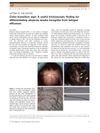
March 2018 in “The Journal of Dermatology” The "color-transition sign" helps tell apart alopecia areata incognita from telogen effluvium by looking at hair color changes.
 28 citations
,
December 2006 in “Clinical lung cancer”
28 citations
,
December 2006 in “Clinical lung cancer” Early recognition and management of skin side effects from new cancer therapies can prevent treatment delays.
Hair can naturally regain color after greying, and this change may be linked to stress levels.
7 citations
,
November 2022 in “International Journal of Molecular Sciences” As Japanese males age, their hair darkens due to increased melanin, with males generally having darker hair than females.
3 citations
,
June 2008 in “Springer eBooks” Hair care products clean, protect, style, color, and change hair structure.
 10 citations
,
September 2020 in “Metabolites”
10 citations
,
September 2020 in “Metabolites” Hair color and length affect metabolite profiles in hair, so they should be considered in hair analysis.
June 2026 in “Domestic Animal Endocrinology” Angus cattle grow faster and are more feed-efficient than Brahman, especially with growth-promoting systems, and gene expression changes with cold and treatments.
133 citations
,
August 1969 in “Science” Melatonin causes weasels to grow white fur and become reproductively inactive.
 43 citations
,
November 2007 in “Dermatologic Clinics”
43 citations
,
November 2007 in “Dermatologic Clinics” Hair and nail changes can indicate health issues, including cancer and side effects from cancer treatments.
 February 2025 in “The Open Dermatology Journal”
 Many COVID-19 survivors, especially women, experience hair loss and skin color changes, needing specific post-recovery care.
 November 2025 in “International Journal of Science and Research Archive”
 Oxidative dyes damage hair more than semi-permanent dyes, but new technologies help protect hair while coloring.
January 2010 in “Elsevier eBooks” Hair color is important in many fields and is measured for various purposes.
September 2021 in “Zenodo (CERN European Organization for Nuclear Research)” Chemotherapy side effects might help treat autoimmune hair loss.
 January 2023 in “Fashion and textiles”
 Cationic and nonionic surfactants provide better color intensity and resistance for semi-permanent hair dye than anionic surfactants.
28 citations
,
June 1991 in “Veterinary Dermatology” Black and white Saluki dogs have a unique hair loss condition different from Doberman pinschers.
 1 citations
,
September 2023 in “The journal of investigative dermatology/Journal of investigative dermatology”
1 citations
,
September 2023 in “The journal of investigative dermatology/Journal of investigative dermatology” Removing Dicer from pigment cells in newborn mice causes early hair graying and changes in cell migration molecules.
2 citations
,
May 2019 in “International Journal of Molecular Sciences” Tranexamic acid turns white hair brown in certain mice by affecting specific proteins.
4 citations
,
June 1980 in “American Journal of Clinical Nutrition” Malnutrition can change hair color due to altered copper and zinc levels.
5 citations
,
January 2016 in “Clinical psychopharmacology and neuroscience/Clinical Psychopharmacology and Neuroscience” Valproate can cause rare hair curling in some patients.
 21 citations
,
October 2014 in “Actas dermo-sifiliográficas/Actas dermo-sifiliográficas”
21 citations
,
October 2014 in “Actas dermo-sifiliográficas/Actas dermo-sifiliográficas” Hair dyes can change hair color temporarily or permanently but may cause side effects like skin reactions and hair damage.
 1 citations
,
January 2017 in “Evolutionary studies”
1 citations
,
January 2017 in “Evolutionary studies” Different human traits like skin color and hair type vary between populations due to genetic adaptations to the environment.

Exosome treatments may cause mild inflammation, new blood vessel growth, and hair growth, detectable by ultrasound.
Hair ages by graying and thinning, treatable with medications, transplants, or hair dye.
 10 citations
,
May 1986 in “Experientia”
10 citations
,
May 1986 in “Experientia” Too much zinc in the diet can cause hair loss and color change in young mice by reducing copper in the body.
Hair fibers degrade and change color in very basic water.
2 citations
,
November 2024 in “JAAD reviews.” Certain drugs can change hair color, either lightening or darkening it.
 2 citations
,
September 2020 in “International journal of radiology & radiation therapy”
2 citations
,
September 2020 in “International journal of radiology & radiation therapy” Radiotherapy can cause rare changes in hair color, which should be discussed with patients.
2 citations
,
February 2016 in “Irish journal of psychological medicine” Mirtazapine may cause hair loss and change hair color, but stopping the drug can reverse these effects.
18 citations
,
April 1989 in “Archives of Dermatology” Iron deficiency can cause hair color changes, which can be reversed with iron supplements.